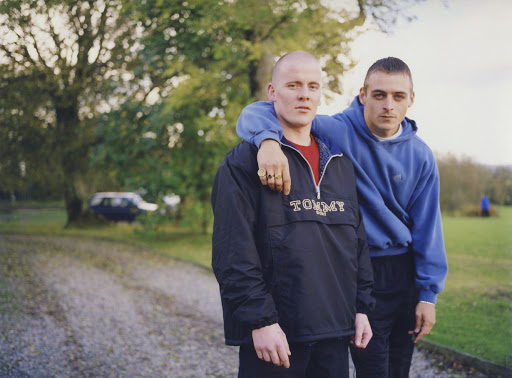
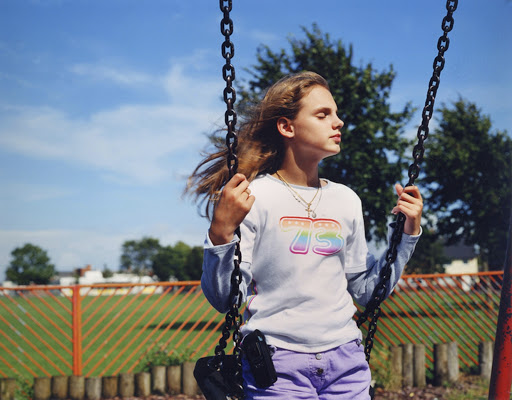
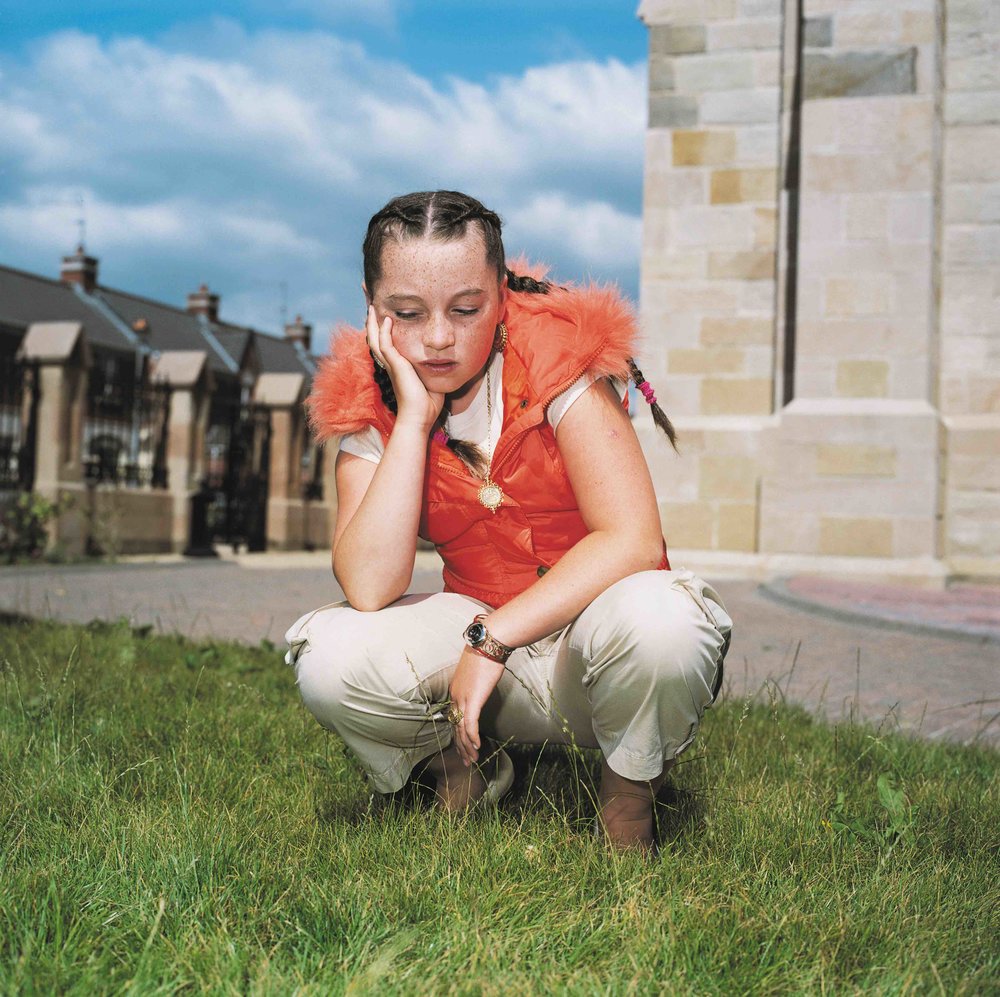
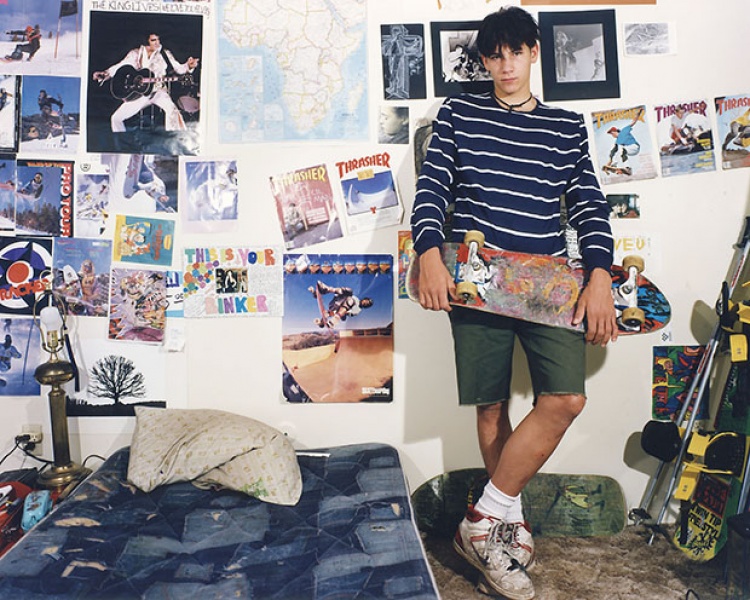
THEORETICAL RESEARCH – ENVIRONMENTAL PORTRAITS

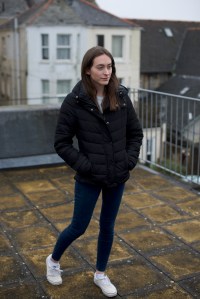
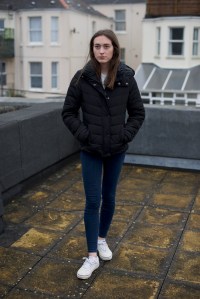
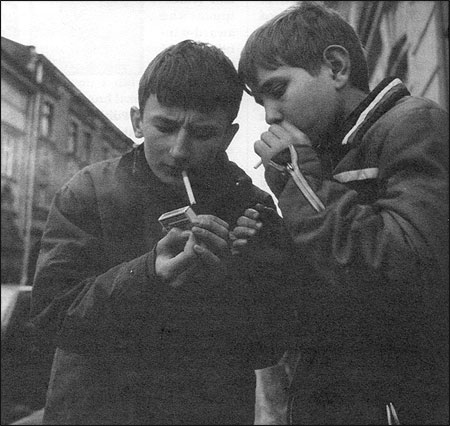
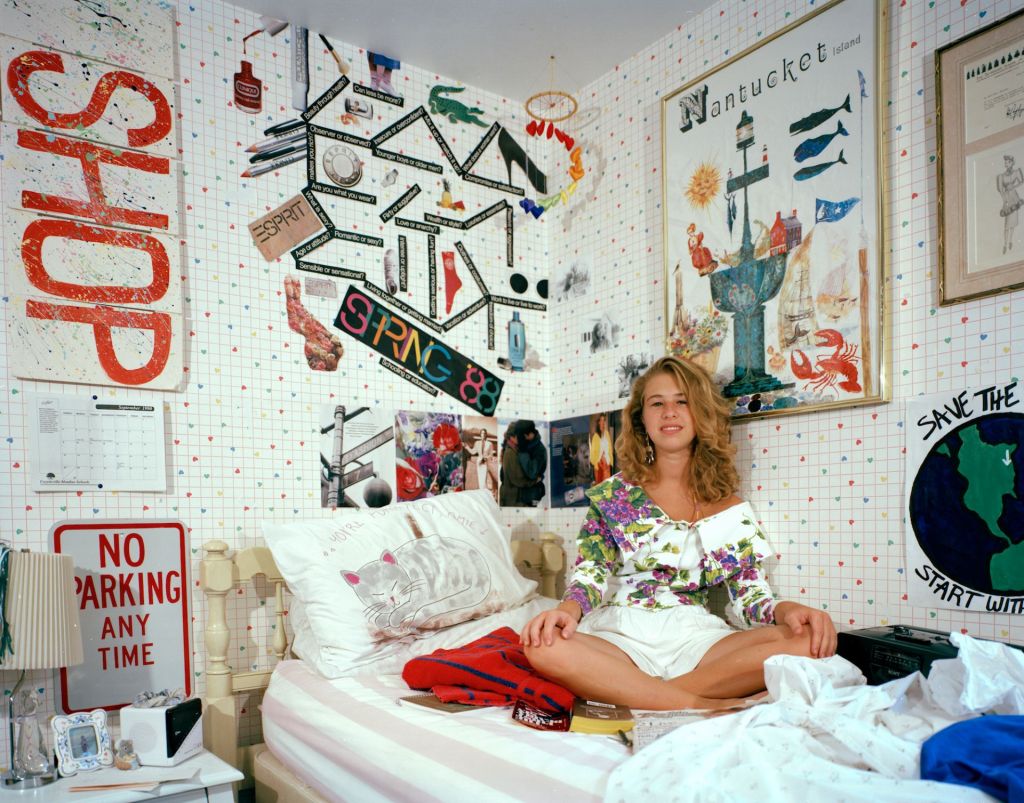
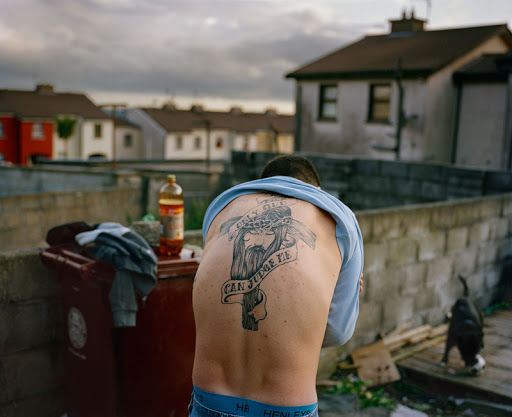
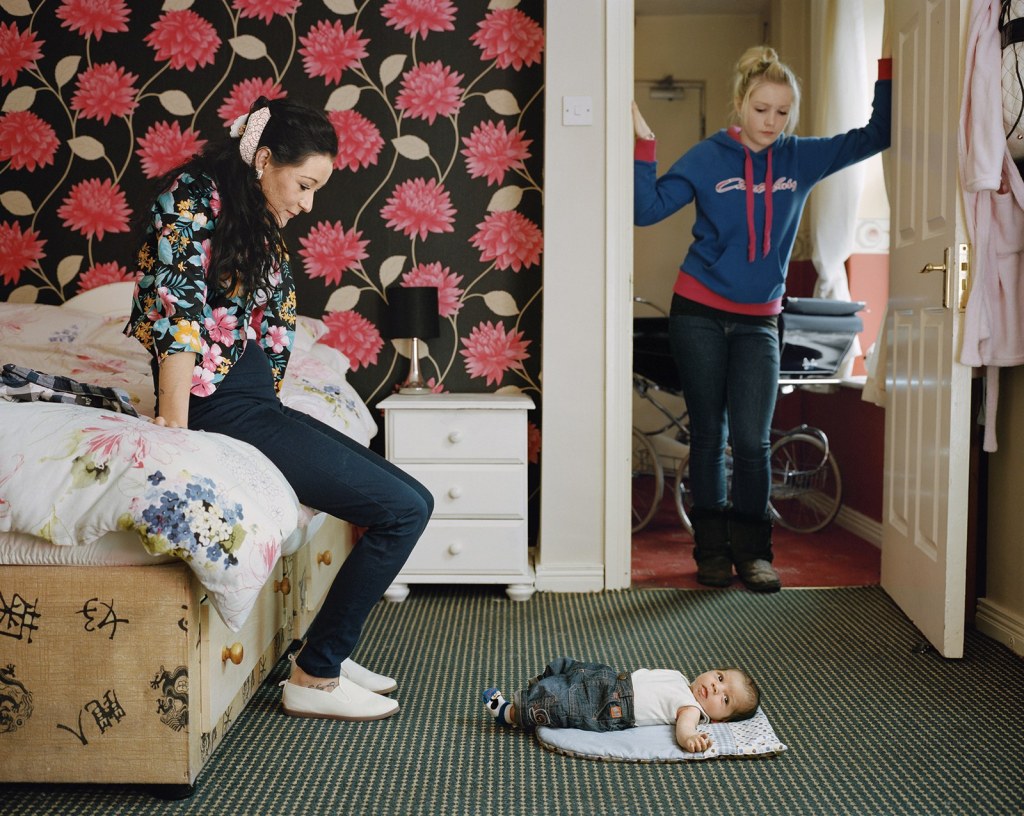
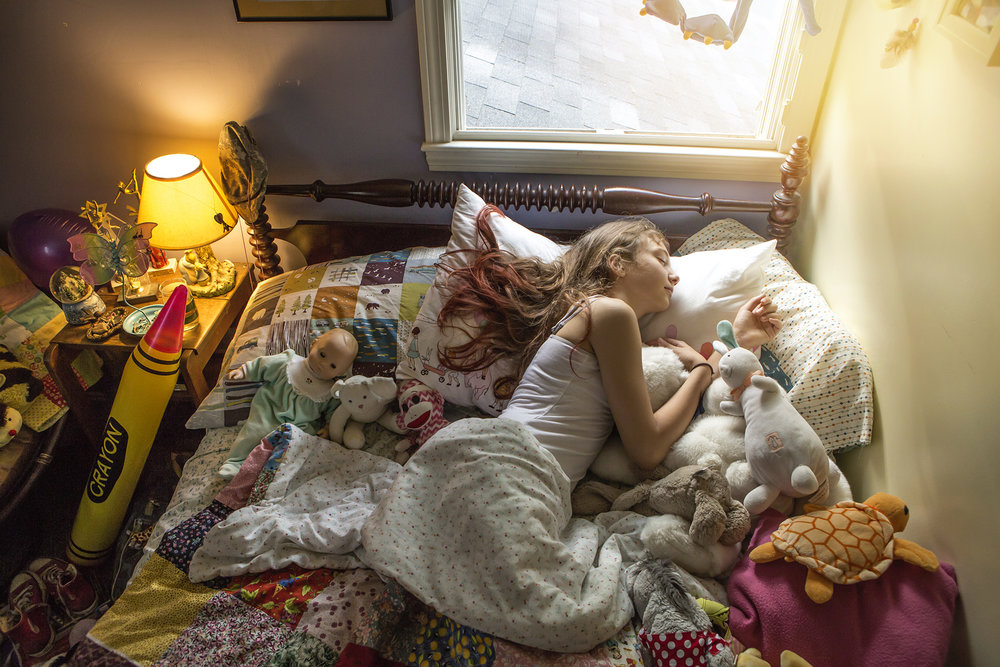
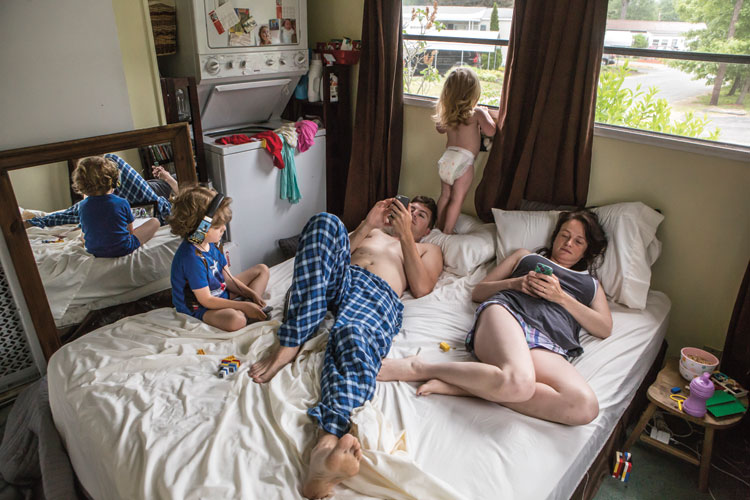
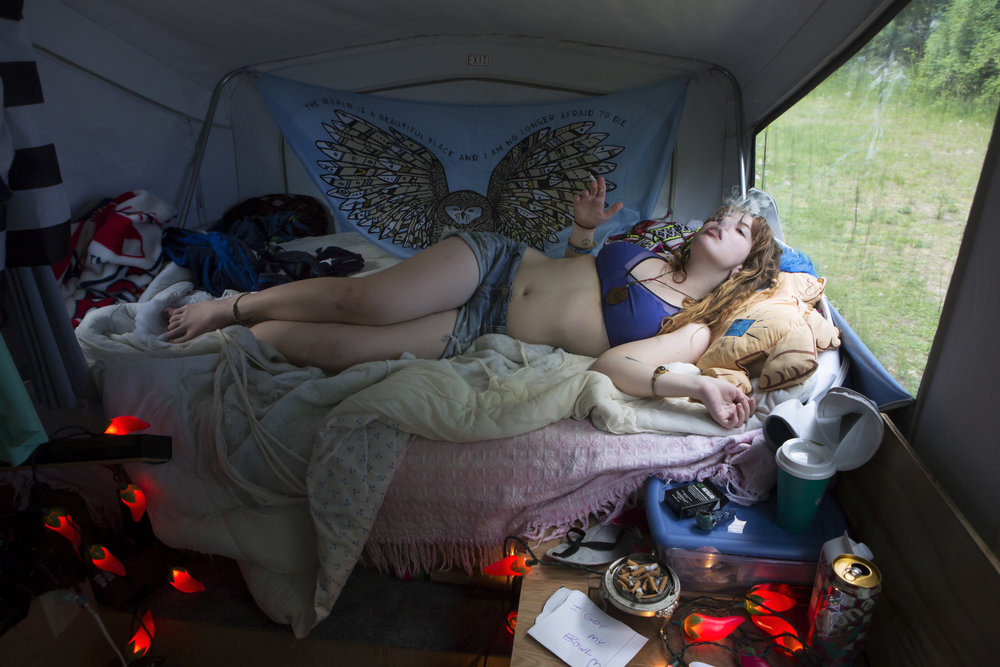
Environmental portraiture has always been a popular genre of photography. It can establish the time or place that the image was taken, giving the viewer an insight into the context behind the image. When you view a portrait you automatically begin to look for clues that indicates who they are as a person. But these clues are often found past the main focus of the model. The location, whether it is natural or man made can give so much more information. Objects in the scene can also be useful. All these things are what make up an ‘environmental portrait’. In all genres of photography, the location is one of the most important aspects of the image. I learnt this myself in the set construction module, every object we put in the frame added to the context and story of the photograph. So even if it is subconsciously, the items in a scene in an environmental portrait has great significance.

Environmental Portraits - Manfrotto School Of Xcellence

As Jaqueline Tobin says in a book, it is always tempting to get close to the subject to show the expression and facial details but taking a step back can tell more of a story. What makes environmental portraits so effective is that they are more accurate representations of reality. For example if you’re photographing someone in their room, they can put on certain clothes, put on makeup and pose in a certain way but the location doesn’t change. Even if the subject wasn’t in the frame, the room can probably give more indication about who they are as a person.

Another important part of the environment is the way the subject interacts in it. Using my work as an example, the subject is going to be so much more comfortable in their own space. This is something I have noticed in my own practice. I often photograph the same people. If I take them to a different location, they act is a different way to when they are somewhere they know. Looking back at the way the relationship between the photographer and subject affects how the viewer sees the image, the relationship between subject and location is just as important. I want the subject to feel comfortable so that they have a more relaxed, natural expression.

So to conclude, environmental portraits can be more effective than any other. If you took a photo of someone that ran a shop in their shop, the viewer would have so much understanding about who they and what they do. Whereas if you put the person in a studio with no props they become almost anonymous. There is no clues to give the viewer any ideas on the story of the subject. Each environmental portrait has its own narrative, which can make it so much more interesting than a studio portrait.

How to Create Environmental Portraits

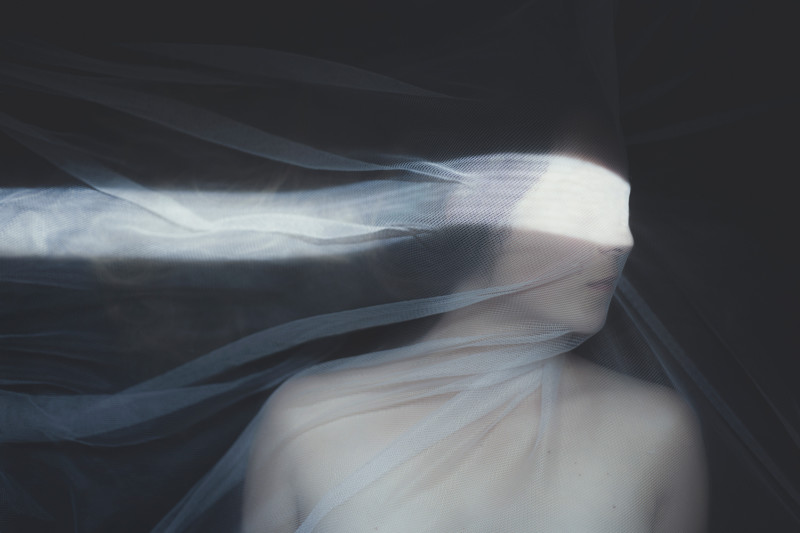
SUBJECT RESEARCH – MENTAL HEALTH

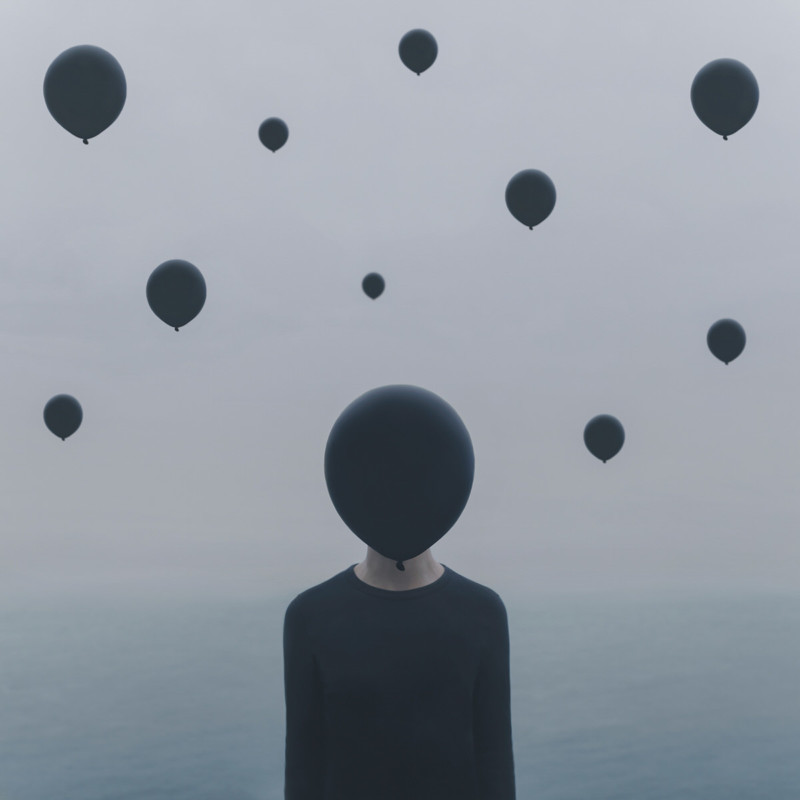
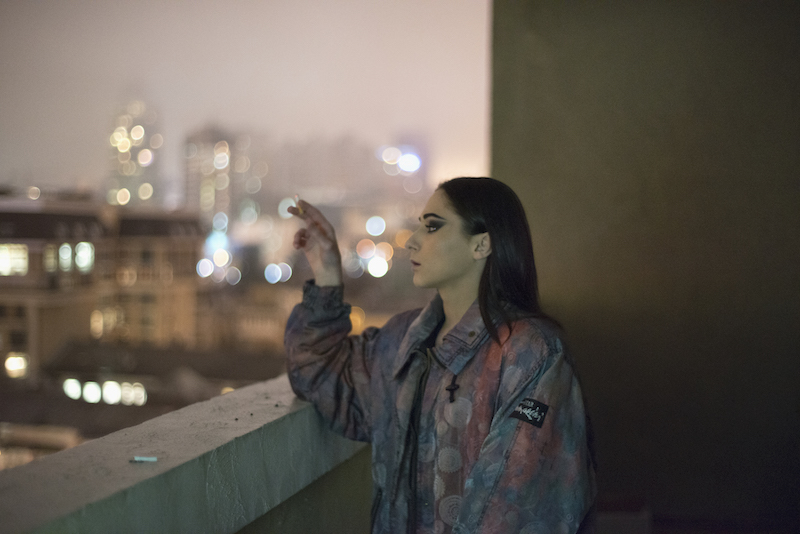
Photo by GABRIEL ISAK

I am going to research more into mental health of people in their 20’s. From my initial research it was clear that there was a struggle with mental wellbeing. This is a really important subject and probably effects a lot of the people I will be photographing. Mental health commonly emerges in late teens/ early twenties. Many people I photograph will probably have their own struggles, mostly hidden.

Like from the other research I have done, a big reason for mental health deteriorating is the big changes in life and the pressure that comes with it. Other reasons include lack of sleep, sex life, drugs and alcohol. Depression and anxiety is not heritable and so your environment has a large impact. Social environment is a big factor, even if you have a large risk of having a mental health issue, having a good social environment can help you thrive. Through these changes in life, your brain also undergoes drastic change.
There can also be triggers that lead to conditions such as depression. Such as a stressful time in your life can trigger a disorder. This is because mental disorders are chemical imbalances in your brain. While being in your 20’s, you can experience a lot of stressful events, such as, moving put, relationship changes and financial problems.

Another thing that can lead to mental health problems is your lifestyle and how you take care of yourself. The first (and very common) factor is not getting help when you are not okay. There is a lot of stigma about mental disorders and I think people can be reluctant to get help when somethings wrong. Through talking therapies and sometimes medication, you can see improvements. Alcohol can be a problem with people who are already vulnerable or at risk. It is been proven that alcohol can make a situation worse and can sometimes lead to a dependancy. Other lifestyle choices such as what you eat can affect your mood. There are certain foods that help boost your food or reduce stress. If you are eaten no foods with any nutrients then the balance could be off.

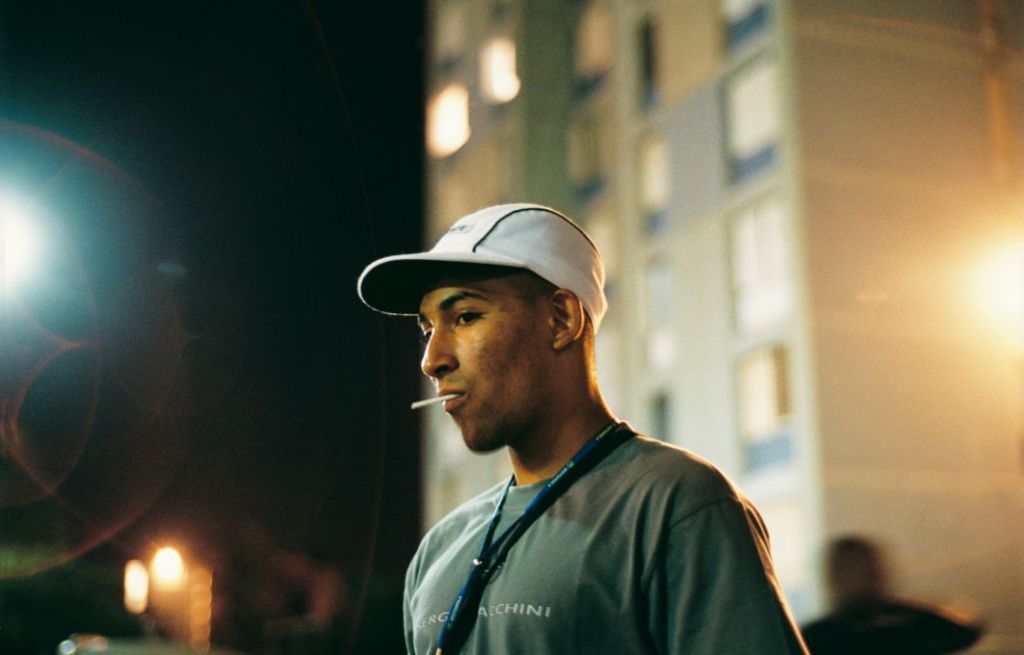
Photo by GABRIEL ISAK

This research is interesting to review. People in their 20’s are at a high risk of developing mental health problems for many reasons. It is already difficult to navigate this stage of your life so the added difficulty with living a disorder such as depression or anxiety will be difficult. I will find a way of primary research to see how much of an issue this is with the people I meet through out my project.

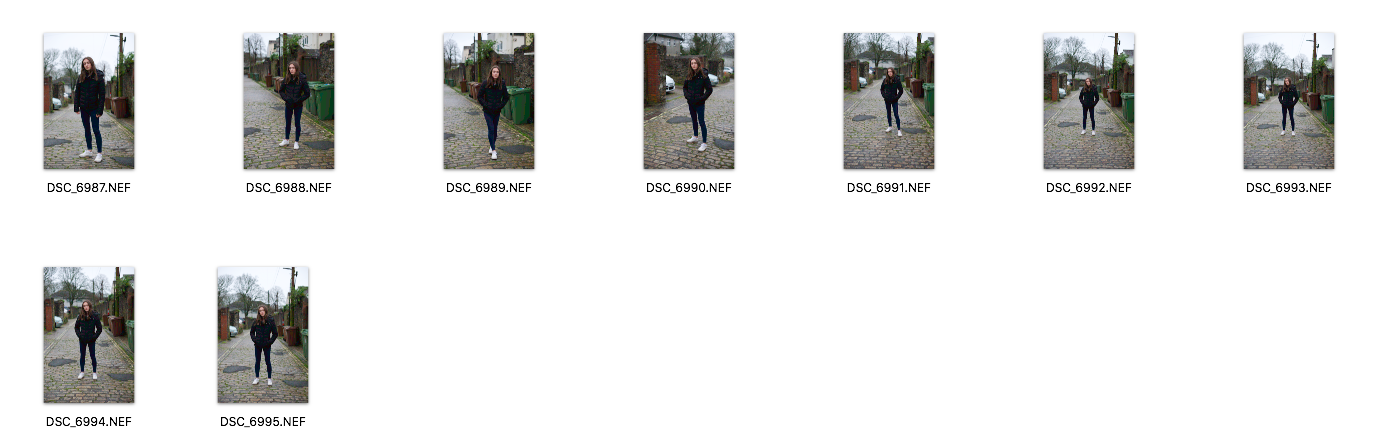
SHOOT 3

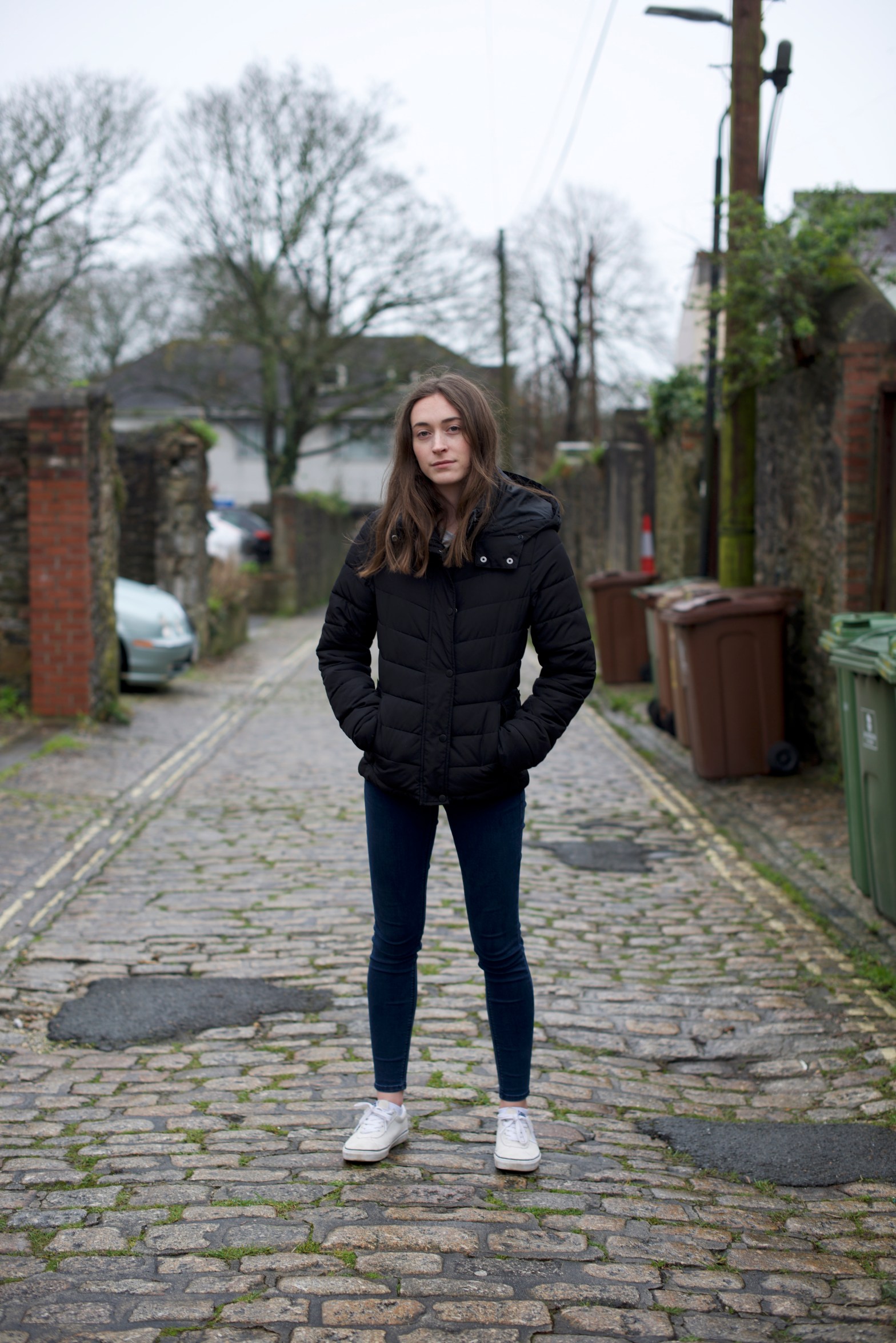
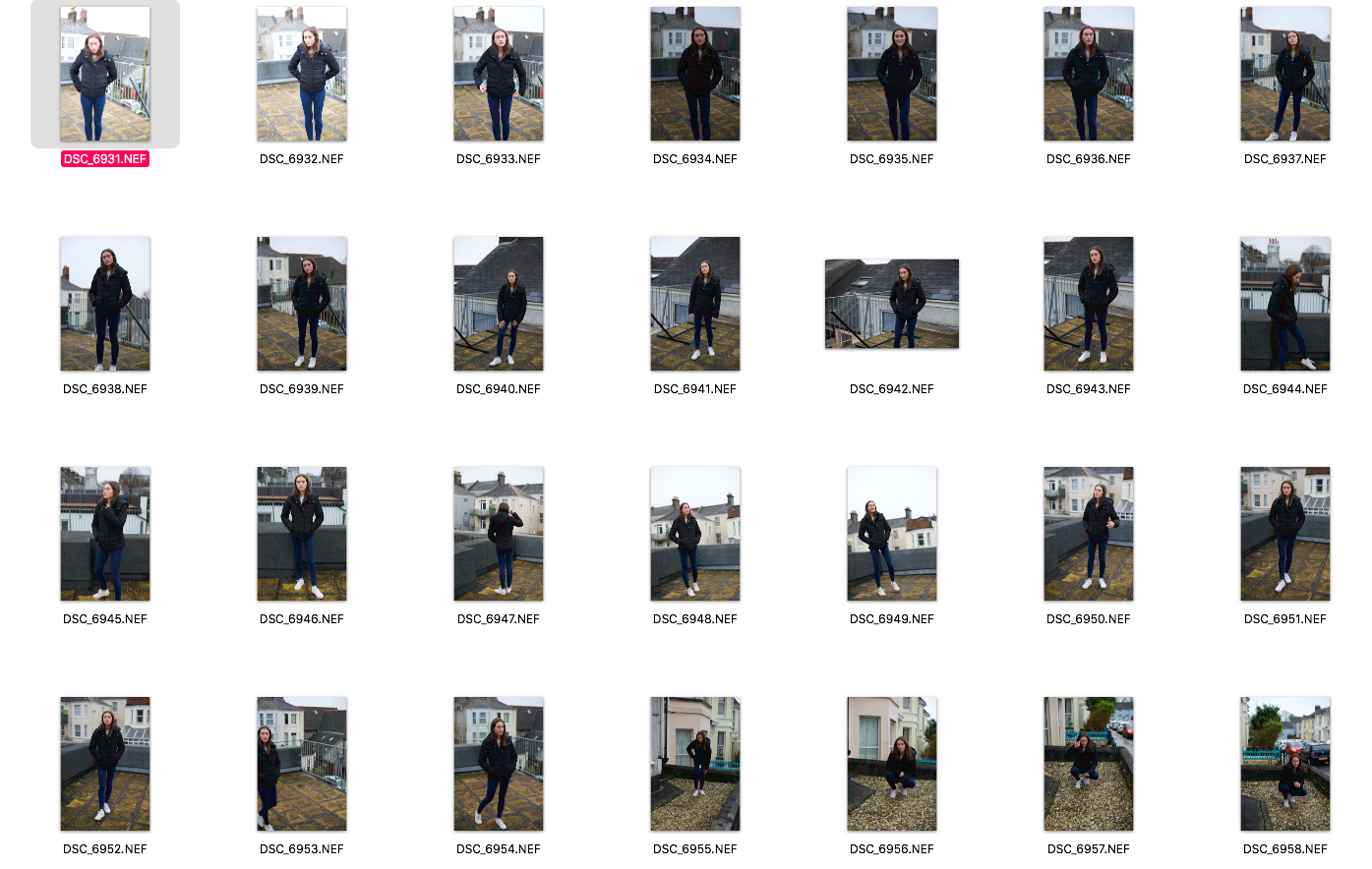
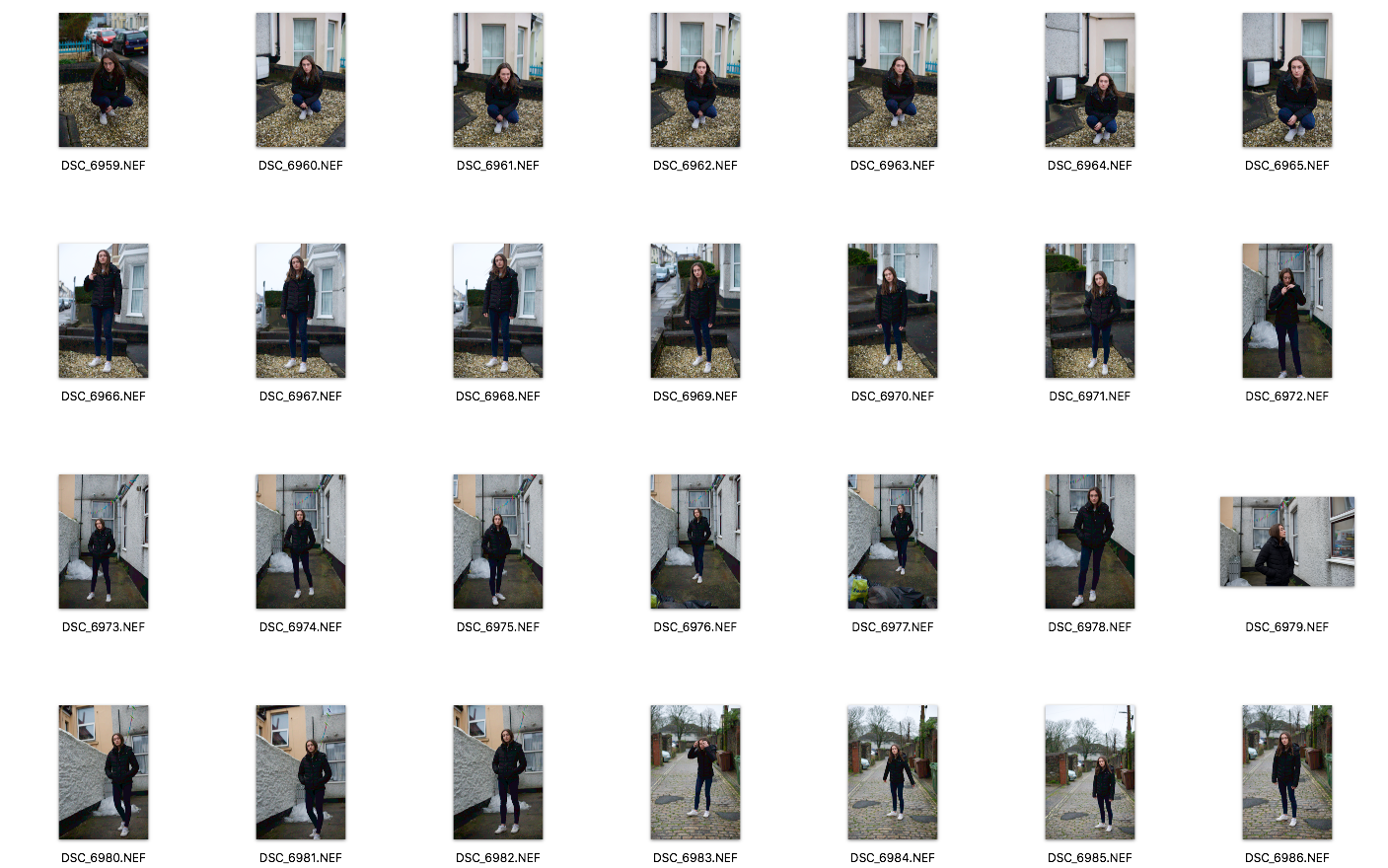
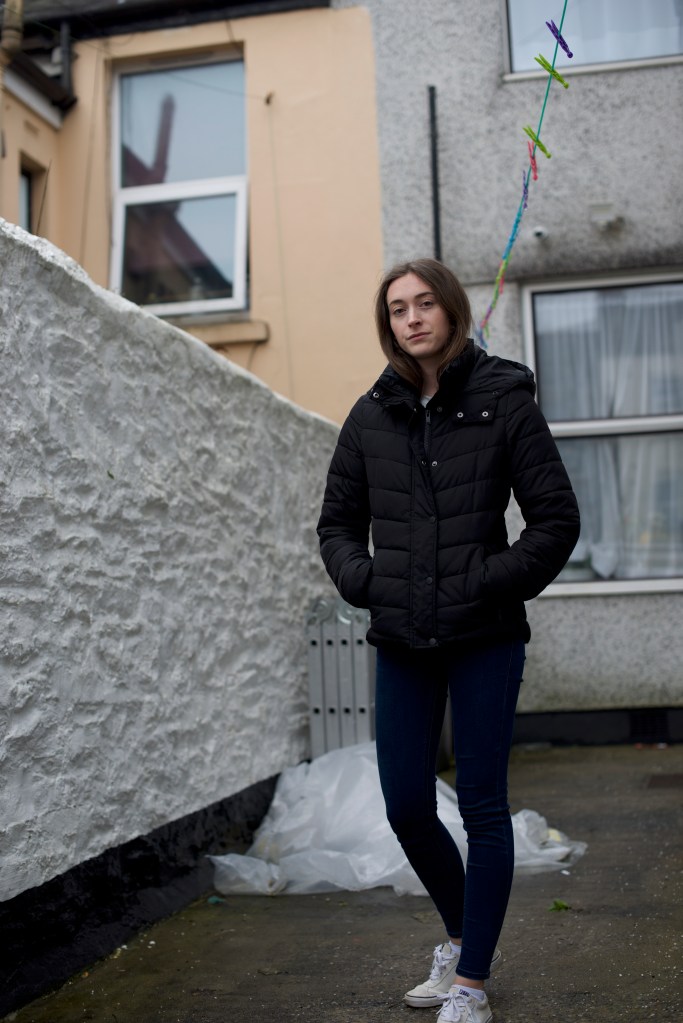
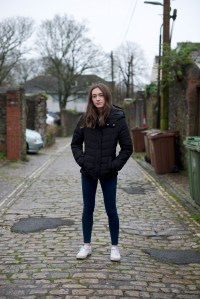
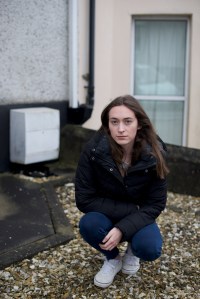
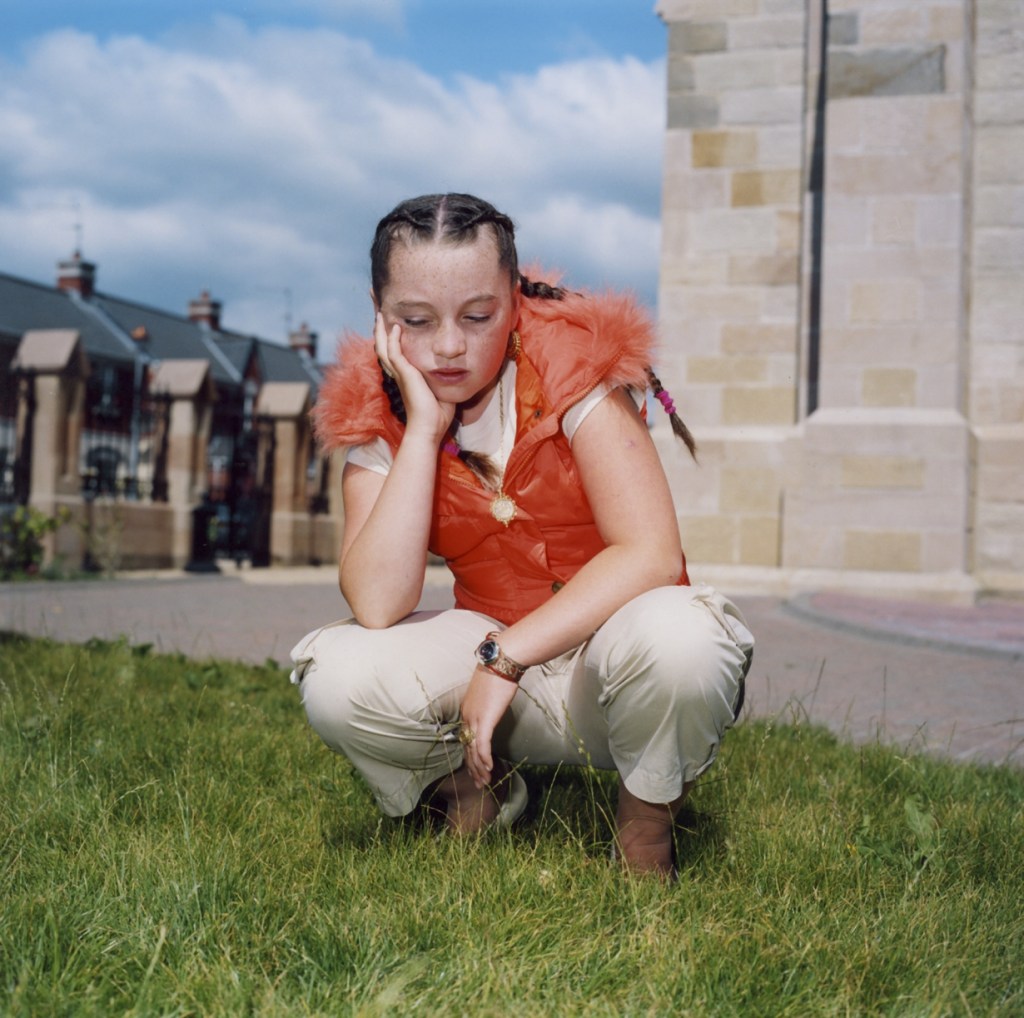
For this shoot I was inspired by Michelle Sank’s work. This is still initial stages of my work so I used my house mate as my model. So far I have shot in interior locations, so I am going to try exterior images. Sank’s ‘Teenagers Belfast’ project consists of portraits taken outside and this is what made me intrigued to try this.

I used our house as the location as it was familiar space for the subject. I wanted to make the subject feel comfortable in order to create a natural expression.

Michelle Sank was my main visual inspiration for this shoot. In most of her photos the subject looks into the camera, creating this connection between them and the viewer. They are posed differently and this makes me think Sank allowed them to pose how they wanted. Because of this I gave very little instruction to the model in order to have the similar natural affect. The difference in Sank’s work is colour. The colour in her portraits really stands out and grabs my attention. It was an overcast day when I was shooting, my model wore dark colours and nothing in the surrounding was very colourful. This created dull images in comparison. It could be seen as more effective though, maybe the gloomy skies could represent the subject mood.

There was many influences from research in this shoot. My theoretical research about relationship between viewer and subject showed how important that relationship is on the mood of the image. This is still early stages so I experimented with a different idea. Normally I am friendly towards the subject but this time I was a little more reserved. She lived in the house so she already had this connection with the place, so I didn’t give much instruction or talk very much. Already, I can see this made a difference. She acted a little more awkward and more reserved towards the camera. This leads me to my research on Rineke Dijkstra. I took my time waiting for more natural moments like she did. This worked in some images but in most just made her feel more awkward and this wasn’t really the atmosphere I was aiming for in my work.

VISUAL RESEARCH – Michelle Sank

Michelle Sank is a photographer based in England. Her work is a social documentary of the human condition. She looks into issues around social and cultural diversity.

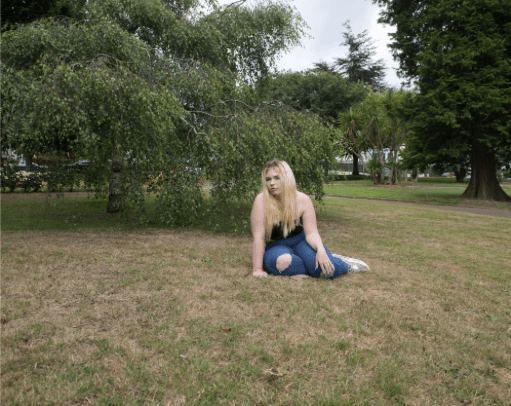
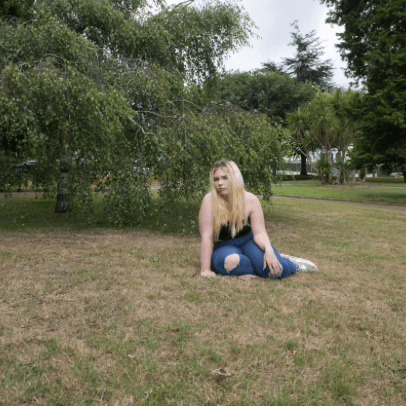
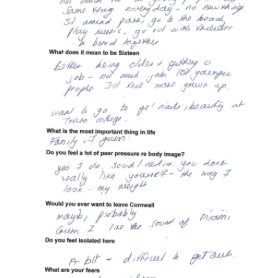
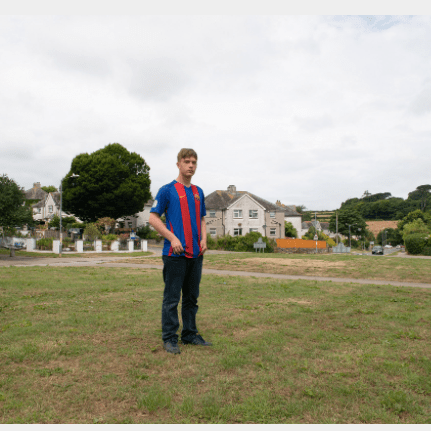
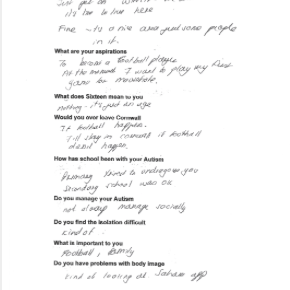
The first series of hers that I am interested in is ‘Sixteen’. She was documenting what it is like to be 16 now. She focussed on Cornwall where she could explore the economic poverty and physical isolation. The series is really interesting as she incorporates text with it. The images alone are fairly simple. The subject is sat or stood in a location, usually looking at the camera. Some feature other people with them, perhaps important people in their lives. They look comfortable in the locations they are posed in so they might of chosen them themselves. What I like is that the images can only show so much about the person. The text that accompanies it lets you understand more about the subject and feel more engaged in the image. Adding media other than photography can add more depth to the work.

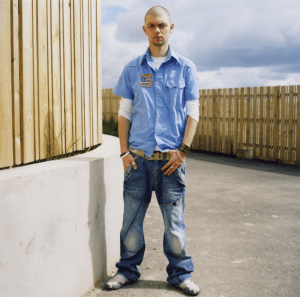
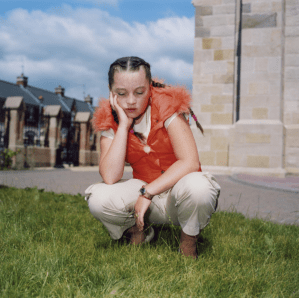
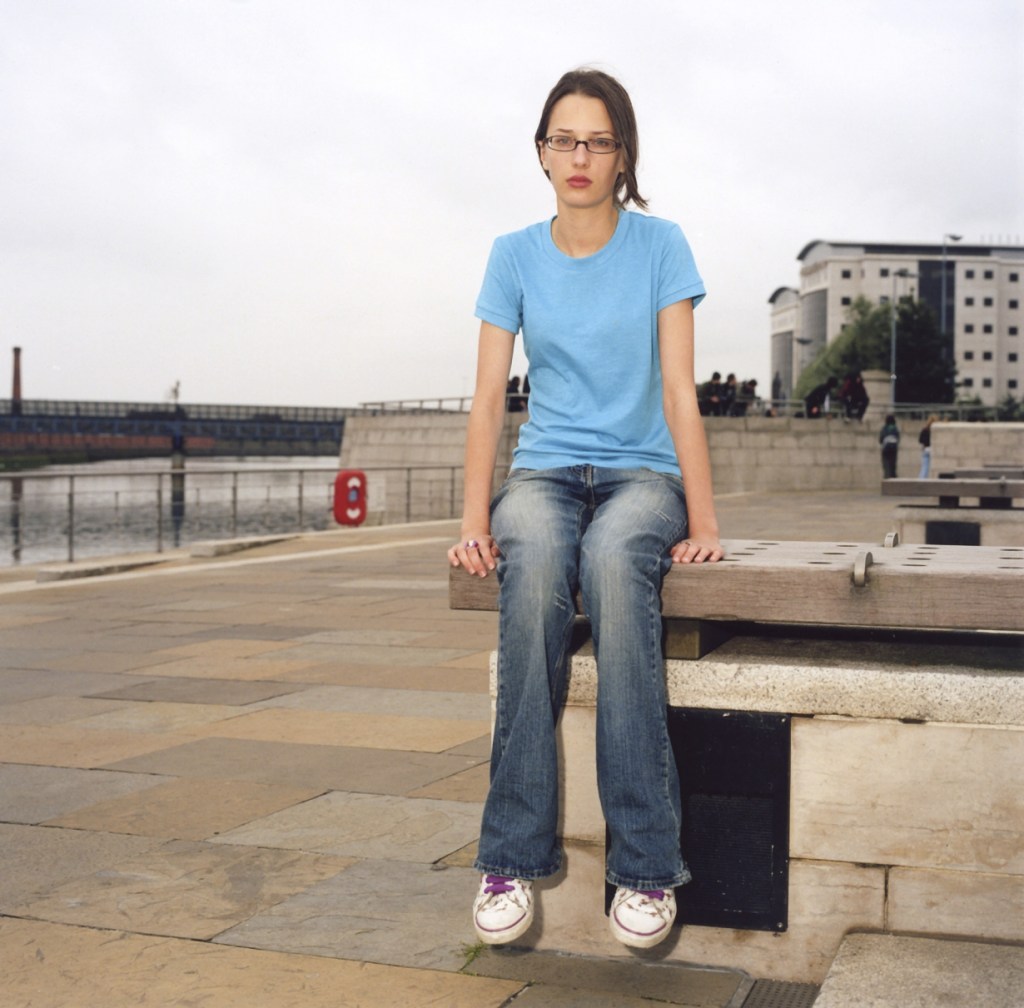
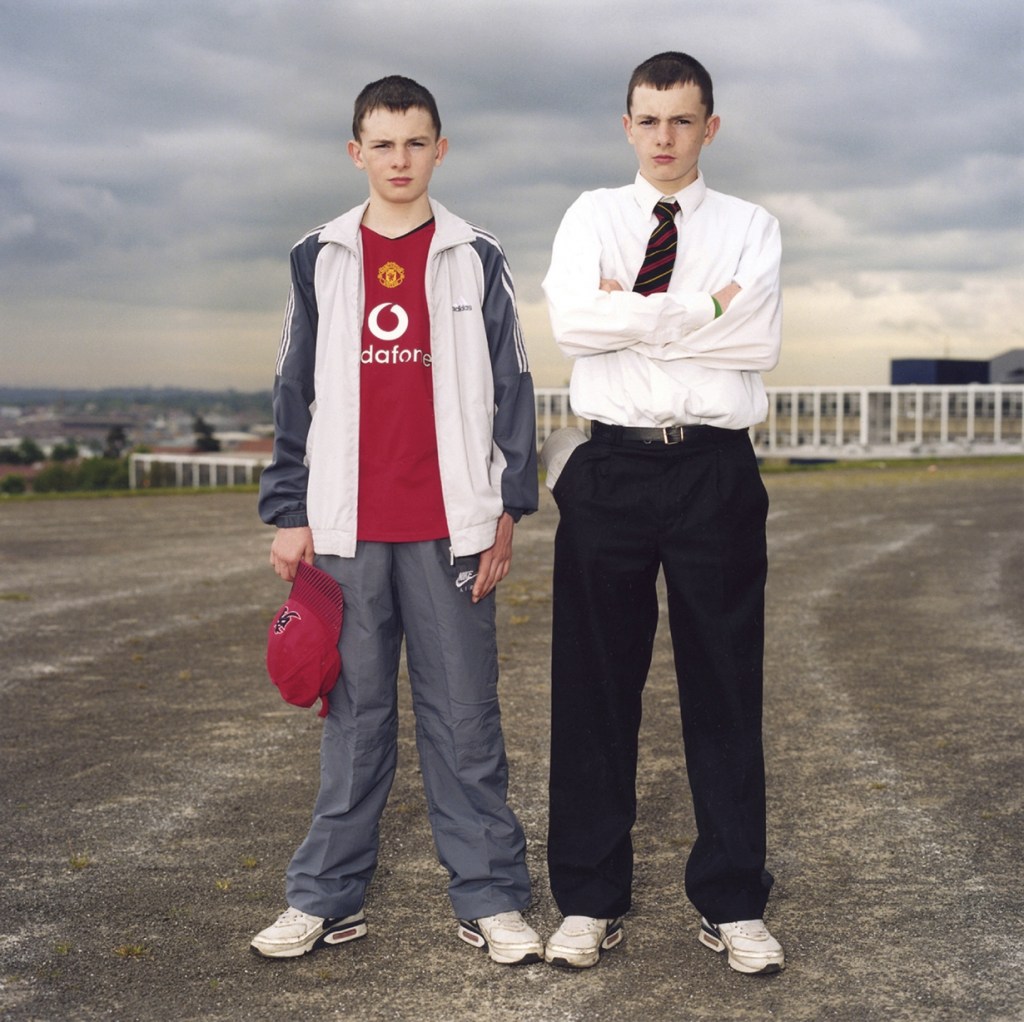
The other series I am particularly interested in is ‘Teenagers Belfast’. This was a commissioned work by Belfast Exposed Gallery. It was intended to ’empower these teenagers with a sense of individuality and to locate them within environments that bear no reference to the political struggles’. These images have inspired me visually. Each person looks moodily into the camera, they each pose differently suggesting ideas about them. For example one boy stands with his arms crossed in front of him, it looks as if he is doing this to show his authority.

The way she has photographed is really effective. The shallow depth of field means the subject stands out, but she is far enough away that you can see the background and surrounding area. A flash or some kind of artificial light must of been used as there is no shadow on the subjects. I like this as you can fully see the details of them and their expressions. These details are what make you begin to make assumptions about who they are.

Looking at Michelle Sank’s work has been inspiring. There is a few ideas that I would like to try out such as the text accompanying the images. She has also done a lot of portrait projects that I am going to use as visual inspiration, especially the Teenagers Belfast project. I will experiment with a flash and see if this is more successful.

VISUAL RESEARCH- RINEKE DIJKSTRA

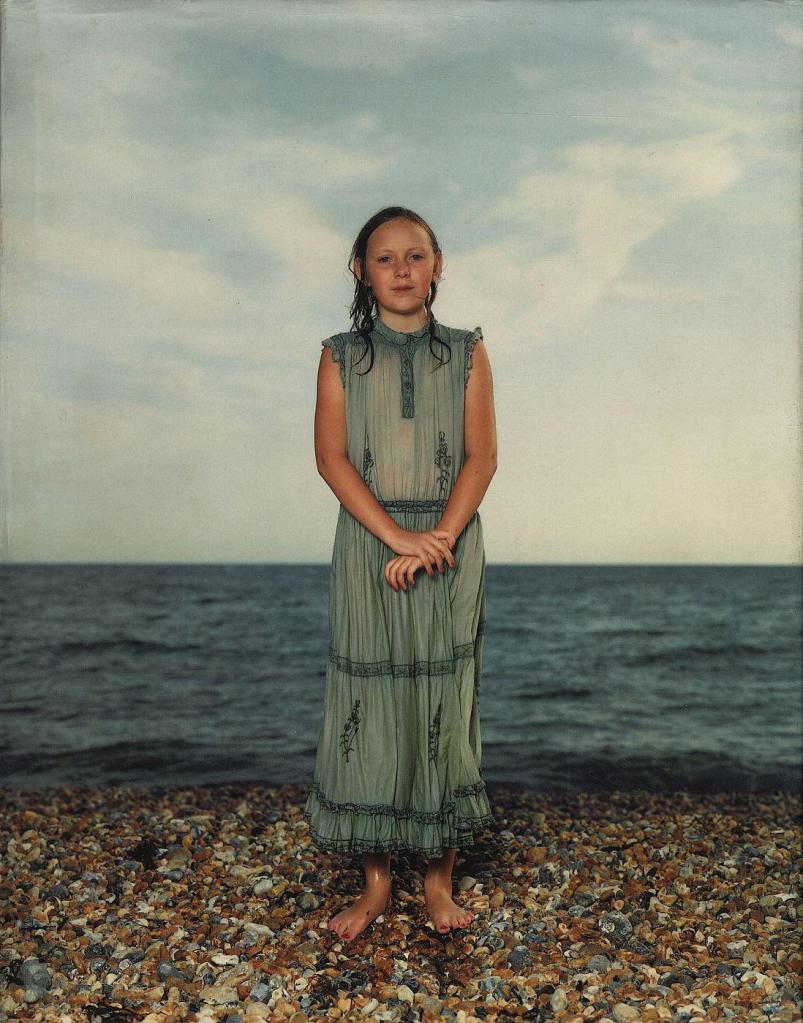
Rineke Dijkstra is a Dutch photographer, known for her portraits. She produces large scale. She looks into different groups of people, such as adolescence, bull fighters and women who have just given birth. The large, simply composed portraits mean the viewer can really engage with the subject .

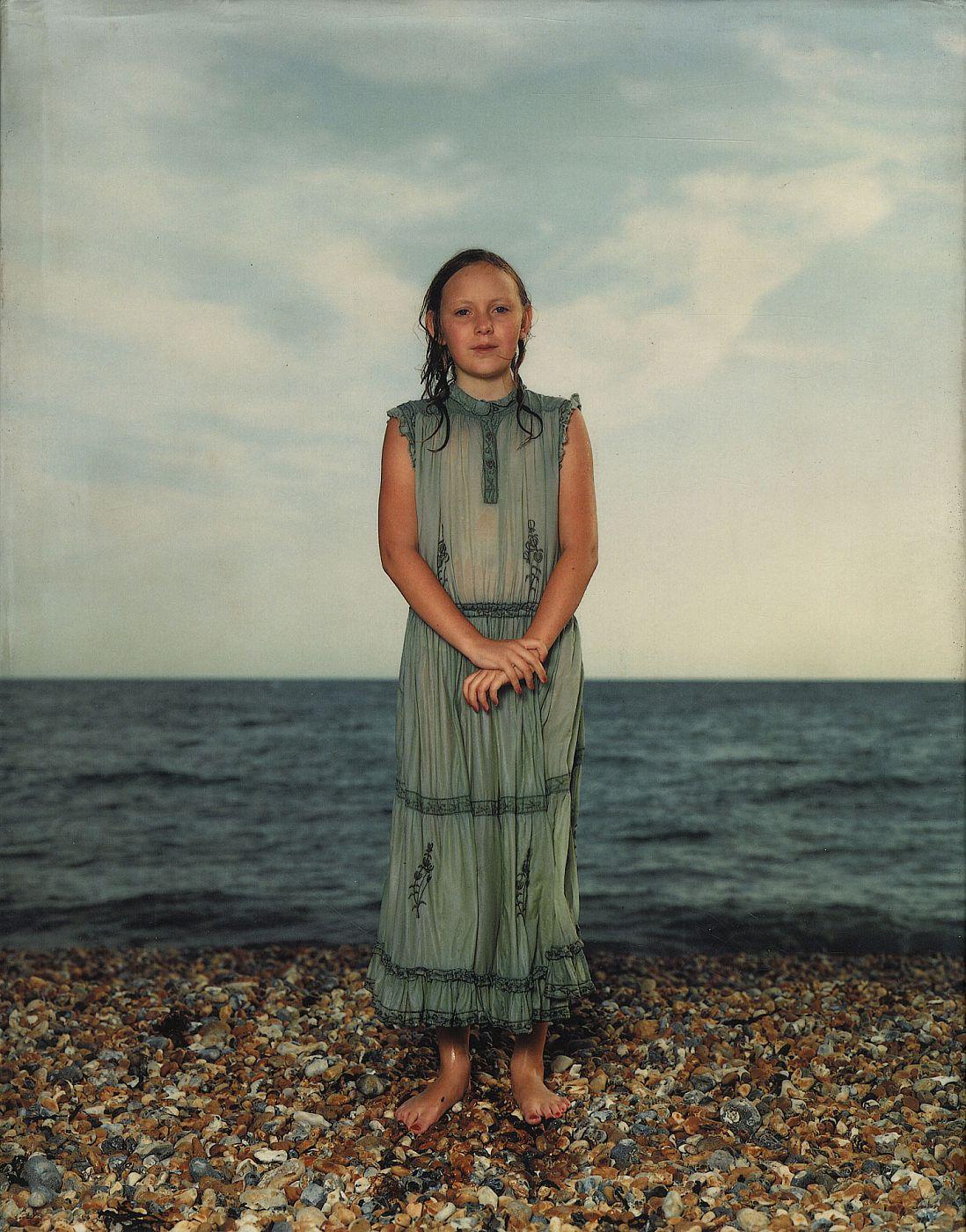
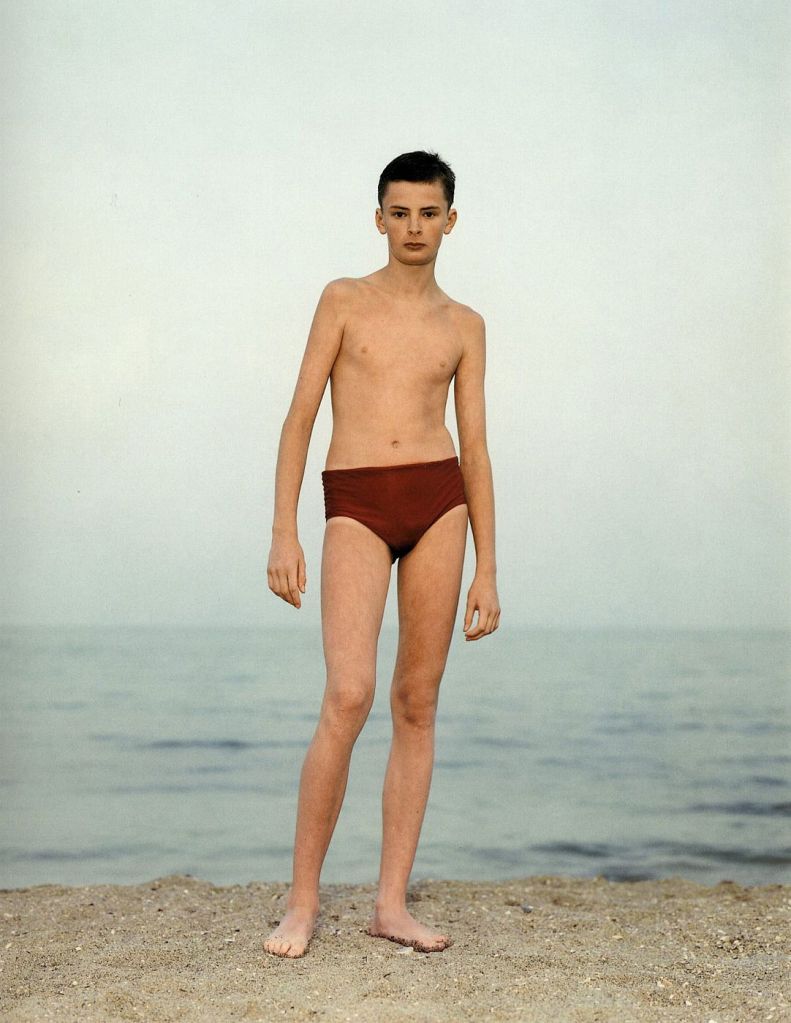
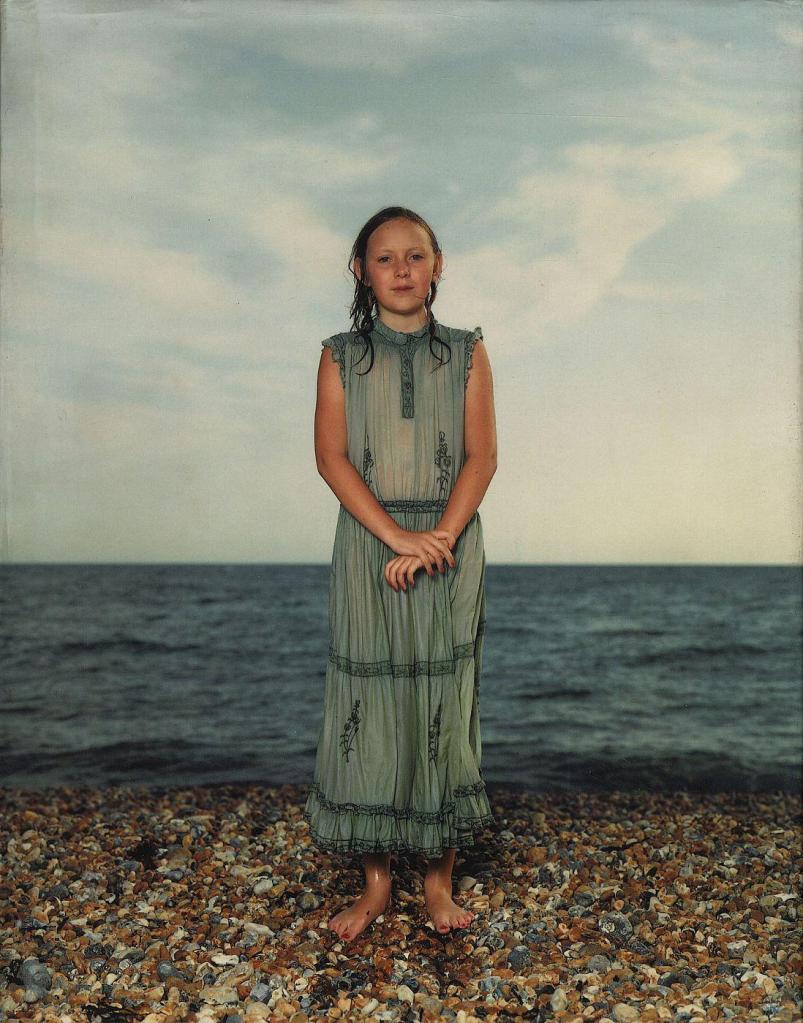
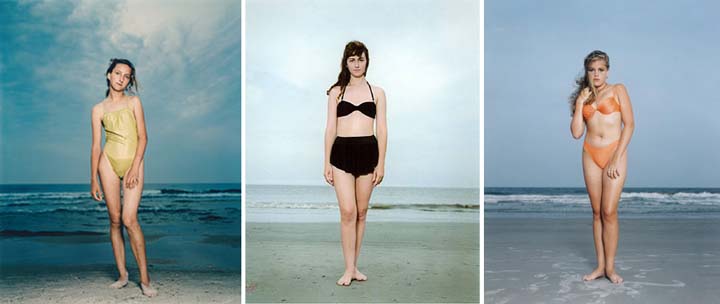
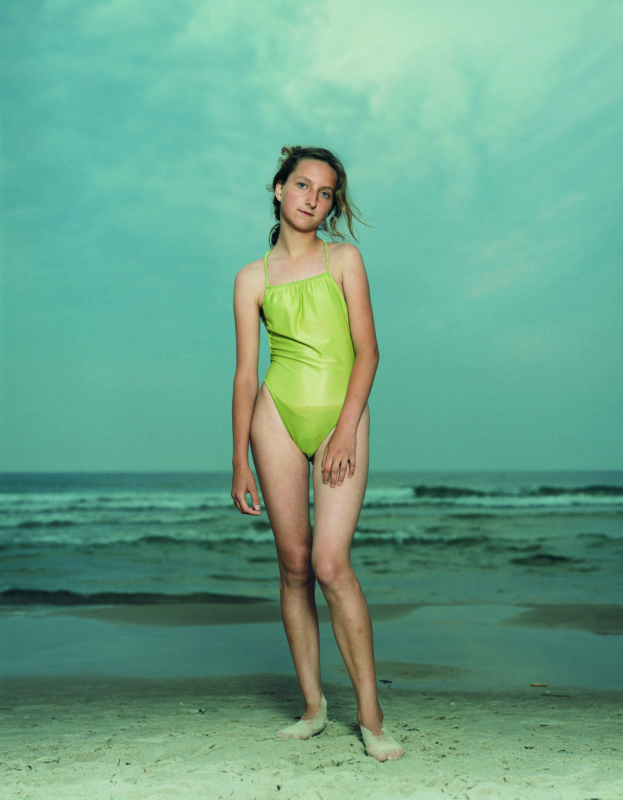
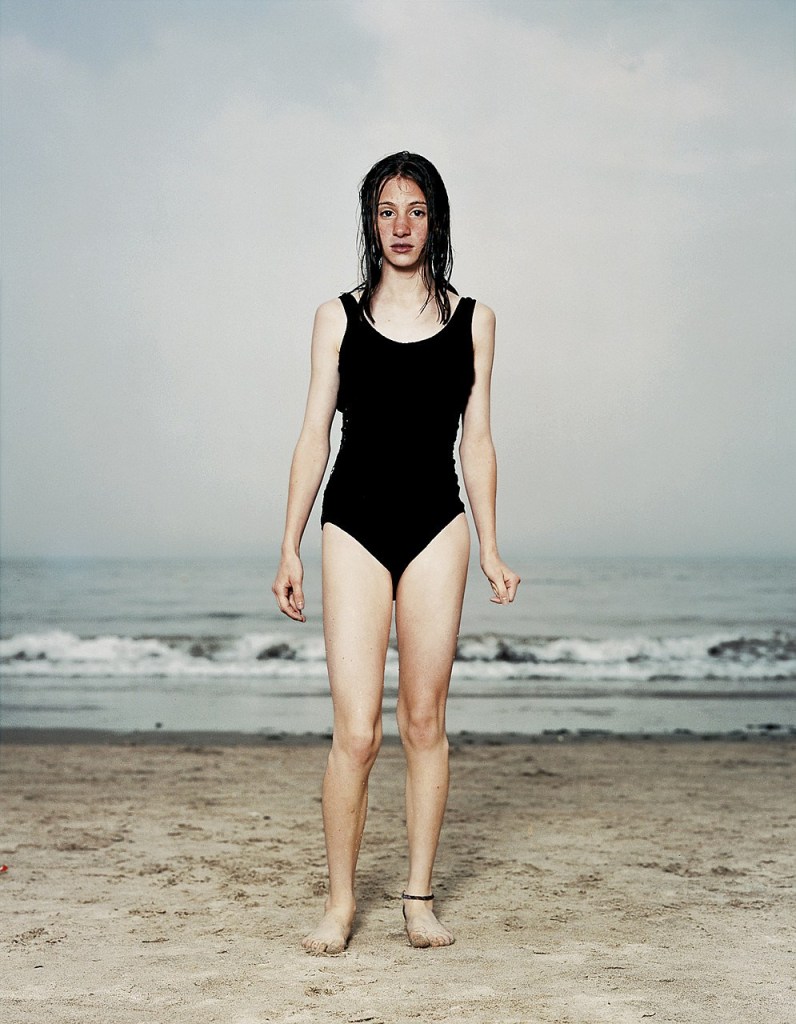
The series I’m most interested in is her Beach Portraits. She explores young people from around the world, posed on a beach. Like what I am exploring, she looks at the awkward stage between childhood and adulthood. The way she documented these people is really clever. She uses a flash which means there is no shadow and makes the subject stand out. In an interview, Dijkstra says that by taking people out of their context, it is just about the subject. This means you can focus on the details. Also putting them in that setting can make them feel uncomfortable, you can see this by the way they are stood, such as raising shoulders slightly. She also waits for a moment when they are more unaware so they appear more natural. She says, “I don’t want a pose in which people comply with a certain image [that] they try to control and that reveals only the intention of how they want to be perceived…I wait for a moment in which they display a certain introversion.”

What is interesting about the series is that although they are taken in different countries at different times, the plain background on sand and sea gives no indication of were it is taken. It is interesting that they are taken far apart from each other. Each person probably has completely different lives but they are all similar in their awkward, teenage phase.

The left and right photo in the images above are really interesting to compare. They look different, as one wears a bikini whereas the other chose a swimming costume.The left girl looks a little more awkward and not as confident as the one on the right. This is indicated by the way she has raised her hand to her hair. Again there is little information on where these photos were taken but what is intriguing is that they are posed very similarly. They both have one leg slightly in front of the other, a hand on one. One shoulder slightly raised. This could be because through things such as the media this is how they think they should pose. As they are getting older they are becoming more aware of how they should represent themselves.

SUBJECT RESEARCH – BECOMING AN ADULT AT 21

It is important that I understand the message I am trying to portray in this project, therefore subject research is essential. From my initial research I understand there a lot of different challenges being in your 20’s and many changes. What I have always found interesting is that 21 is the age you are defined as an adult. 18 brings a sense of independence as you are legally allowed to more things but I think at 21 there are more exceptions of what you should be doing and how to act.

Looking back at history, the age of adulthood in the bible is 20. Before World War 2, the age in USA and UK was 21 (this is because this is when you could become a knight).

21 is now the highest world legal adult age of majority. Also a lot of laws (mainly USA) affect people below 21, such as drinking and gambling. But is adulthood only defined by the laws and things you can now legally do? I looked at online blogs and forums to see if there was a difference between the ages of 18 and 21 to see if there was anything that made people more of an ‘adult’.

An obvious difference is how you act. Being 18 you can now drink, smoke, and others thing you couldn’t do before. Its an exciting time and I think as they haven’t been able to do these things before, they make the most of it. I know from other peoples experiences, you start partying loads when your 18 and by the time you’ve reached 21 your almost bored of it.

By 21 more people have full time jobs. Many people have part time jobs at 18, but less of a responsibility. Some people who haven’t gone to University are in careers, saving for a house, having a car on finance and other big commitments. Using the financed car as an example, you really can’t commit (or even be accepted) for such a big commitment until you are an ‘adult’.

From personal experience I can understand why 21 is an important age. I agree with the blogs I read that at 18 people are more reckless. Being allowed to go to clubs and drink for the first time was really exciting and led me to go out every weekend. I had a part time job I cared little about and I wasn’t really thinking ahead financially. I cared about having enough money to buy the things I wanted.

Now I’m 22, I do still like going out but not as often. I have a job that I work as much as I possibly can, this is because I’m thinking about the future, saving for a house, better car etc. Because of this mindset this is why 21 feels so much more grown up.

THEORETICAL RESEARCH – RELATIONSHIP BETWEEN PHOTOGRAPHER AND SUBJECT

The relationship between photographer and subject can be just as important as just the subject being in the frame. Even subconsciously, you are portraying your own thoughts on the subject into your work. ‘The subject usually faces the camera, and the contrast between subject and photographer hangs palpably in the air that separates them. It is across this agreed-upon distance that all sort of power relationships and tensions between or among the people involved are negotiated. The picture itself records this exchange.’ This quote from Roswell Angier suggests that an image is not just of the subject, it documents the relationship between them and the photographer.

Richard Avedon’s portraits are the perfect example of this. He did not speak to his models while he worked. He moved around the room, staring intensively at them. For many people, it led to photos where the subject appeared quite intimidated and uncomfortable. This would be quite the contrast compared to someone who walked in and was more friendly. Without even instructing the model, they would react to the situation in a different way. This shows that almost more than any technical aspect of the picture, the relationship between the photographer and subject will be more of an influence.

In some cases, having more of a relationship with the subject can be effective, you can add more emotional value to the work. In an article by Denise Keim, she wrote that when she was photographing, people often asked her if she was working for a newspaper. When she says it is for her own work the subject appears more natural and relaxed. ‘It becomes a more intimate experience, about me and them and the camera.’ As a documentary photographer, this isn’t always possible. There can be cultural difference and language barriers that stop you from developing the relationship with the subject.

‘Documentary photography is a medium of aesthetic expression in which form and content need to collaborate with the subject matter to capture an unchangeable image. This collaboration provides an active examination of contemporary society and a presentation of experiences to enhance historical and cultural awareness.’ The photographer has the freedom to express his own views about the subject to portray a certain message. How the photographer shoots will affect how the viewer reads the image.

I have read lots of articles about the relationship between photographer and the subject. They all say how important it is and that it can really change how the viewer interprets the image. Photography is so much more than just the technical aspects. In my project the relationship is very important. My work is personal and almost of me discovering who I am and what I should be doing. I need to make sure that I don’t portray any of my own thoughts when photographing people but at the same time, I can connect to the subject emotionally.

EXPERIMENTAL SHOOT 2

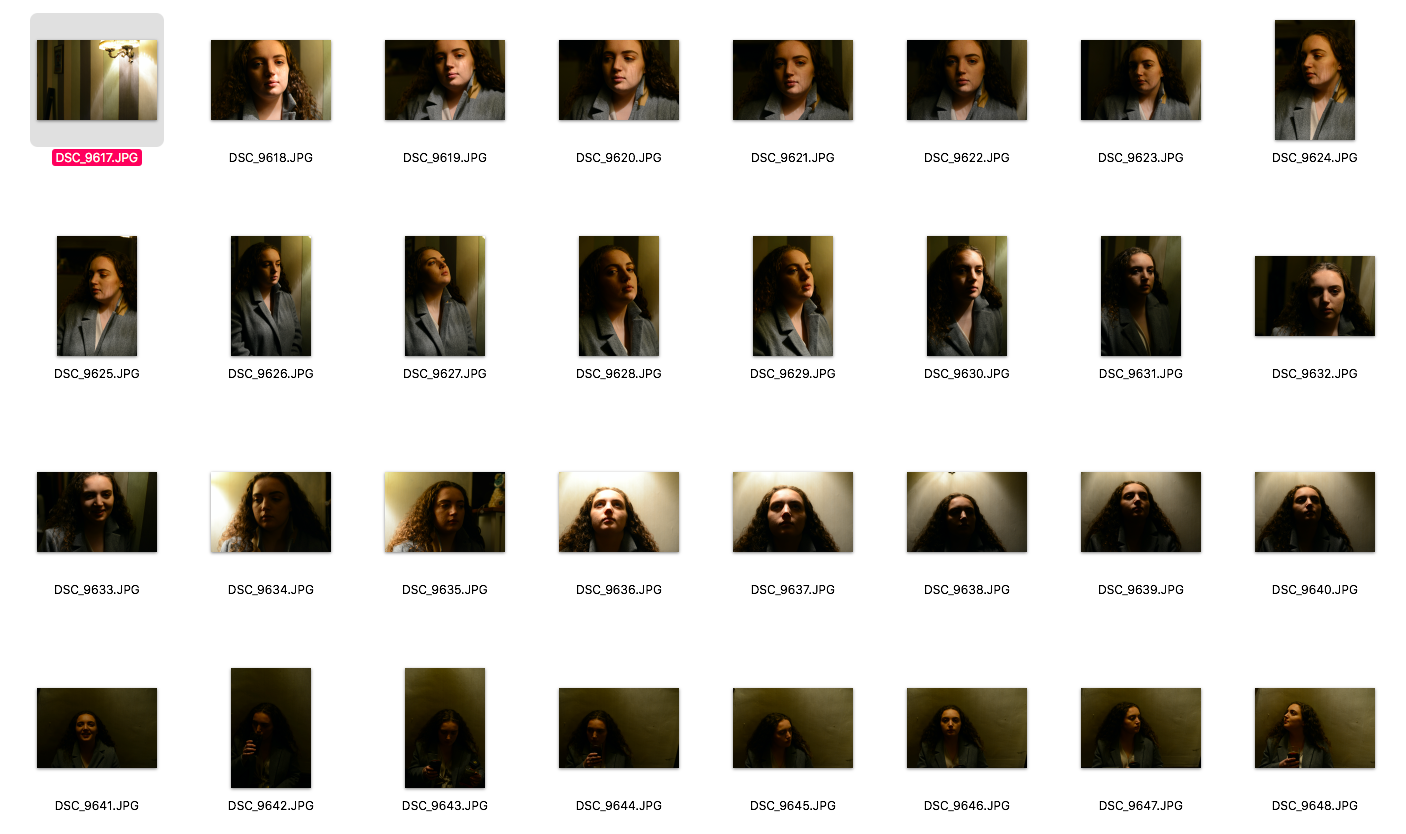
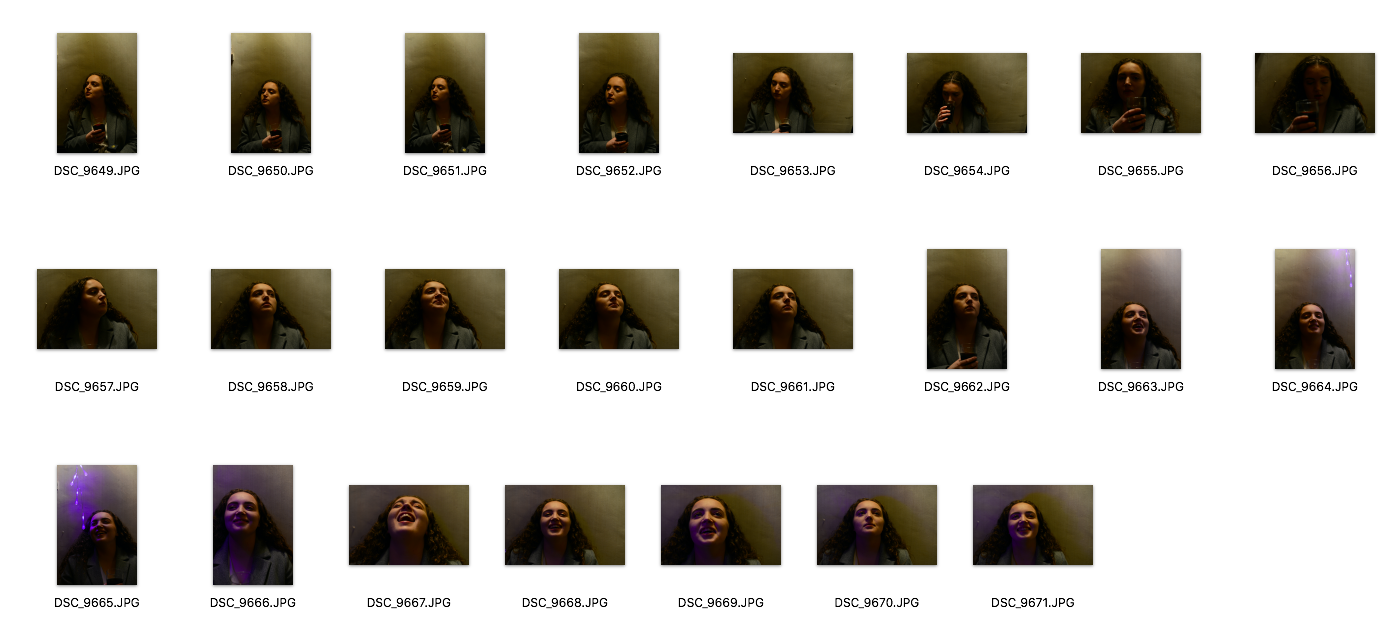
I decided that another experimental shoot would be useful. Through this project I will be photographing different people in different places. Although the first shoot was successful, I need to try more in different location and lighting conditions. For this shoot my friends had met at a friends house. This was the perfect opportunity to practice a shoot without much planning.

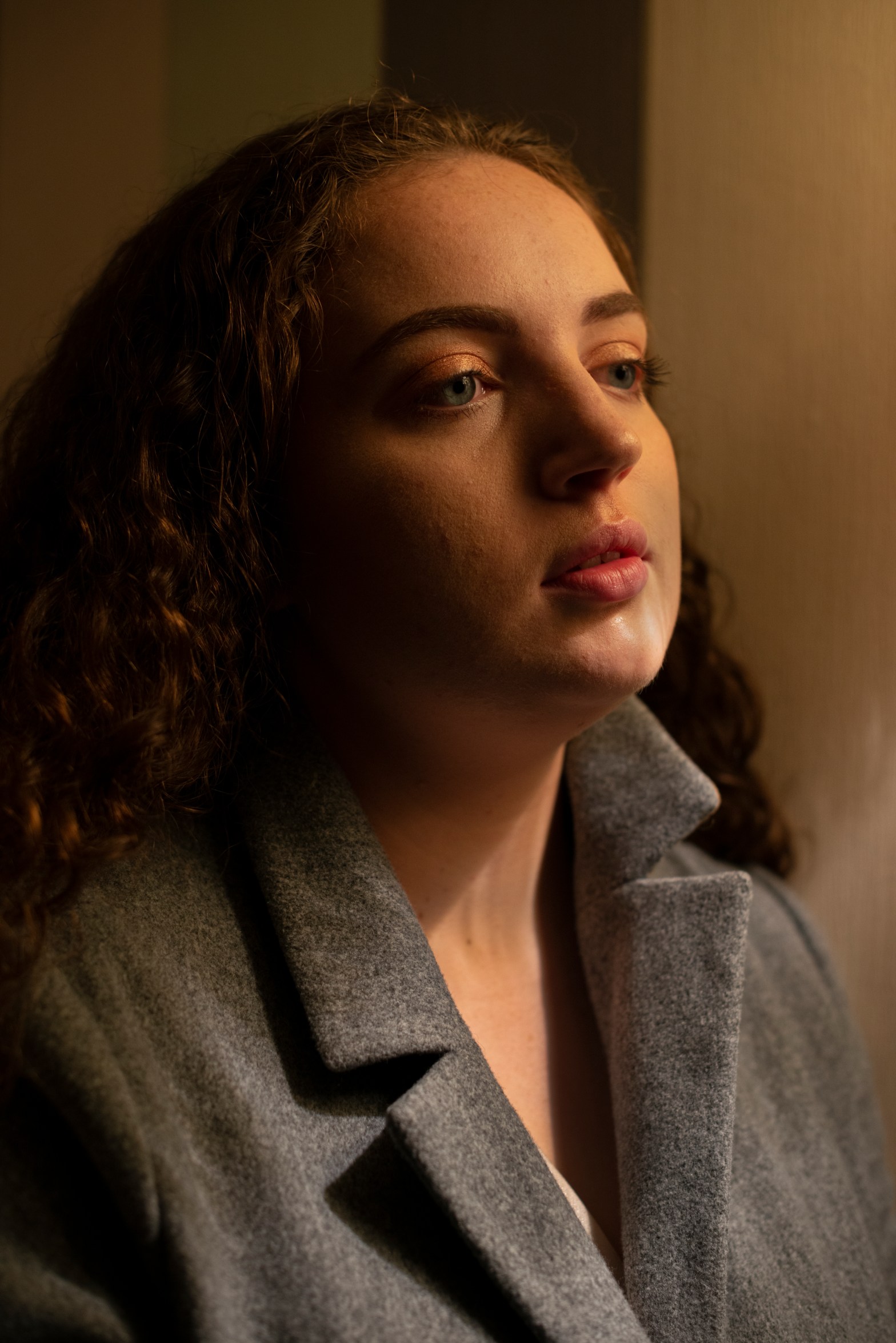
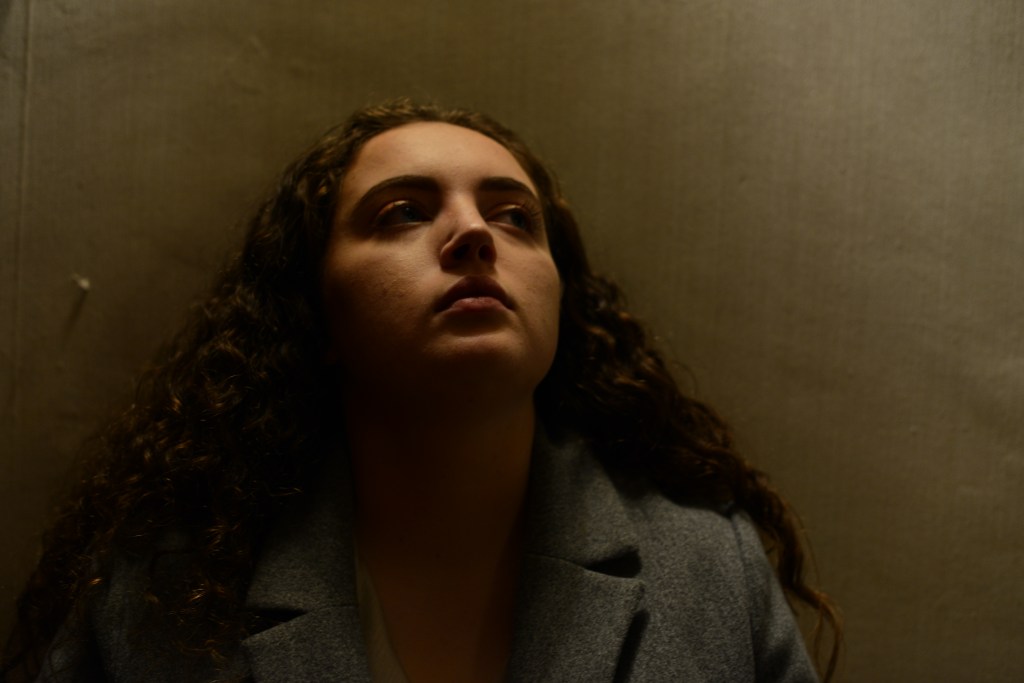
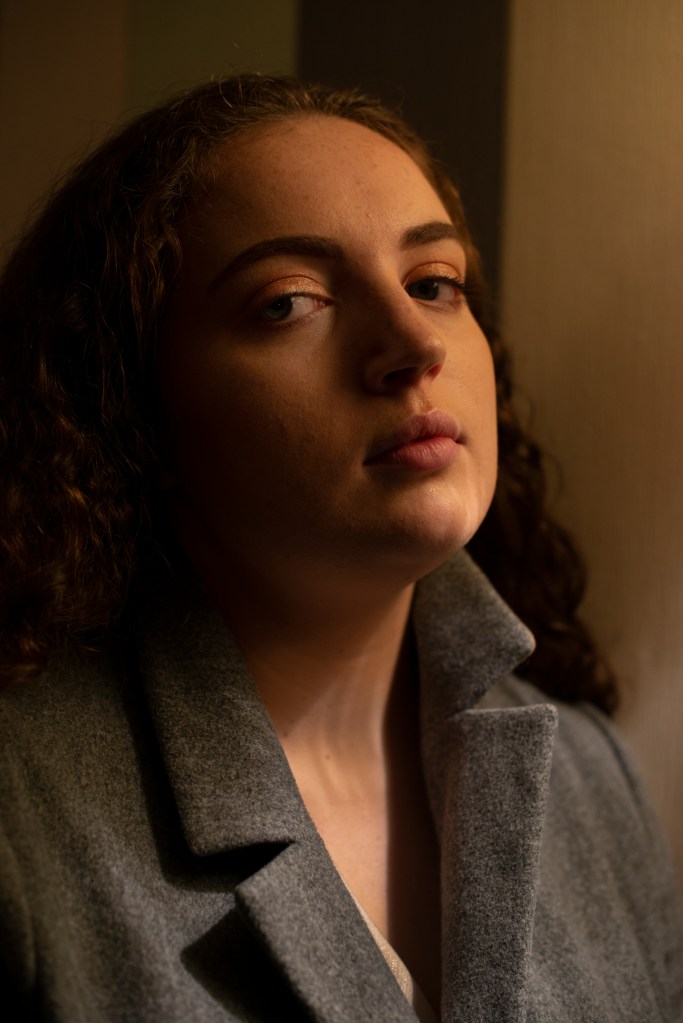
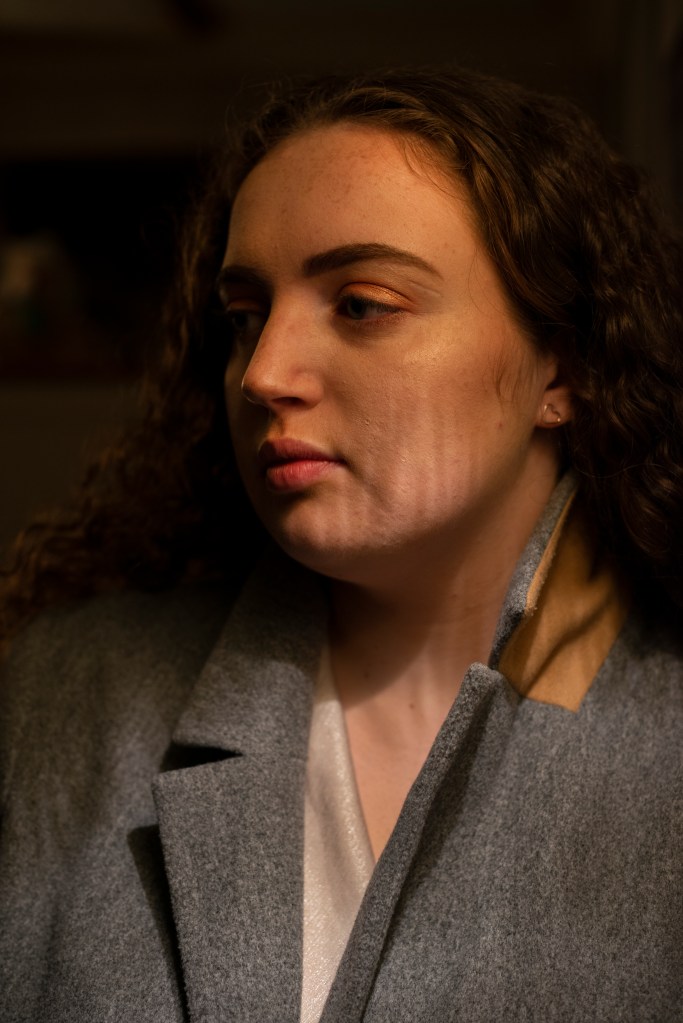
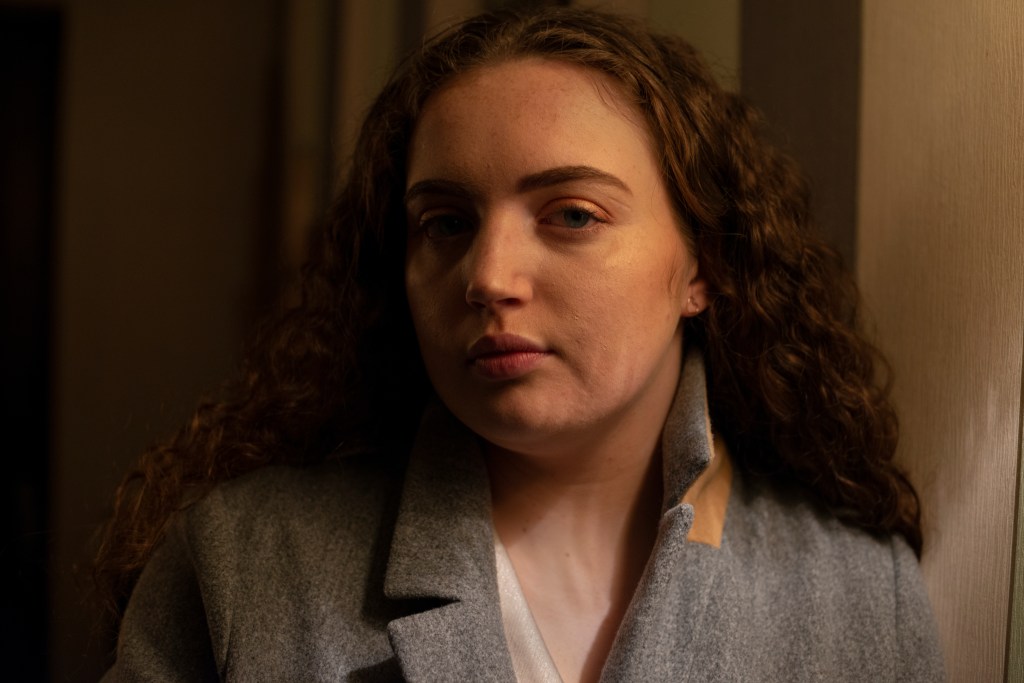
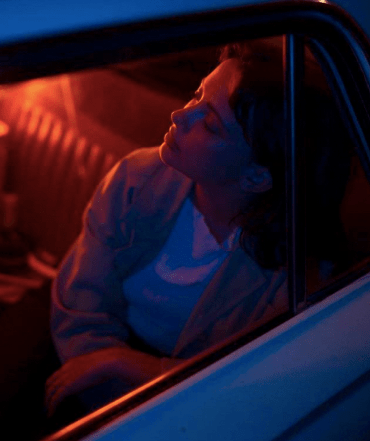
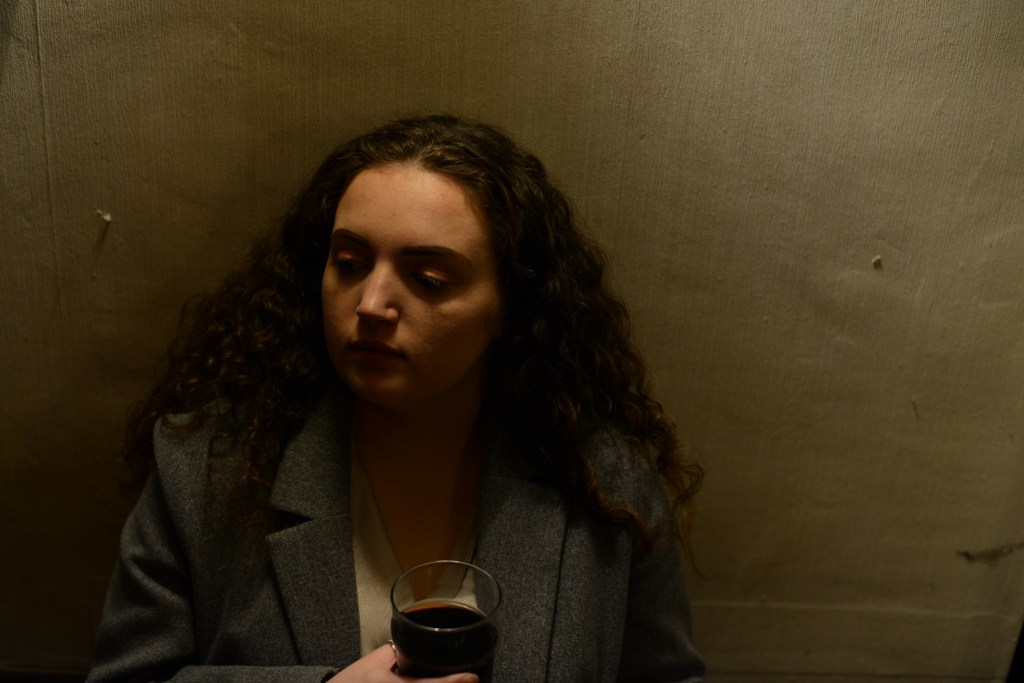
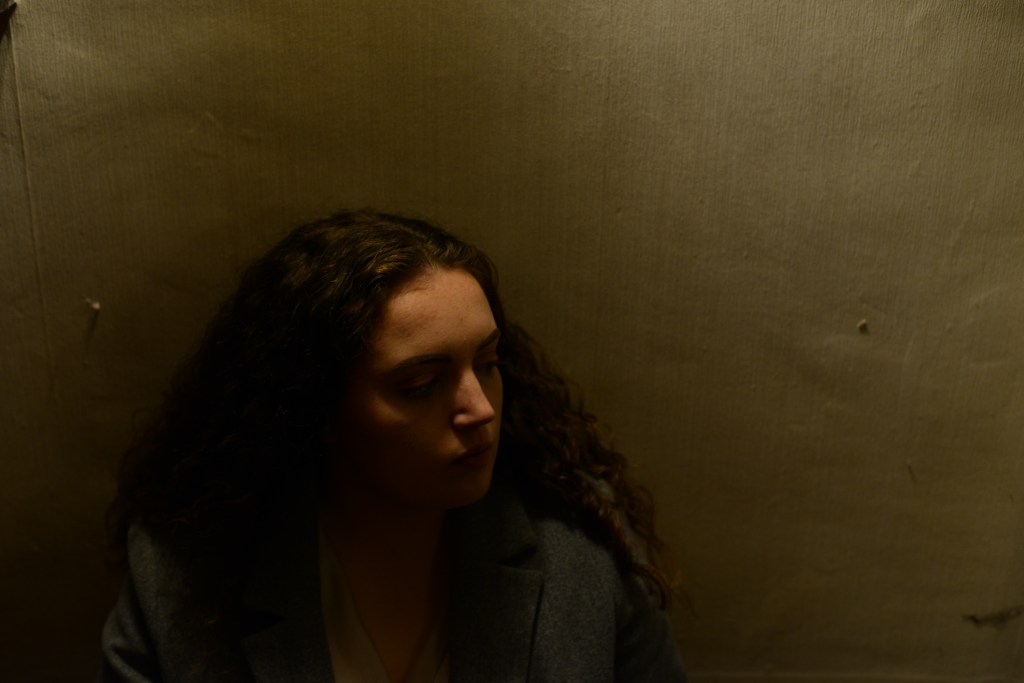
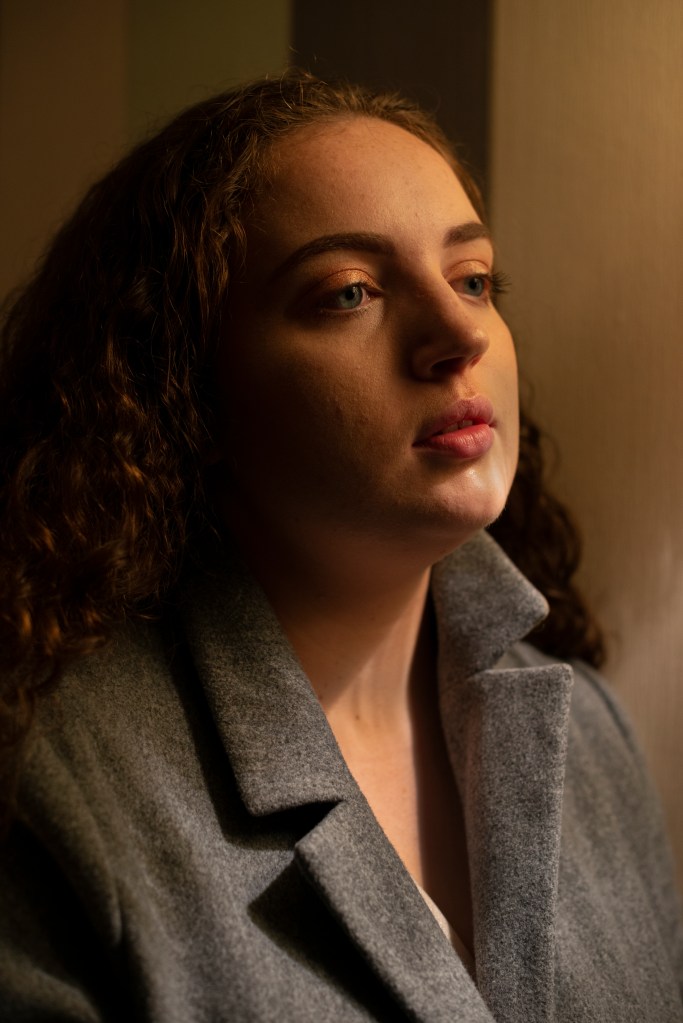
It was night so I had to rely on ambient light that was available in the room. There was only a few wall lights so I had the subject stand quite close to them. Once I had corrected the exposure I like how the light created some dramatic shadows on her face. We tried a few different positions to see if we could create more interesting compositions.

The main thing I struggled with in this shoot was creating a narrative of who she was and what she was doing. With the last shoot, Jordan was a gamer and this is clear to represent. Whereas my model here has recently finished university and not sure where to go next with her life. I thought the best way to portray this was quite gloomy looking images, with a blank facial expression. But I do not think this is clear in these photos. I asked a few people what they thought these images showed and no one was clear on its meaning. Again this is making me question my project and how I am going to represent this awkward stage of life. In both shoots I have gotten quite close to the models face, focussing on their features and expressions, but I think I should take a step back to consider their surroundings in the frame.

These photos are successful as portraits but again show nothing about the subject so would not work in this project. I like the style of portrait though as the lighting makes it quite atmospheric. It creates some interesting shadows on her face. I will consider other ideas on how to show more of a story in each of these shoots, firstly by taking my photos from more of a distance.

EXPERIMENTAL SHOOT 1

I experimented with my ideas of taking photographs of people in their 20’s. This was to begin shooting and start to develop a style.

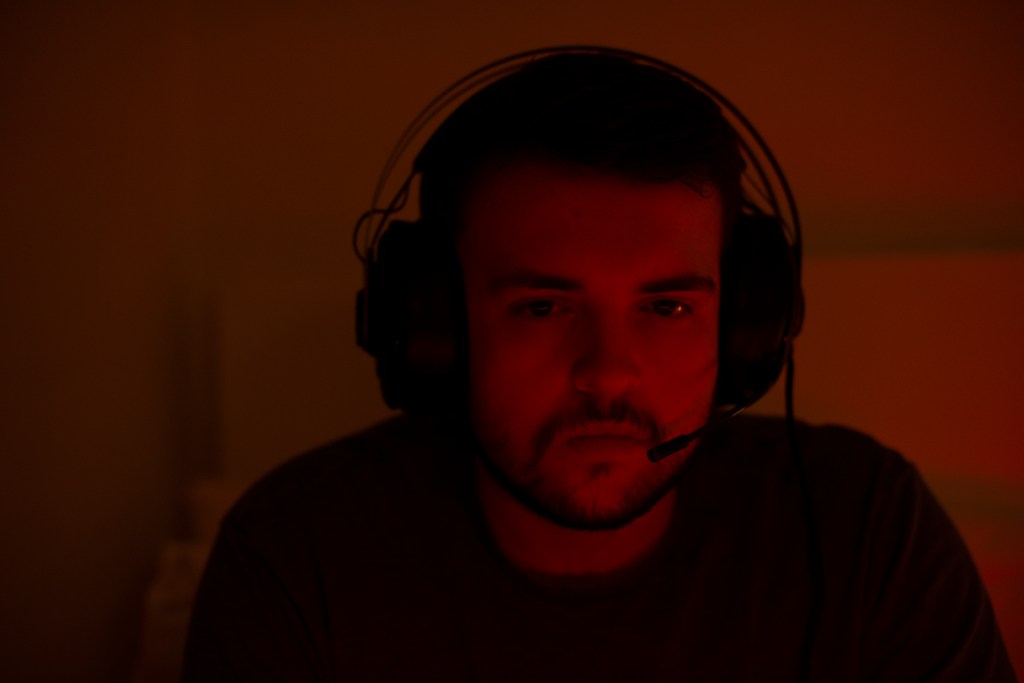
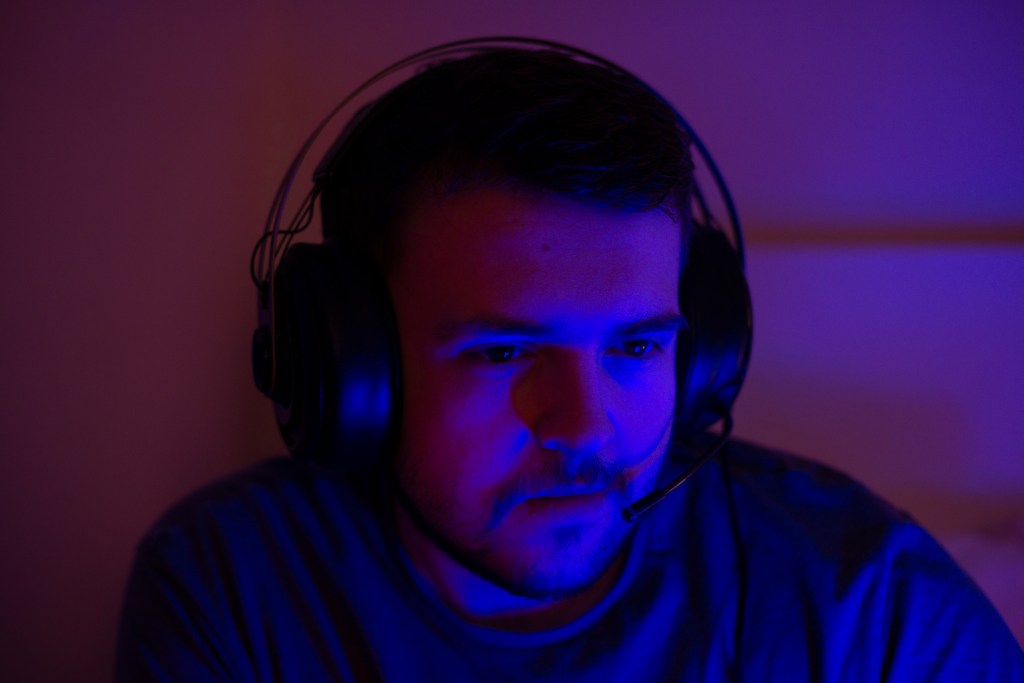
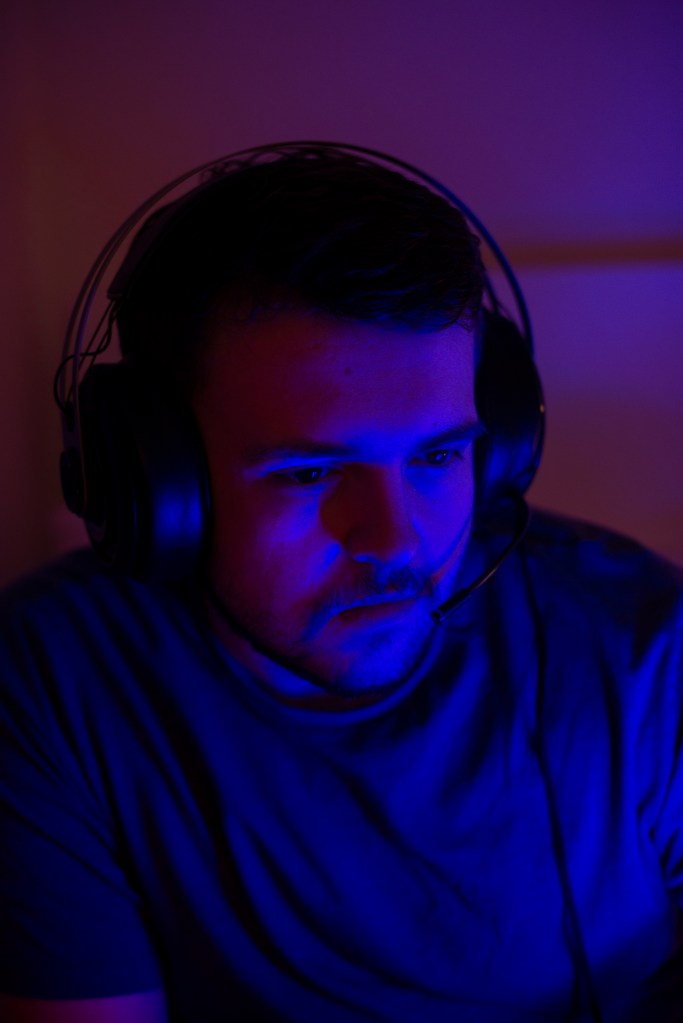
For this shoot I took photos of my boyfriend who’s main hobby is gaming. Even though he has a full time job, gaming is his interest so I think it represents him more than anything else.

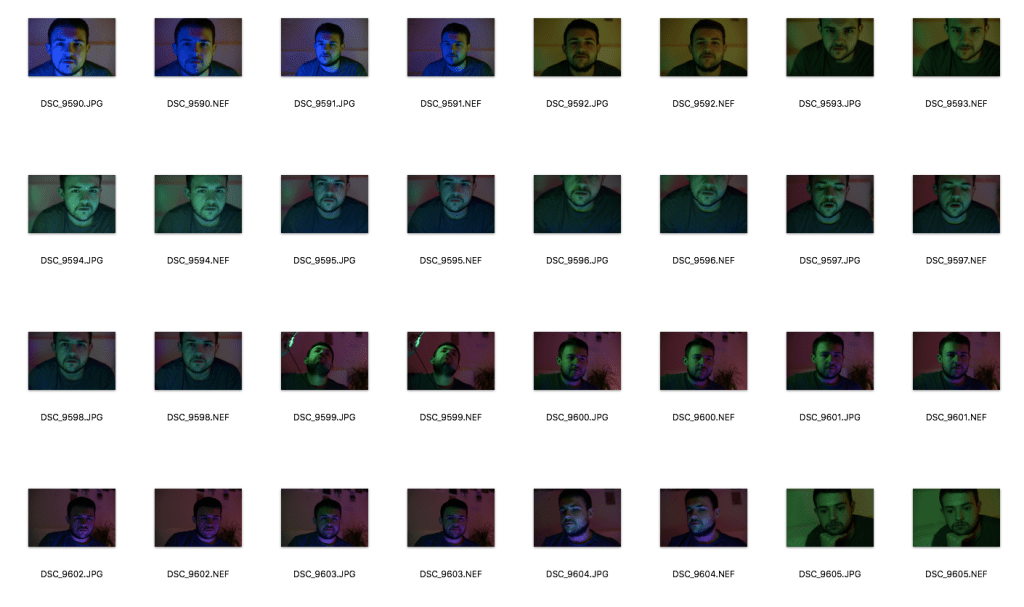
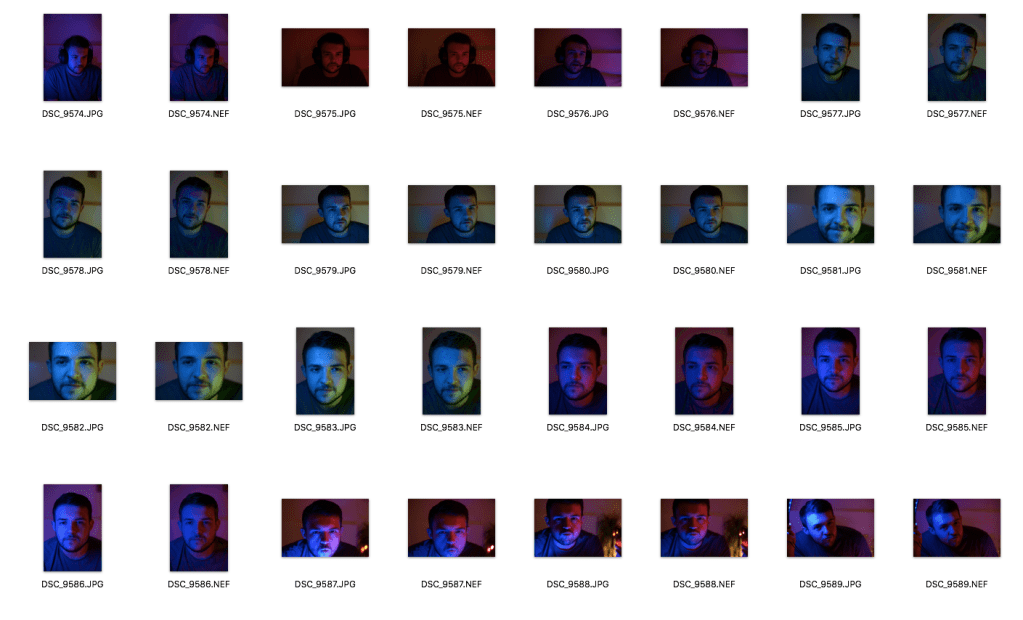
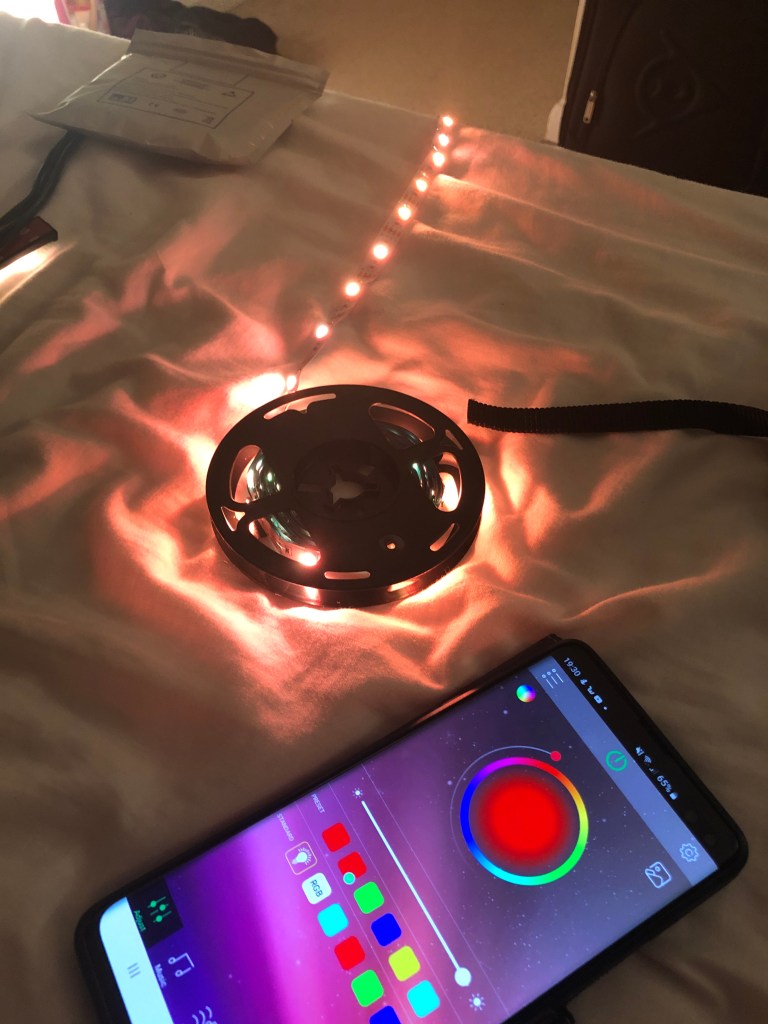
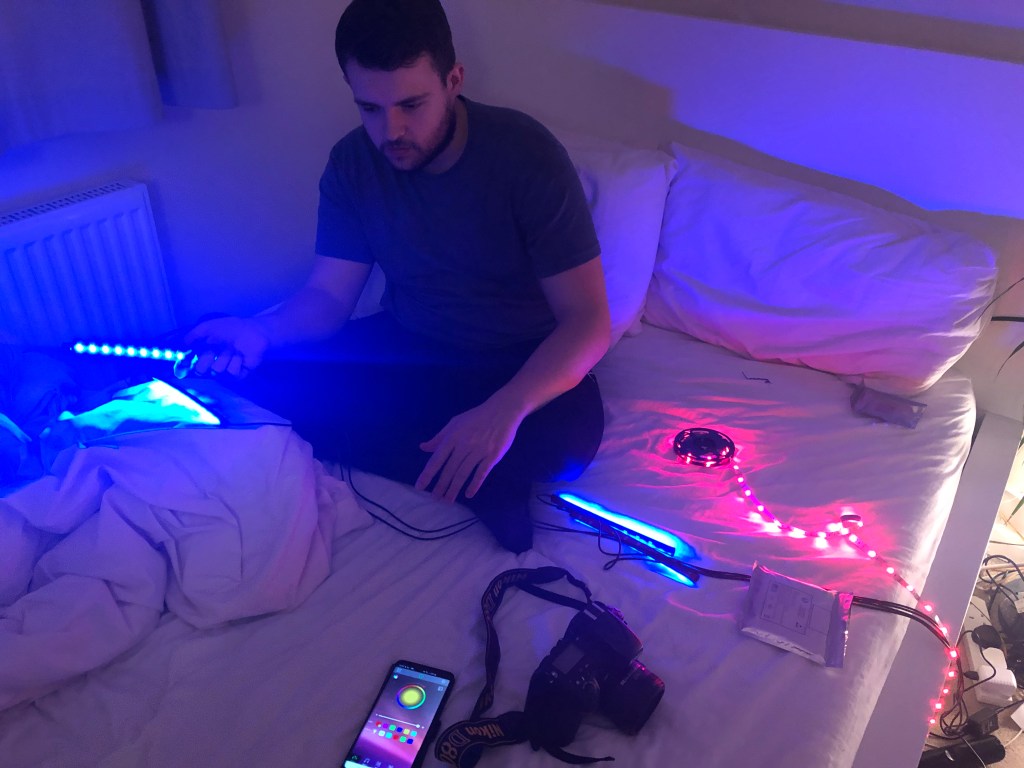
We tried to take photos while he played on his computer but his room was really small so impossible to take any. Instead I decided to experiment with a more staged idea. He sat posed with a gaming headset on and looked off to the side as if he was at his computer. It is known that screens let out a blue light, so I used RGB lights to create this on his face. It was not that effective so I added another light which was red, this added more depth to the image. It also created more interesting shadow. This is the set up from the shoot. It is simple but the lights were bright enough for it to be enough to light the subject.

UNSUCCESSFUL IMAGES/ WHAT TO IMPROVE

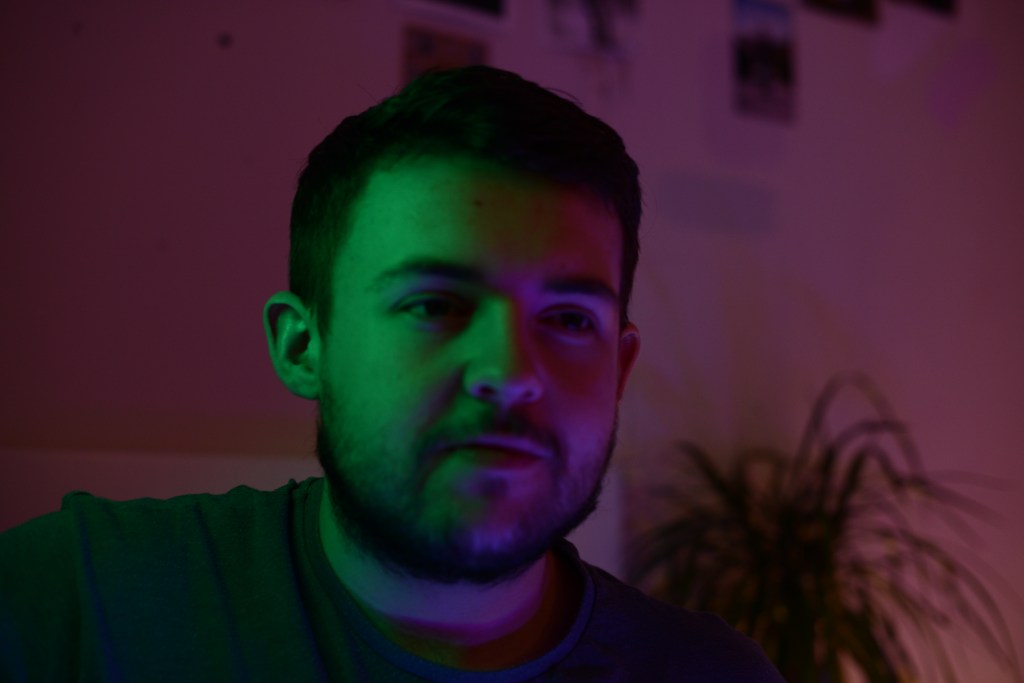
I found using just one colour light was not that effective. There is little depth to the image and the model doesn’t stand out that much because the tones of his face blends in with the background.

I shot this photo in my bedroom, which if I was continue I would be shooting in peoples rooms/houses. I like the colour of his face and the fact that it makes him stand out from the background. But it was hard not to include other objects in the background (such as the plant in this one). This is something I need to be careful of in future shoots.

FINAL IMAGES

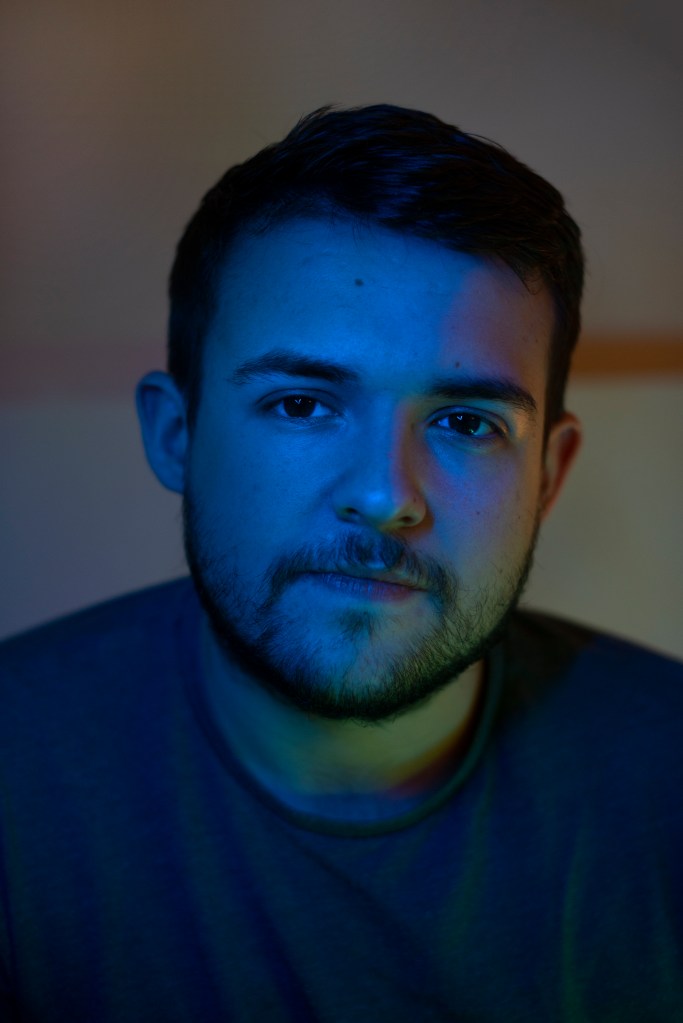
These are the most successful images from the shoot. I am really happy with the blue and red light ones as it looks as if he is actually on his computer which is what I had planned. The blue light highlights his facial features. The light in the left image is successful and works well as a portrait but not for this project it would not work that well as it tells you nothing about who he is.

VISUAL INSPIRATION

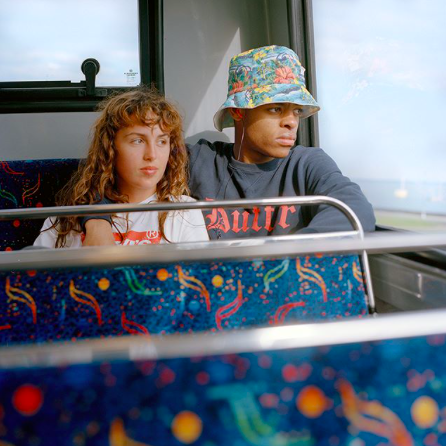
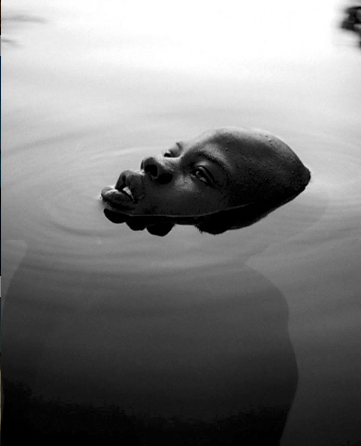
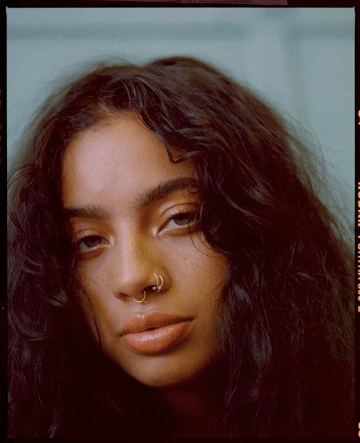
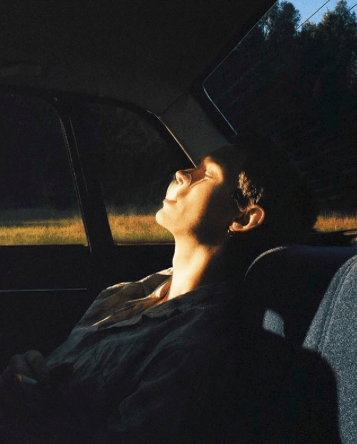
I am going to create a sort of mood board with photographs that have inspired me and photographers I can research. This will give me a page to look back on, to help influence my own work.

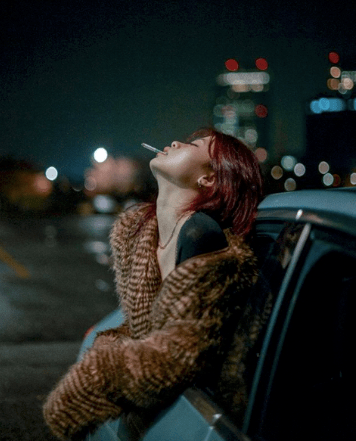
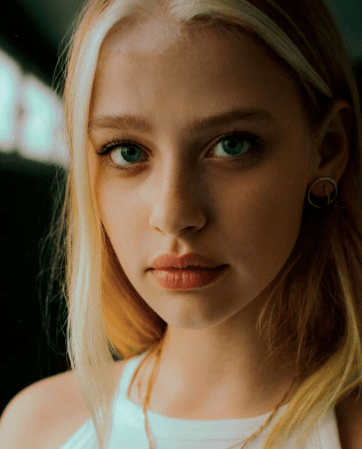
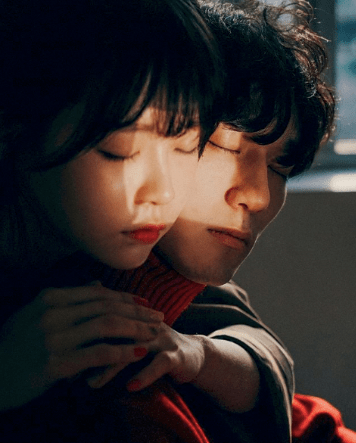
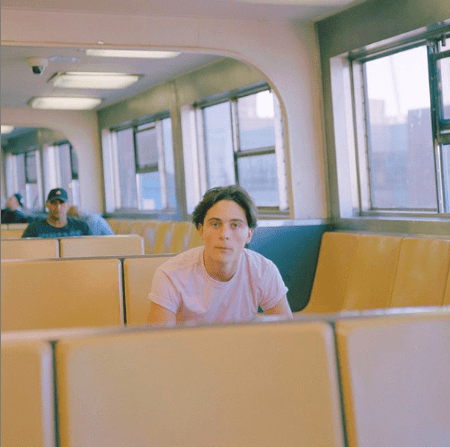
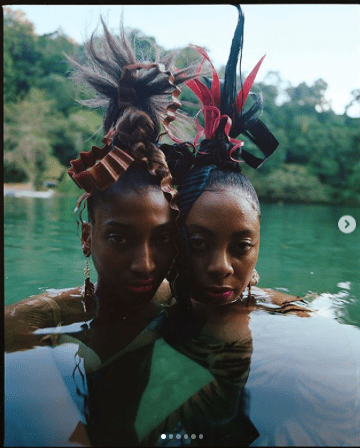
I first looked at Somewhere Magazine on Instagram. I have followed the page for a while and like the range of portraits they post. They have there own little stories that make them interesting.

Rineke Dijkstra

Michelle Sank

Adrienne Salinger

Tobais Zielony

Doug Dubois

Barbara Peacock

Design a site like this with WordPress.com
Get started