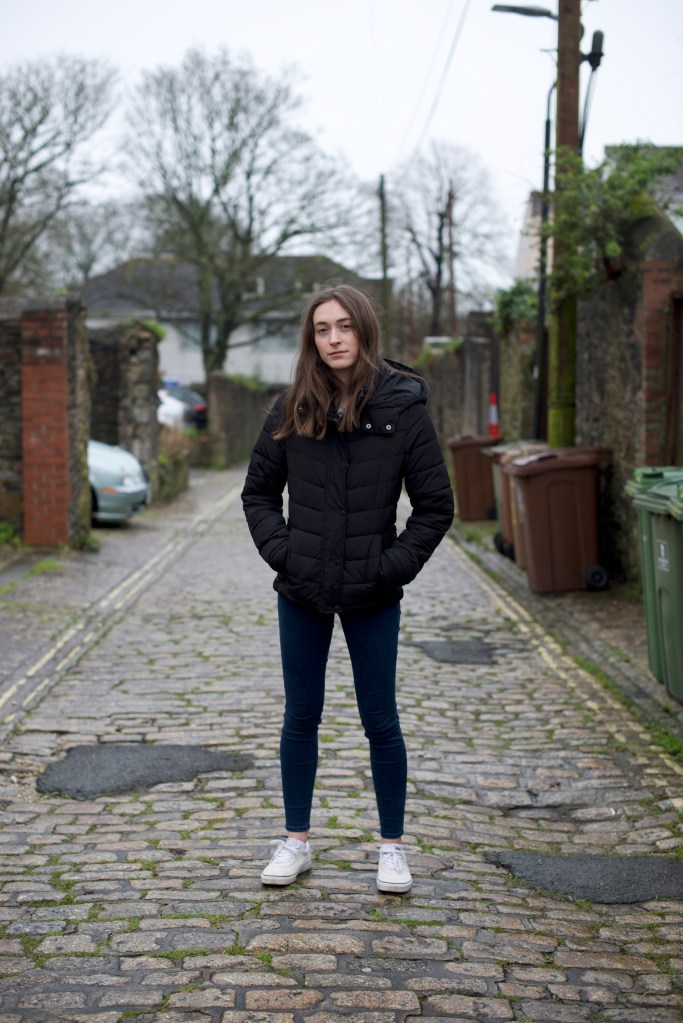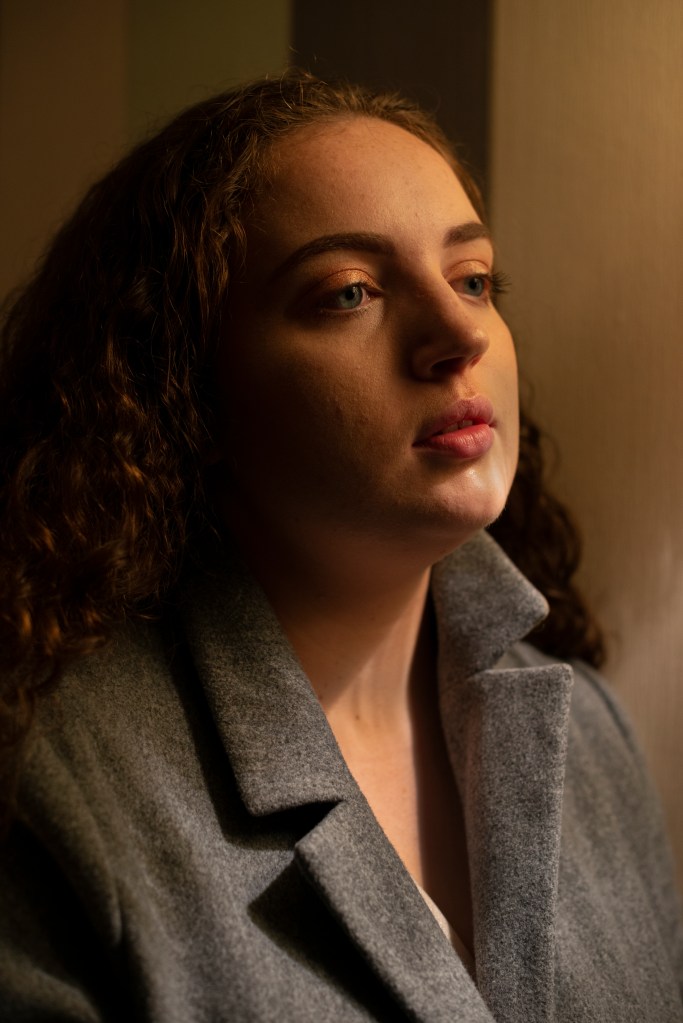
SHOOT 6

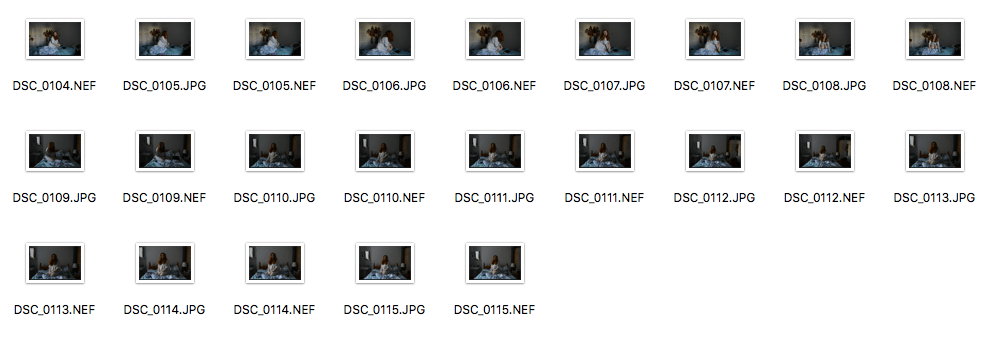
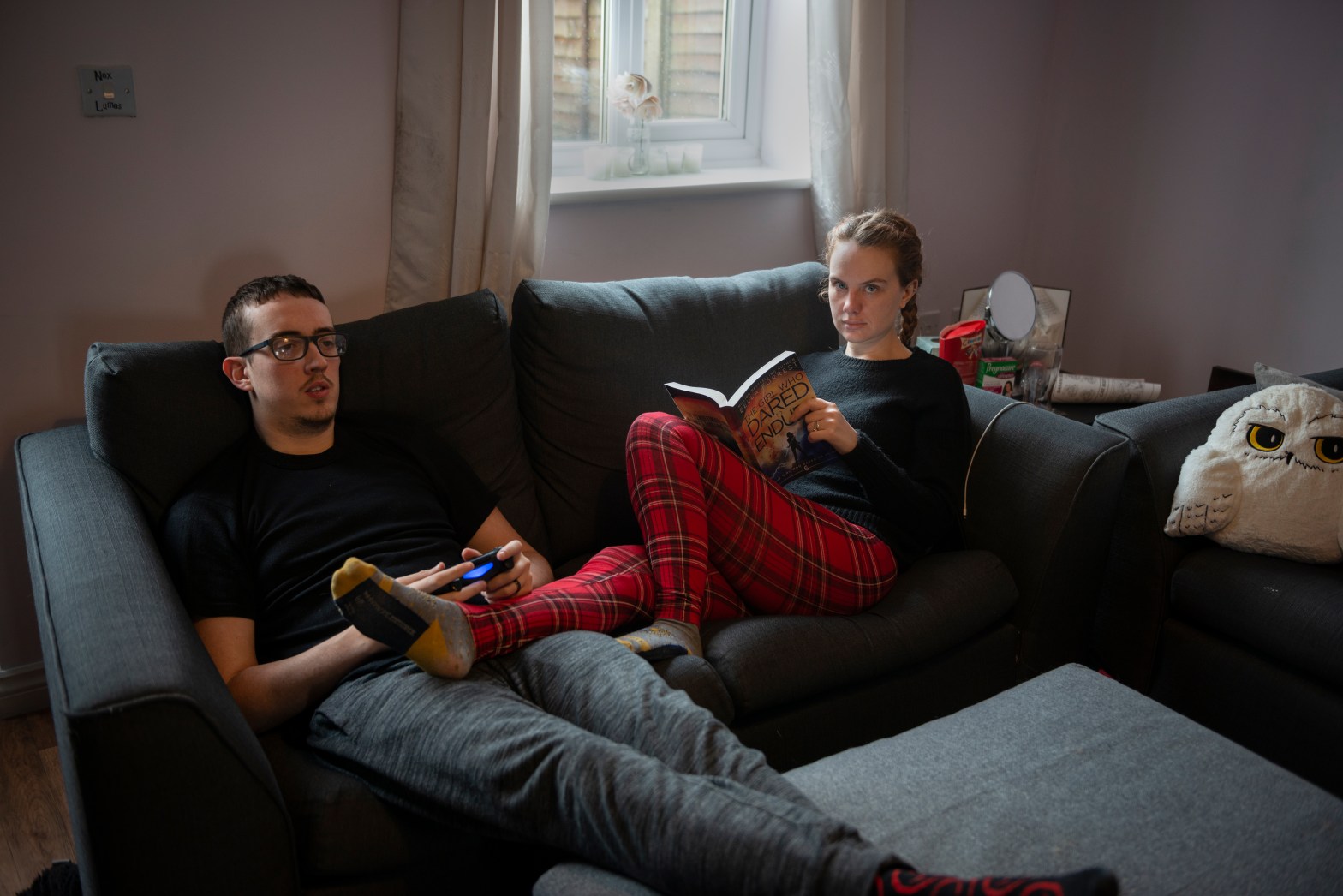
For this shoot I visited a married couple who lived in their own house. This already is quite a contrast from people on my previous shoots. Not being limited to just one room also allowed for more locations for the portraits.

I used what I learnt from previous research to lead this shoot. From Michelle Sank’s work and subject research about people and their spaces, I have made sure to try and include items that suggest more about who they are. Both parts of the research supports my idea that your surroundings say more about you than just a portrait of yourself can so now I need to portray this in my work. I also kept to my idea of giving little instruction on how to pose to create more natural reaction to the camera.
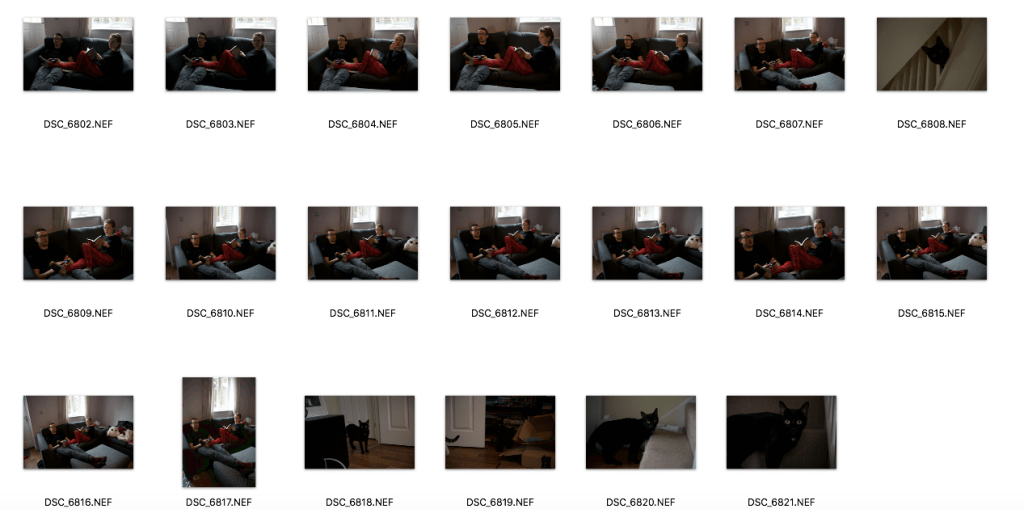
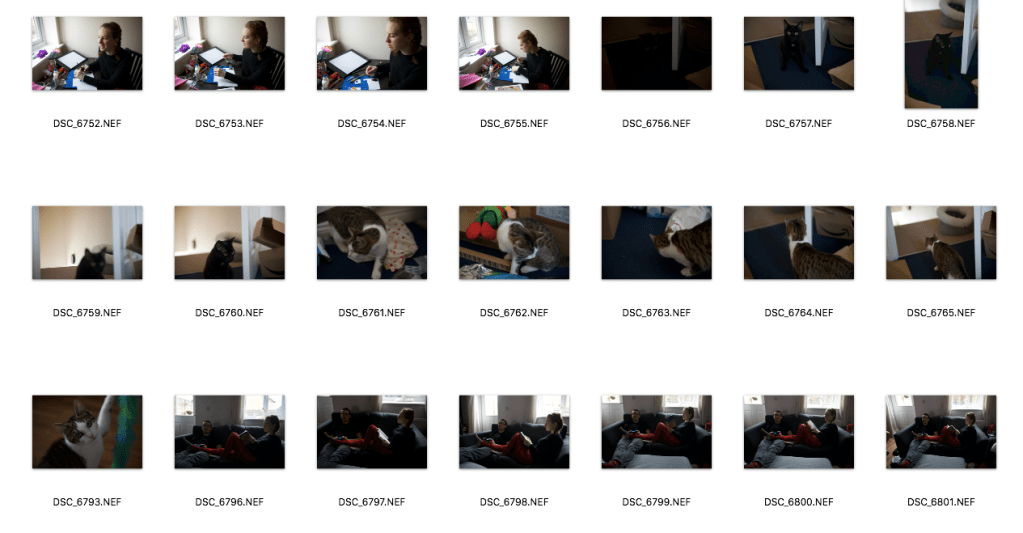
For this shoot I decided to shoot with a 24-70mm lens. Using a 50mm on the last shoot was quite limiting, especially when I am in a small room so using this lens will be more versatile.

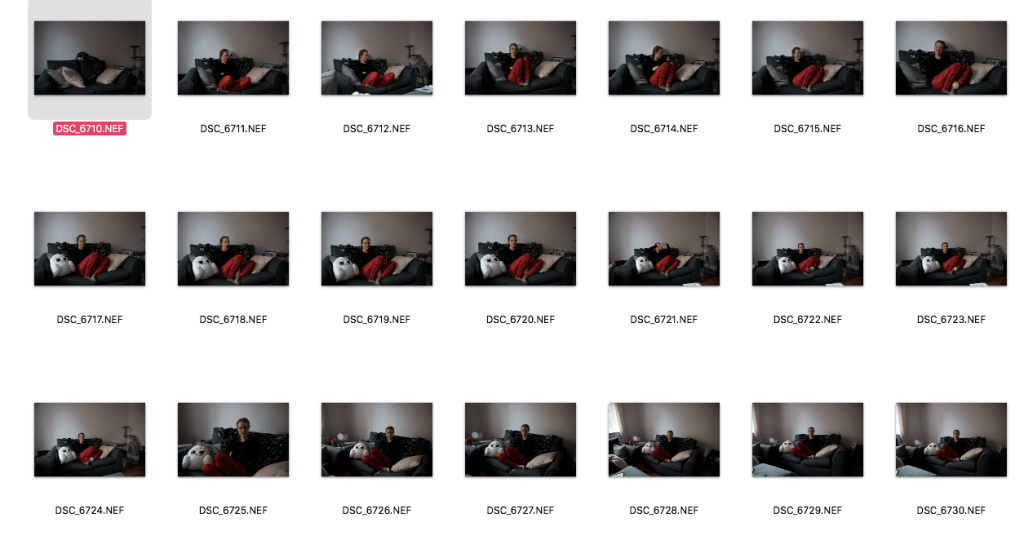
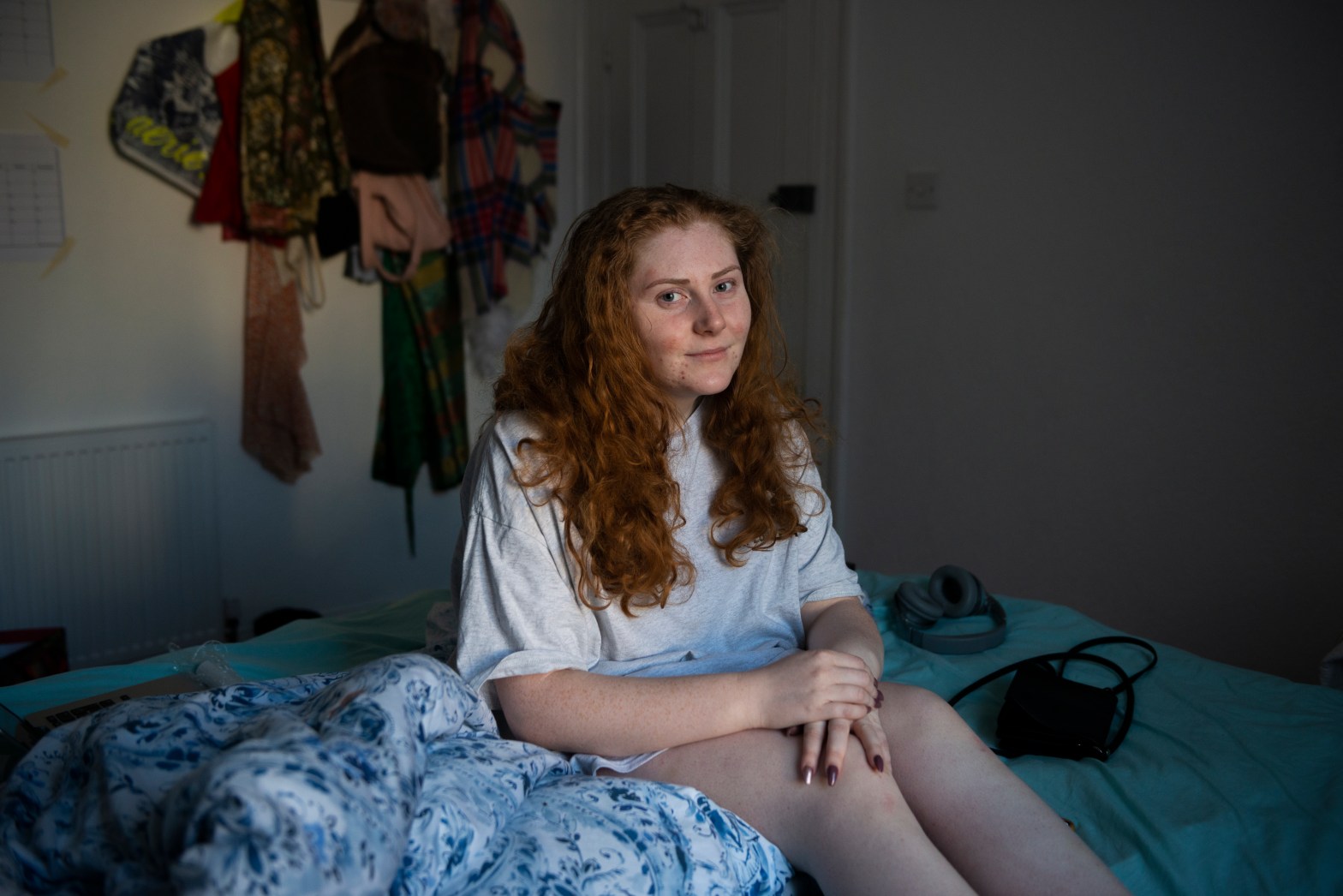
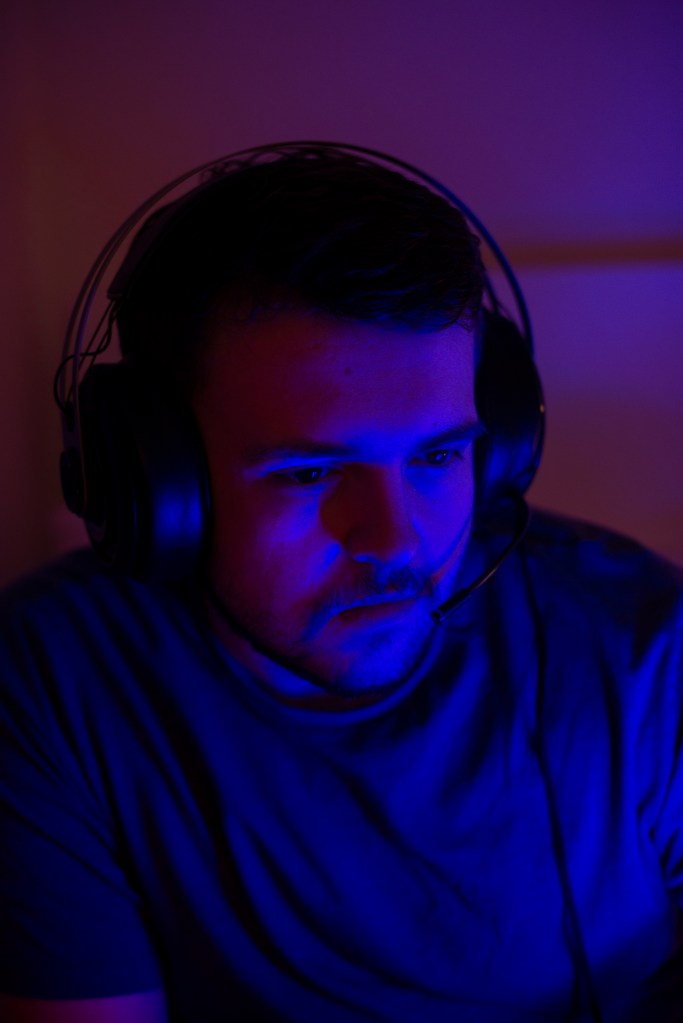
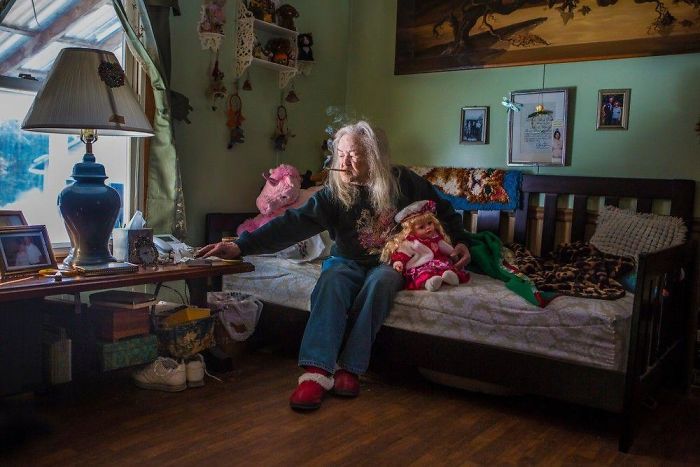
I started off by shooting Rachel alone on the sofa. I used a wider angle to capture the objects around her. She had a spare room that she had turned into a ‘craft room’. I thought this was a good place to shoot as it showed her hobbies. I did find this challenging as it was a smaller space. The window was right in front of her which did work well to highlight her. After we went back into the living room and asked her husband to be in it. It was a good chance to create more of a narrative with the image. She said a lot of the time he plays on his game and she often reads, this is what I wanted to show in the image.
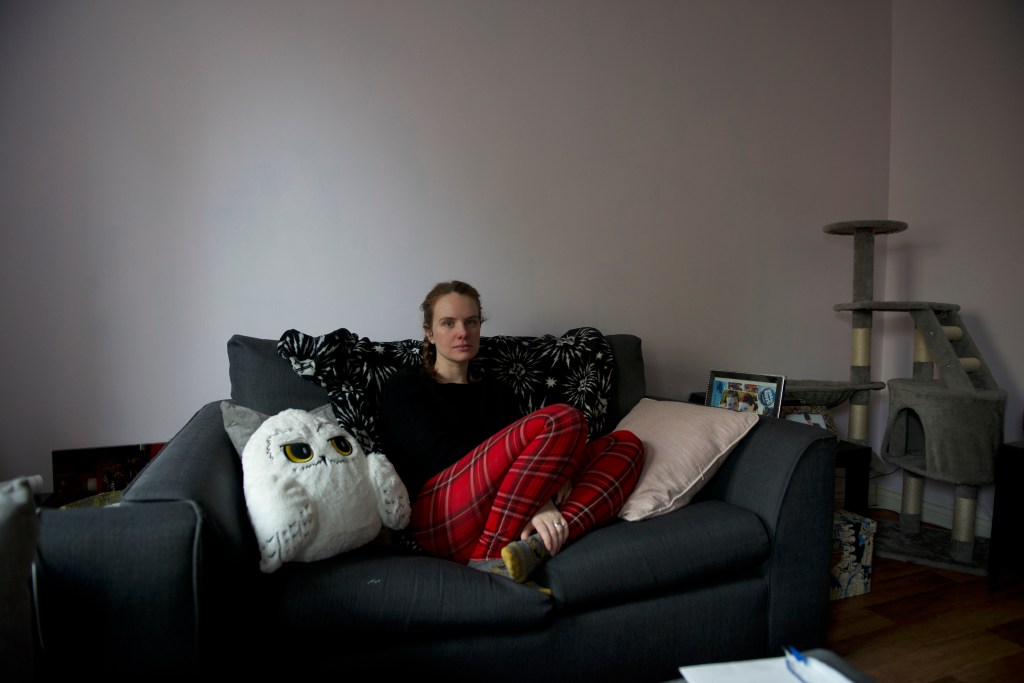
I like this photograph as there is soft light on the subjects face. The rest of the image might be too dark though. I like that there is objects that suggests things about her, such as that she has cats.
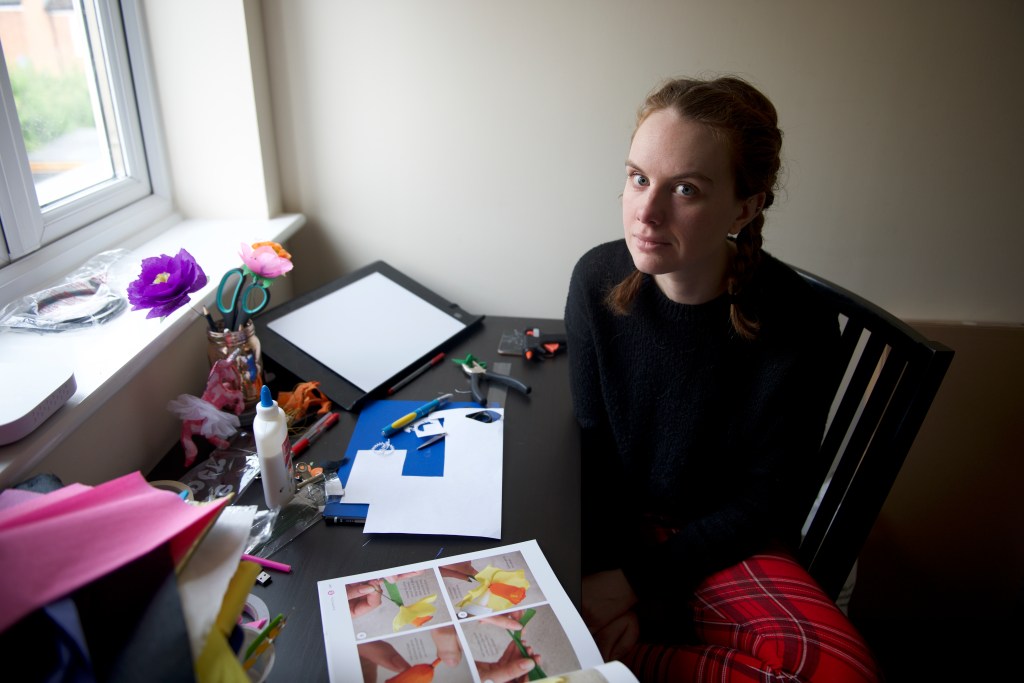
This one works well because the desk makes it interesting to look at. I do not like the angle I took it at though, I think I was looking down on her too much. It was difficult to use many other angles though as I was surrounded by boxes and her belongings.

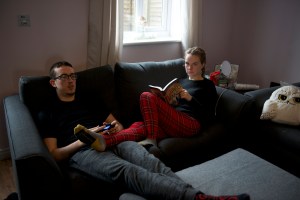
Also in these ones, analysing them now I think I should of got down to their level so I was not looking over them as much. I like that in the second image, she is looking into the camera but he is too engrossed in the game to look. It begins to tell a story.
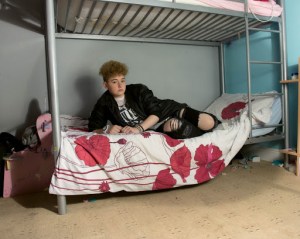
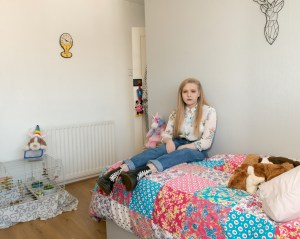
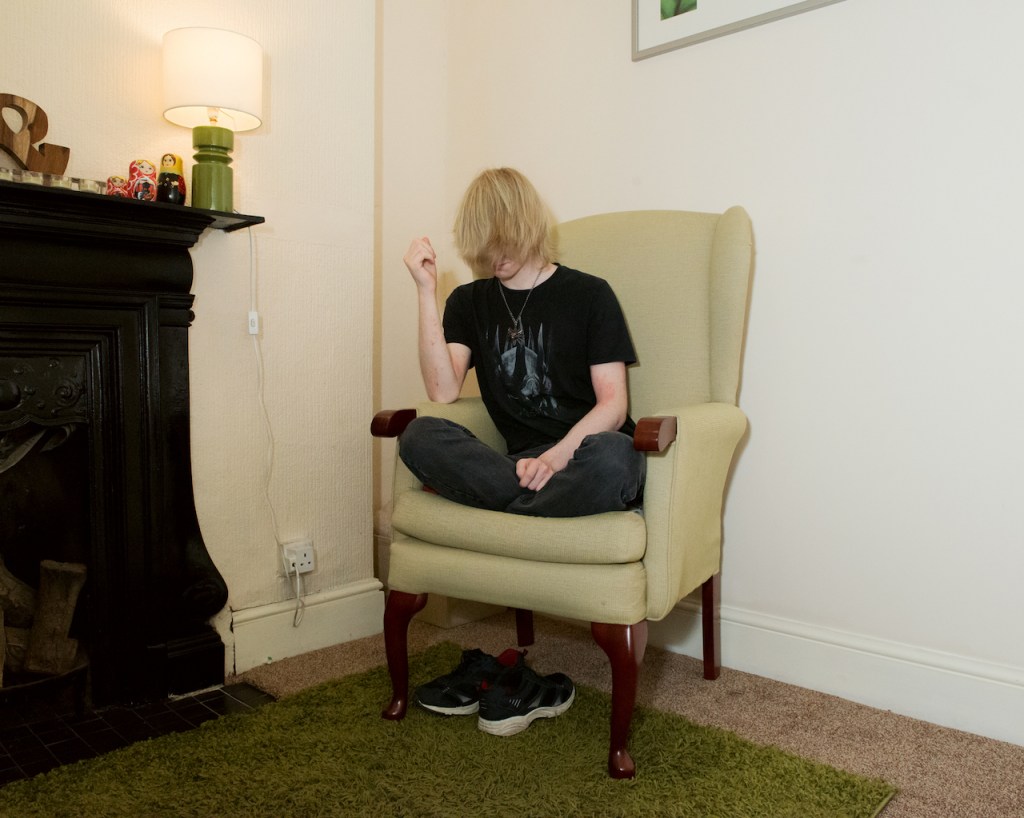
Comparing my images to Michelle Sank’s work, there are some things that worked well and some things that were not as effective. On the image on the left, she is using an artificial light that creates a shadow behind. In my photos of the two of them in the living room, I used the lights they had in the room. It created shadow behind his head which I thought was quite distracting to the viewer. It was difficult though, as the natural light was quite low.

Overall this shoot was successful, although there is some photos that could benefit from being reshot.
SUBJECT RESEARCH – PEOPLE AND THEIR SPACES

I am doing research into peoples personal spaces and what it means to them. I am focussing on bedrooms at the moment because the age group I am focussing on are less likely to have their own homes. This means the main space they can call their own is their bedrooms.

I read an article about what your bedroom says about you, https://www.bbc.co.uk/bbcthree/article/1cd61c5f-4784-4a12-ac88-ae6e0c8c4bad. Without even meaning to, your bedroom can give you so many indications about who you are as a person. ‘Sam Gosling, a Professor of Psychology at The University of Texas says “If I met you briefly for an hour, I just have a sample of your behaviour. Whereas if I go into your bedroom – that’s many weeks, months or years of accumulated information, which is often hard to fake, and can be a more reliable indicator of what someone is like.” This relates to my photography idea. That a portrait alone can only suggest so much, but an image of the subjects room will mean so much more. This information in rooms can be deliberate or unconsciously done. For example I put photos up on my wall of friends, family and places Ive travelled. I have consciously done this. Whereas if I had an unmade bed and plates on my floor, it would not be put there for a reason but if someone was to see it they would begin to assume things about your personality.

Having your own space is so important and that why for many younger people not moved out, their bedroom is seen as a safe space for them. It is not just important for sleeping, but relaxing, studying, getting ready and so many other things. My university room for example is so meaningful for me. Living in a shared house means my bedroom is where I have to store most of my belongings. This shows how a room is so much more than just for sleeping.

VISUAL RESEARCH – MICHELLE SANK

I have already researched Michelle Sank, but since changing my style of photographing there is another one of her projects that is useful to look at.

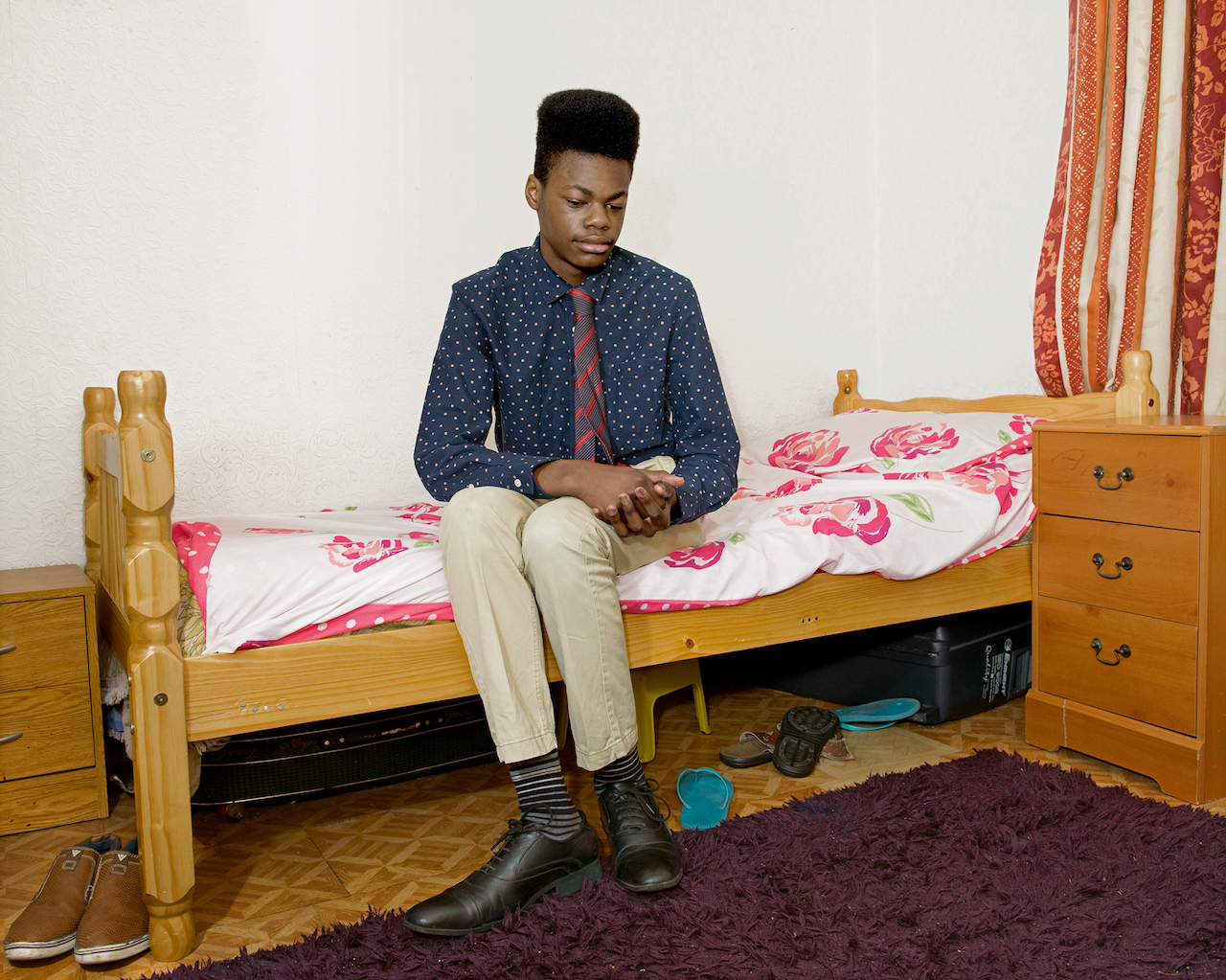
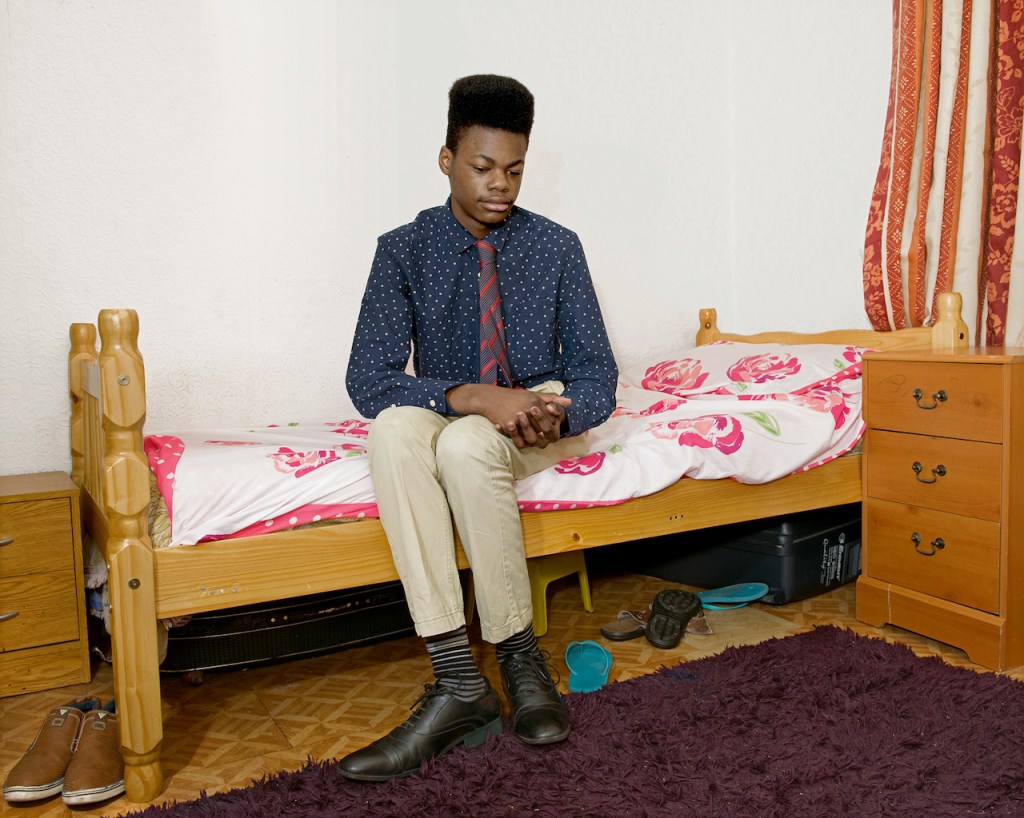
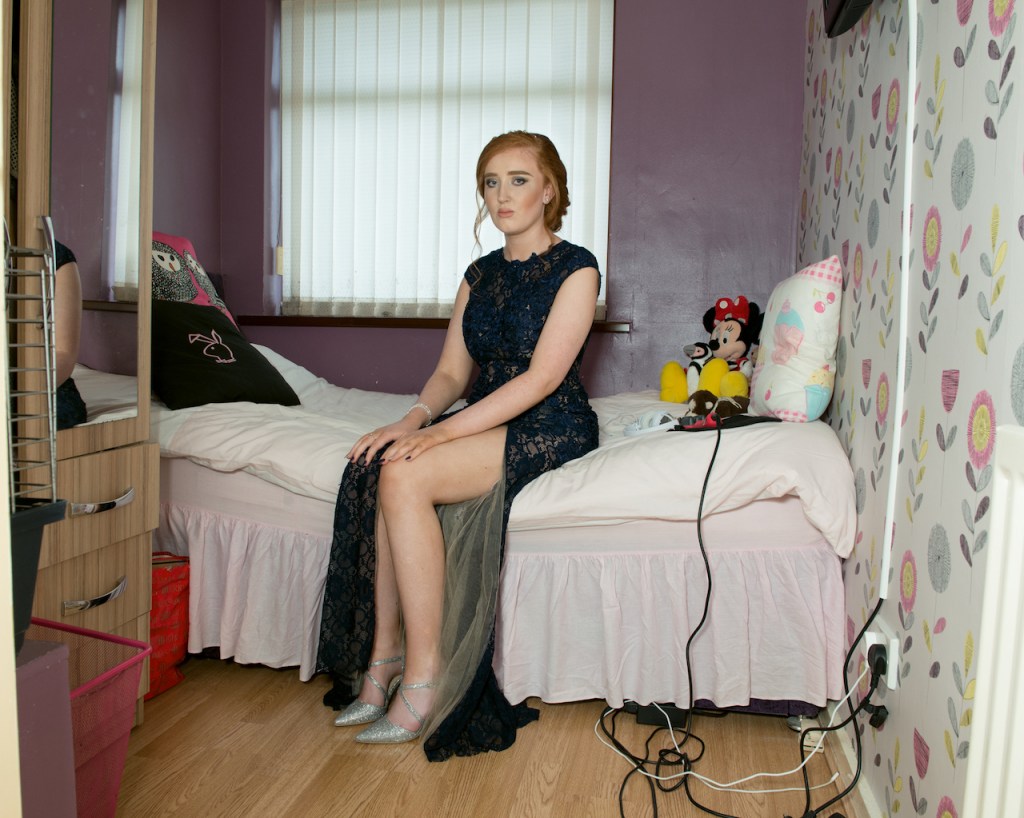
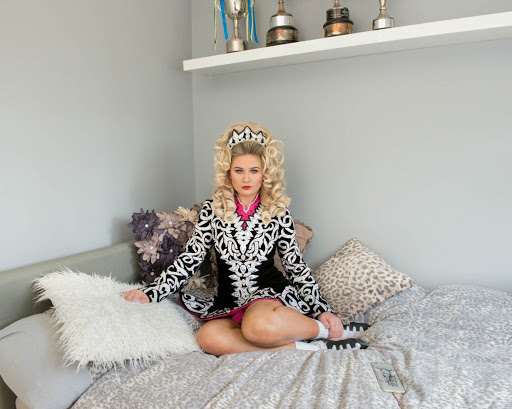
‘My.Self’ is one of her projects where she documents the diversity of young people living in an area. Especially what it means to be a young person in todays society. She says ‘the subjects were photographed in their bedrooms so that the objects and decoration within became metaphors for their individuality and their cultural contexts’. Their possessions are able to describe a lot about who they are. Also their rooms are an intimate space and probably where they probably feel most comfortable.

The images are really interesting. I feel like the subjects have some choice in how they dress and pose, as in one image the boy is dressed in what looks like motorbike gear and in another a guy is dressed in a sparkly jacket and smart trousers. This alone shows a lot about them. They are also posed very differently, one is sat crossed legged on a seat , hair covering his face. I feel like Sank has let him pose like this because if she was directing him she might of asked him to look at the camera. In most of the photos the subjects are sat on their beds. It is a very personal space. Some appear rather uncomfortable, whereas others appear more confident, almost proud of their rooms.

This series of work supports my idea that someones space and belongings can show so much more about them then just a portrait can. You can begin to assume so much more.

VISUAL RESEARCH – MARTINA MULLANEY

Martina Mullaney was born in Ireland in 1972. She lives and works in London.

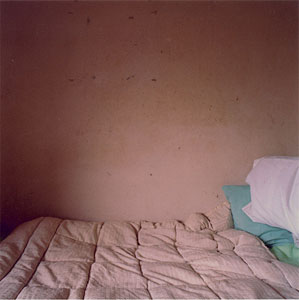
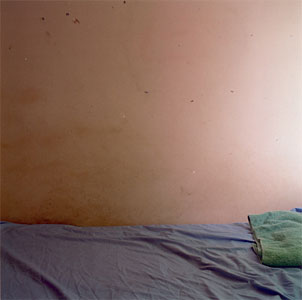
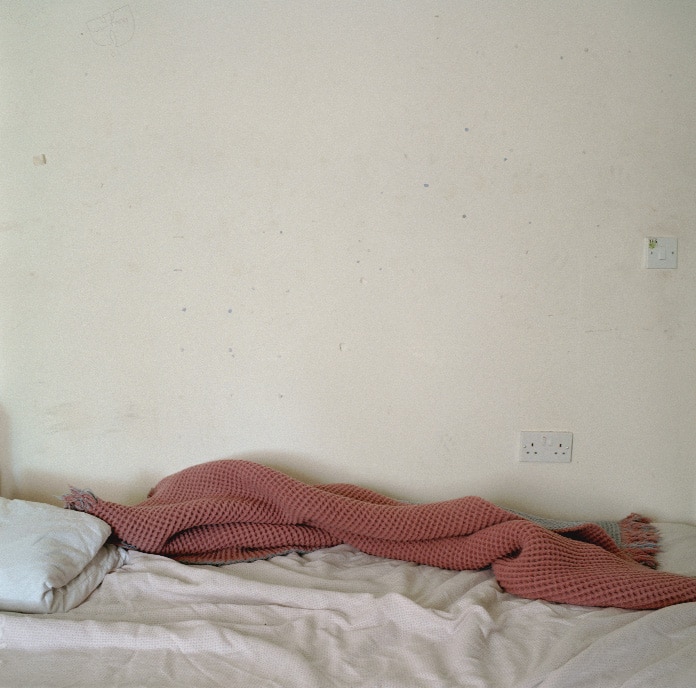
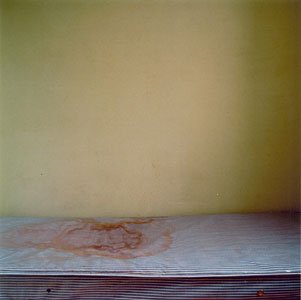
She has a series of work made in 2005. It is of large scale photographs of slept in beds of homeless people in England and Wales. It is interesting how she has approached a common and sensitive subject in a unique way. It is intriguing and emotional as you can see the dirty and worn mattresses and begin to wonder the stories of the people that sleep there.

The images are all very similar. The mattress fills about a third of the frame and the rest is of a wall. Because of how minimal they are, the viewers attention is directly to the smaller details, such as the unclean sheets and marked walls.

Although the style of Mullaney’s work isn’t what I am planning in my shoots, it is how he has shown context just through someones space that has inspired me. Although the images are simple, you are able to compare each one. For example one looks somewhat comfortable with pillows and a bedsheet, whereas one is just a stained mattress against a marked wall. Without even showing the person, Mullaney is allowing the viewer to feel sympathy towards a group of people.

SHOOT 5

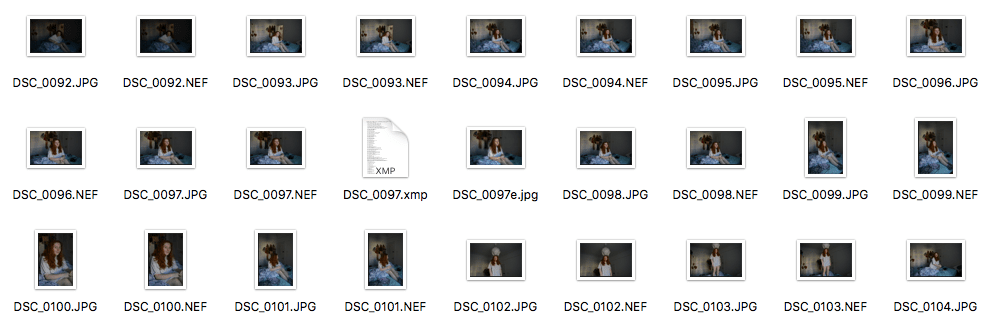
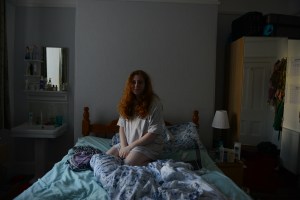
This is the first shoot I have done with my latest idea of focusing on people in their own environment. As I still wanted to experiment with techniques I chose to photograph two of my housemates so there was no pressure to get it right first time. My tutor recommended to try and do the shoot in about 20 minutes as this would be good when I am in other peoples houses. I used a Nikon D800 with a 50mm lens.

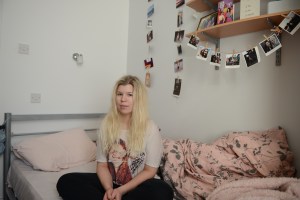
The first shoot below was most successful. She had a large window in her room which let in a lot of natural light which highlighted the subject. As it was natural, soft light, it made for a more atmospheric photograph. I wanted it to be accurate so I simple told her to pose how she wanted and did not move anything in the room. She chose to sit on the bed, we tried different angles but facing the window worked best. I had to think a lot about composition as there was a lot of objects in the back and around her.

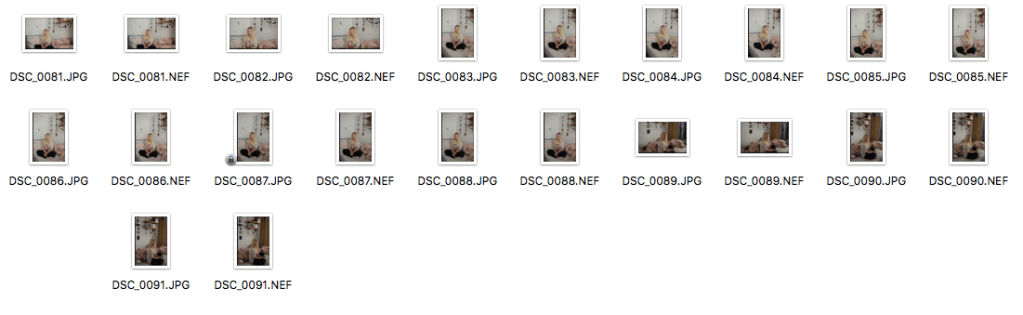
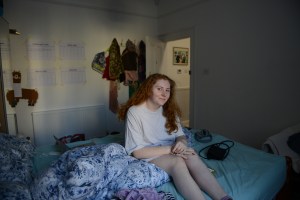
This shoot, also of one my housemates was a bit more difficult. She has a small room so there was less space to work with. As I was using a 50mm lens, this was challenging. I had to stand right in the corner of the room. Again, I used natural light from the window, I think this is more effective as it creates more tones than if I was to add in artificial light. I always tried taking more photos in portrait. It works better in landscape as the point is that it is showing their surroundings and you can see more of this when it is in landscape.

These are images that could be improved. The first one below is too dark, she is facing away from the window so the light is almost wasted. I like that the image is taken straight on, it is effective at showing her room clearly. The second one below is a good example of being aware of the surroundings. Firstly the door being open is quite distracting as it is showing bright ambient light from the hallway. The light from the window falls onto the wall in the background which could distract the viewer from the main subject. Also the angle I took the photo means the subject is not centre of the viewers focus. It is taken too high up, looking down on her.

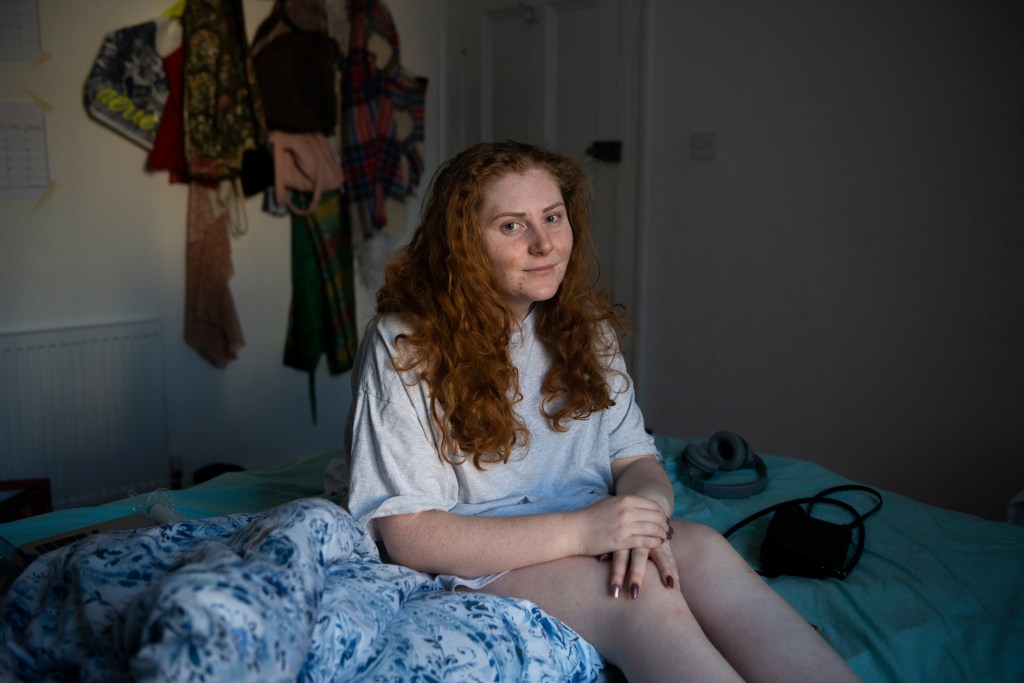
This is the most successful of the shoot. Although there is less of her room in the frame, there is still enough to be interesting for the viewer. I got more down on the subjects level so it wasn’t like I was looking down on her. The angle I took it at also means you can only mainly see the light on the subject and not on the wall as well.
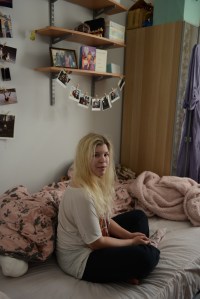
These are the most successful from this shoot. Although in future I do plan to stick to shooting in landscape. I used portrait as she had photographs going up her wall which was more effective when taken in portrait. The light was not as effective as the first shoot as the window was at the other side of the house. This is something I am going to have to get used to as if I am relying on available light, every room I go in will be different.
From this shoot I have decided that natural light works best as it creates more tones and will means there is no harsh shadow. This makes the images more aesthetically pleasing. The subjects being in their own environment is effective, I feel like they act differently than if I was to put them in a location they were not used to. I asked them to sit/stand/pose however they liked and it seemed to be natural for them.

JAMES MOLLINSON – WHERE CHILDREN SLEEP

James Mollinson was born in Kenya and grew up in England. His work has been widely published throughout the world.

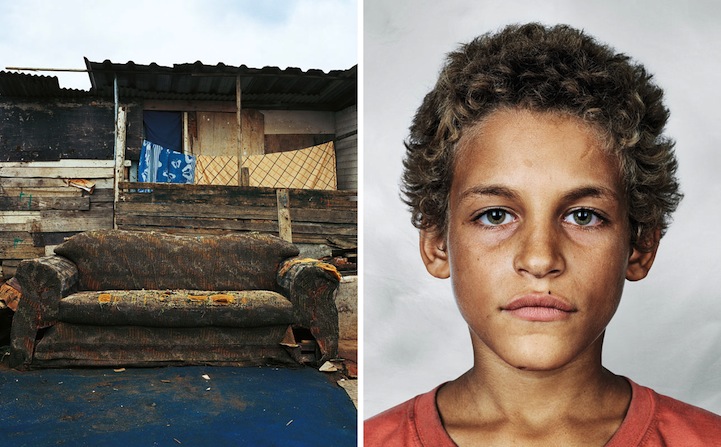
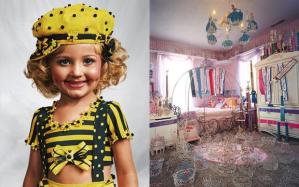
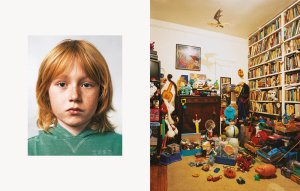
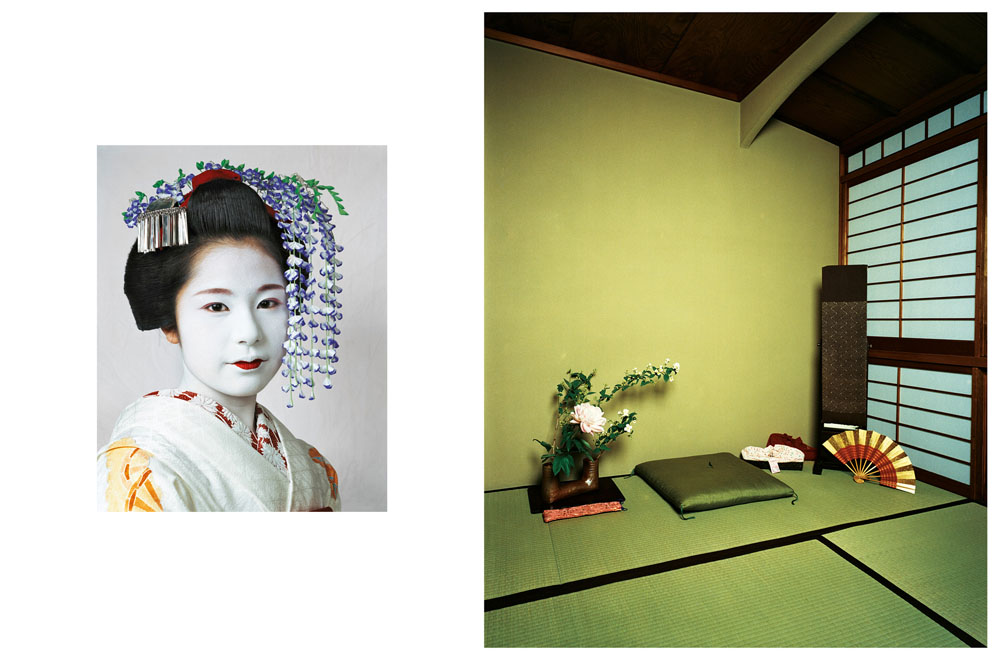
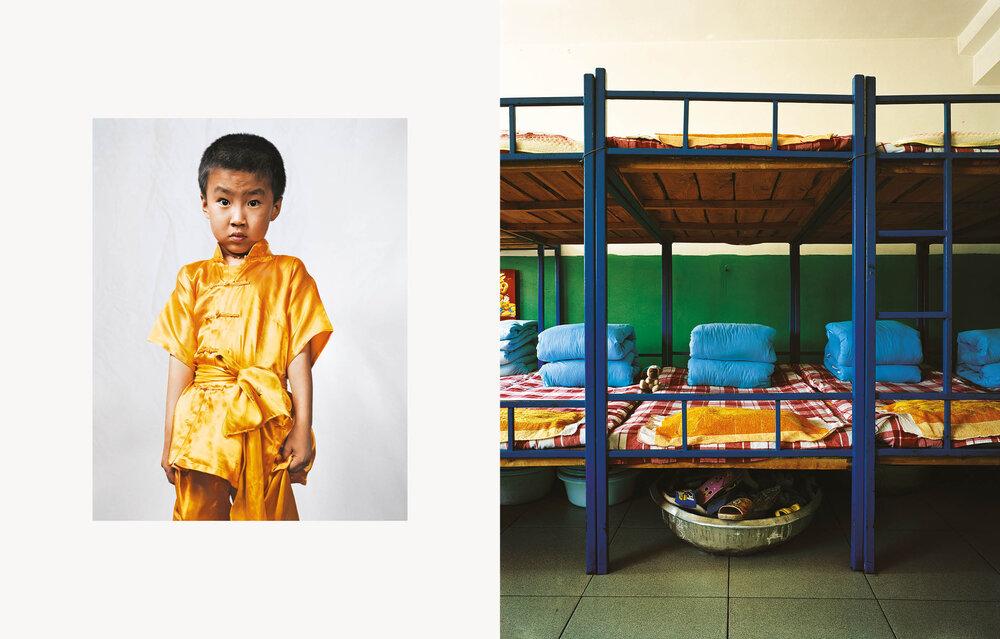
A well known series he created was ‘Where Children Sleep’. He displayed it as a book, where on the left page there was a portrait of a child, on the oppisite page is an image of where they sleep. He went across the world documenting these people and the places they call home.

It is interesting to look and compare how different each place is. Some rooms represent their personalities by the way they have decorated the space. Some also indicate their social status. It seems unfair that one child can have a big room with loads of belongings and another has just a blanket on the floor.

The book keeps the same layout throughout. The portrait is smaller on the left page and the room fills the right page. I think this is because the room is more meaningful in this series, it shows more context. The portraits are fairly simple as they are close up against a light grey background. This image alone can only show the viewer so much about who they are. With the other image, it starts to show a narrative.

I looked into why he documented this subejct. Mollinson decided to do this project as he wanted to engage with the topic of childrens rights. He wanted to represent the children in need but wanted to avoid the usual images you see on TV and adverts. A bedroom is normally the only space a child can call there own. Capturing their space is an effective way at showing the support the less fortunate children need, especially in comparison with the wealthy children.

I found this book intriging to look through. It is interesting that as they are taken around the world, you can also compare how different the cultrues are. There is so many things to compare and this is what I want to portay in my project. I think the viewer will also start to feel empathy towards the subejct which is effective as it will mean they are more enaged in the work. I do like Mollinsons style, where he uses dyptychs to show his narrative. I have tried similar techniques before but I would like to continue showing the person in their own space. This can show deeper meaning as you can look at how the subejct interacts in that space, instead of in front of a backdrop where they are likely to feel uncomfortable. From the ‘Where Children Sleep’ project I have learnt how important and impactful using the photographs as comparisons can be.

SUMMARY 1

These first few weeks have been really beneficial for experimenting with ideas. The subject research has helped lead this project as I now have a good understanding of people in their 20’s and what comes with it. This has helped me photograph not just as a photographer documenting a scene but also with empathy to their situation. From visual research I have experimented with techniques and I now understand what doesn’t work. The theoretical research has showed that I need to look deeper in these photos and the way I am shooting to really engage with the viewer.

At the start, my shoots lacked much context. My idea was simply to shoot people in their 20’s. In the last shoot taken of a group of girls living in a university house it worked better as they were in their own environment and therefore a lot more comfortable but the lack of engagement between me and them makes them lack any emotional value.

So my next steps are to focus on portraits of people in their own environments. My theoretical research about environmental portraits inspired me to experiment more with this idea. The places people are and the items that surround them will add this context my work needs. I can shoot im their bedrooms, workplace or just places they feel most comfortable. I also have thought more about the age I am shooting. The differences from someone aged 20 to someone who is 29 is obviously going to be significant. That is almost a 10 year age gap so it is very expected that these people will be living different lives. Instead I am going to start to focus on people from ages 23- 26. It is a smaller age gap but from experience there is still a lot of changes in their lifestyles. This is also the age of people who have recently left university which from research I think is important to include as it is a difficult stage of life.

SHOOT 4

Unfortunately I lost the photos of this shoot due to a faulty sd card. I shot photos of my housemates over the course of the day, they were doing everyday activities such as cooking, working, watching tv.

I kept with the documentary approach, they knew I was taking photos of them that day but I would take them at random times so they were not as aware. As portraits they were good sue to correct exposure and shallow depth of field. But from my research it lacked much depth. I used my inspiration from Tobais Zielony and Doug Dubois, which was the importance of things in the frame and showing the sense of place but emotionally they did not suggest much.

In my theoretical research I looked into relationship between photographer and subject, in this shoot it was pretty much non existent. Also all the things I have learnt from my subject research was not portrayed in my images, they were simply people living their everyday lives.

Although this shoot was unsuccessful, it has allowed me to understand that a candid, documentary approach isn’t going to be effective for this shoot. I need form more of a connection with the subject to represent how they are feeling.

VISUAL RESEARCH – DOUG DUBOIS

Doug DuBois is an American photographer known for his portraiture work. He makes documentary work of different people.

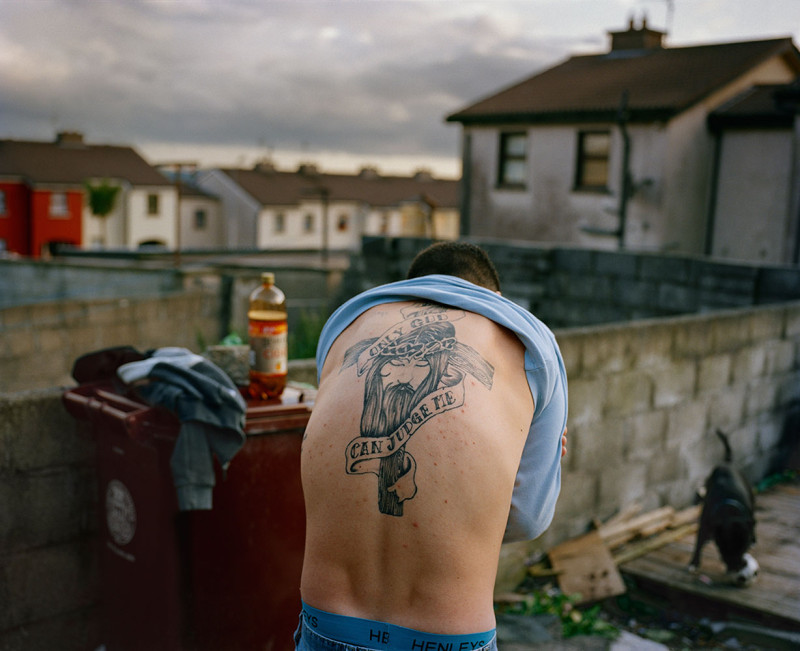
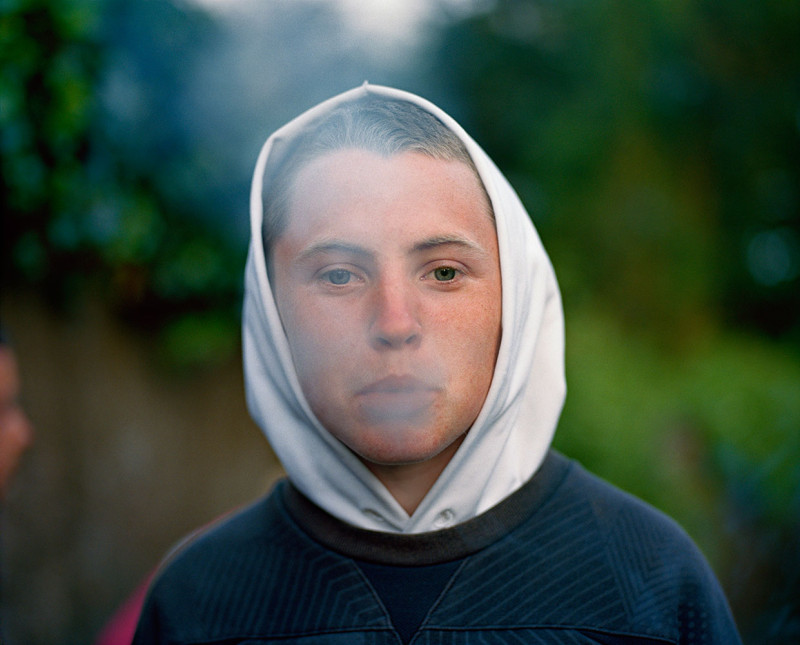
The series I’m interested in is ‘My Last Day at Seventeen’. It is of teenagers in Ireland as the new generation of Irish. The project started as a month long residency and turned into a long term project. In the residency, he was taken to neighbourhoods by the teenagers he was photographing. He went to different areas to document the complex corner of Irish life.

In an interview, DuBois talks about the work. He says on the book there are only a handful of images that are not posed. Even the more candid ones are set up to some degree. As part of the book it includes a illustrated comic. This is made from audio recordings of the stories and thoughts of the people as they looked through the book. He also talked about the process of making the book. He went to Ireland every summer for 5 years to shoot the work, in between summers he would look through contact sheets.

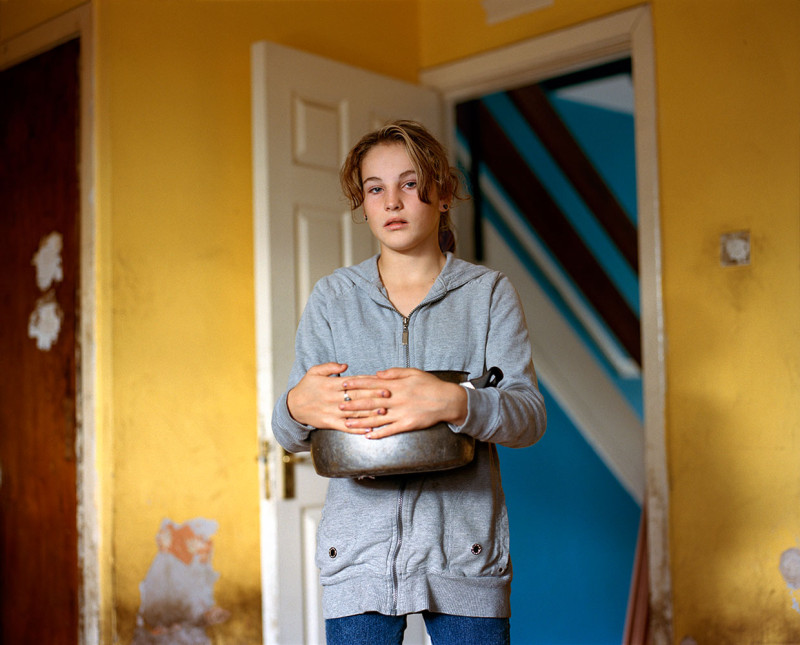
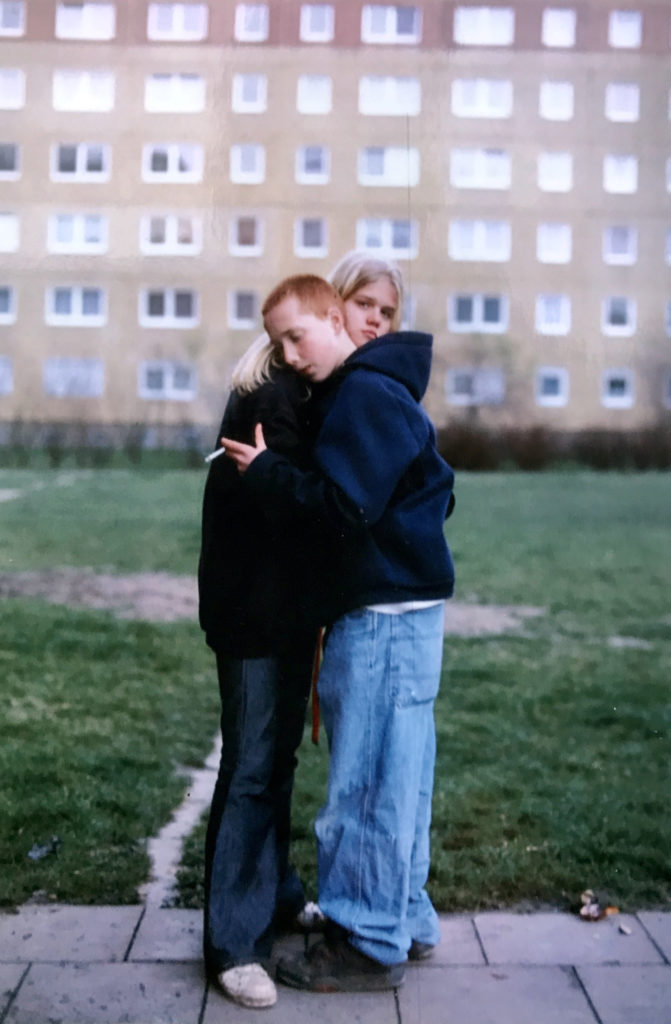
The actually images are intriguing to look at. When you look at them as a series, they have there own narratives. It is a mixture of single portraits, groups photos and what looks like more candid shots. They give a real sense of the place by showing walls of graffiti and young people playing in the street. I like how each image can give you a lot indications about the context. For example this one below, her expression looks blank, almost as if she if fed up. She holds what looks like a cooking pot so maybe she is in the middle of making something. The walls in the background look damaged and dirty suggesting she lives somewhere quite rundown.

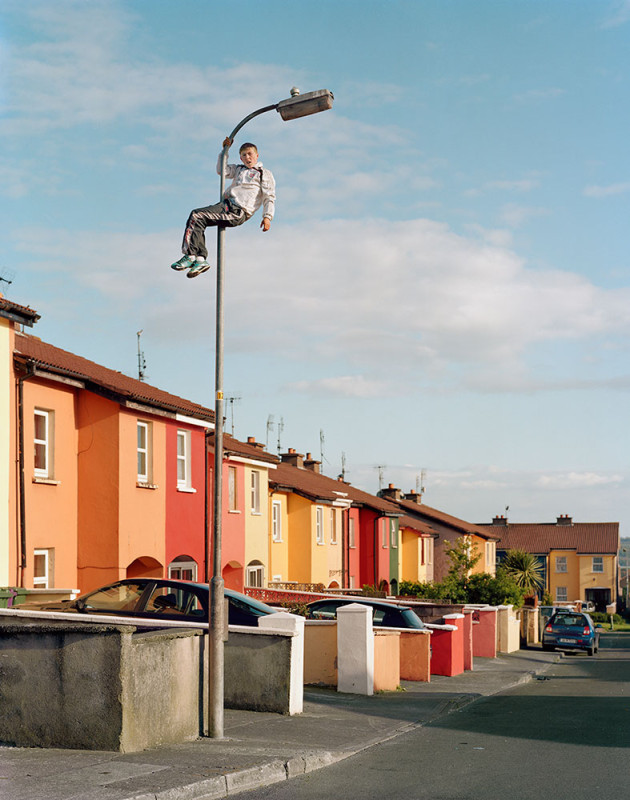
This image below is my favourite of this series. Its taken from slightly back which means you can see the surroundings. This really sets the scene. The sun on the coloured houses is aesthetic and goes well with the light blue of the sky. So at first glance this is a visually pleasing photograph to look at. The boy on the lamppost stands out in the blue of the sky and makes the image more intriguing. The viewer might begin to ask questions about the context behind the photo. Such as how did he climb so high up? Why is he up there? Is he alone or with friends? I feel like the subject is confident as he leans back and looks at the camera.

From looking at Doug DuBois work I understand how important it is to show a sense of place. It can make the viewer more interested in the image as there is more of an idea of the place it is in. Dubois does this is in many of his images by shooting from further away. It is fascinating that most of the images are posed as there is a few that I thought were candid and natural. It shows that it is okay to stage photographs as the narrative intended is still clear.

VISUAL RESEARCH – TOBAIS ZIELONY

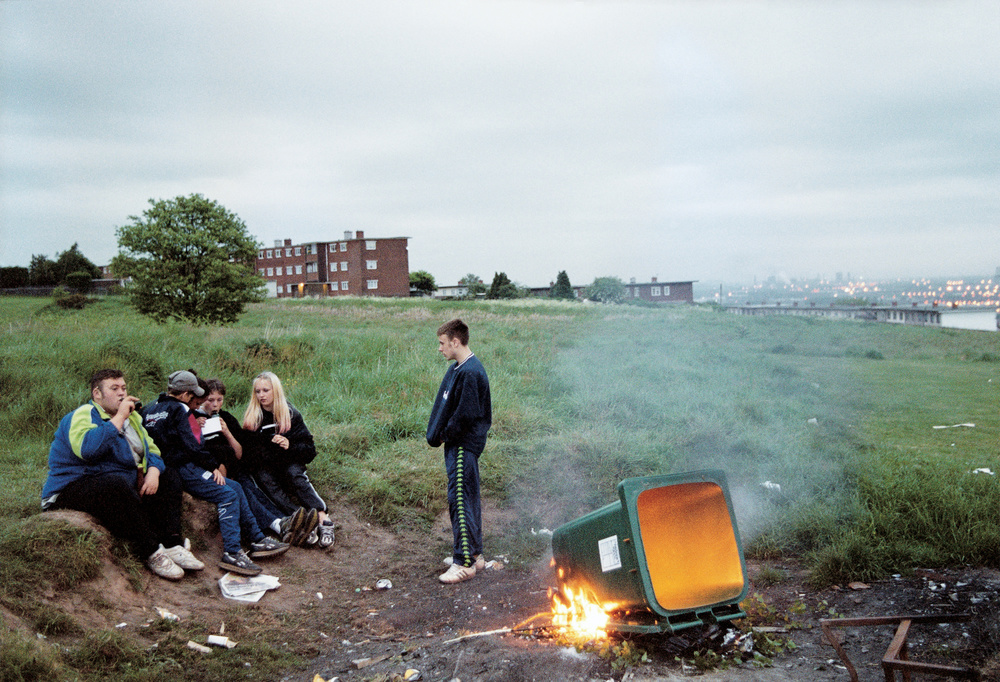
Tobais Zielony is a German documentary photographer. He explored communities around Europe. He has a lot of interesting project where its as if he is telling a story about a group of people. They include, ‘Car Park’, in which he captured listless young Brits in a desolate urban landscapes. Another project ‘Curfew’, shows the destructive boredom from youths in one of England’s poorest urban areas. ‘Jenny Jenny’ is a eighteen month project Zielony did of sex workers in Berlin.

The intimacy of the work is what makes it so intriguing. Each image has its own little story that you begin to understand through the subjects expression, clothes and location. Each project is about people who are facing their own problems and trying to navigate their way in the world. These people are often over looked, sometimes isolated.

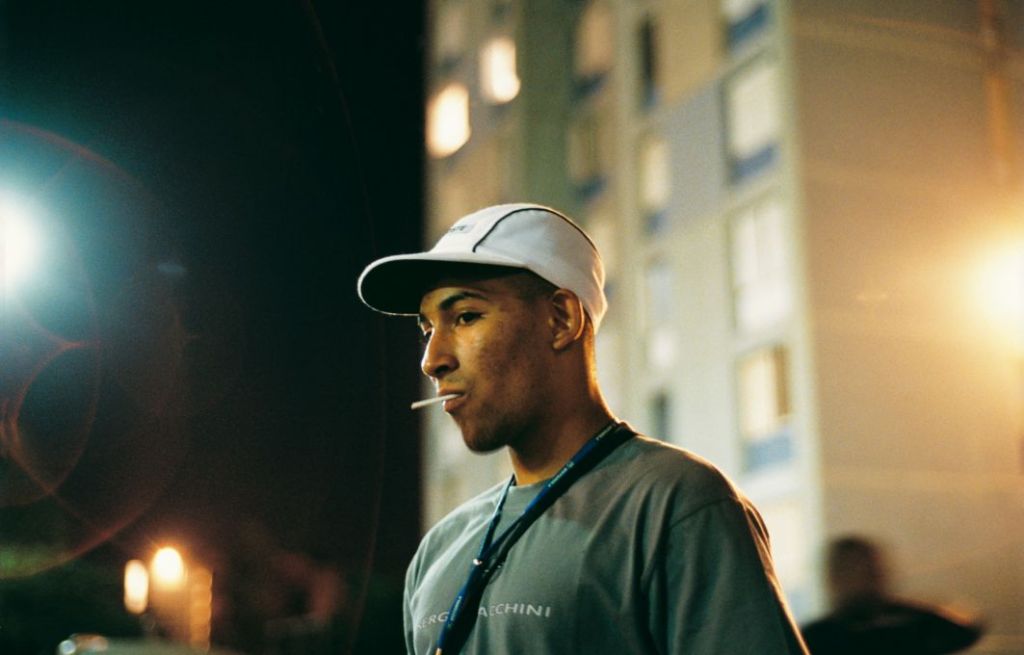
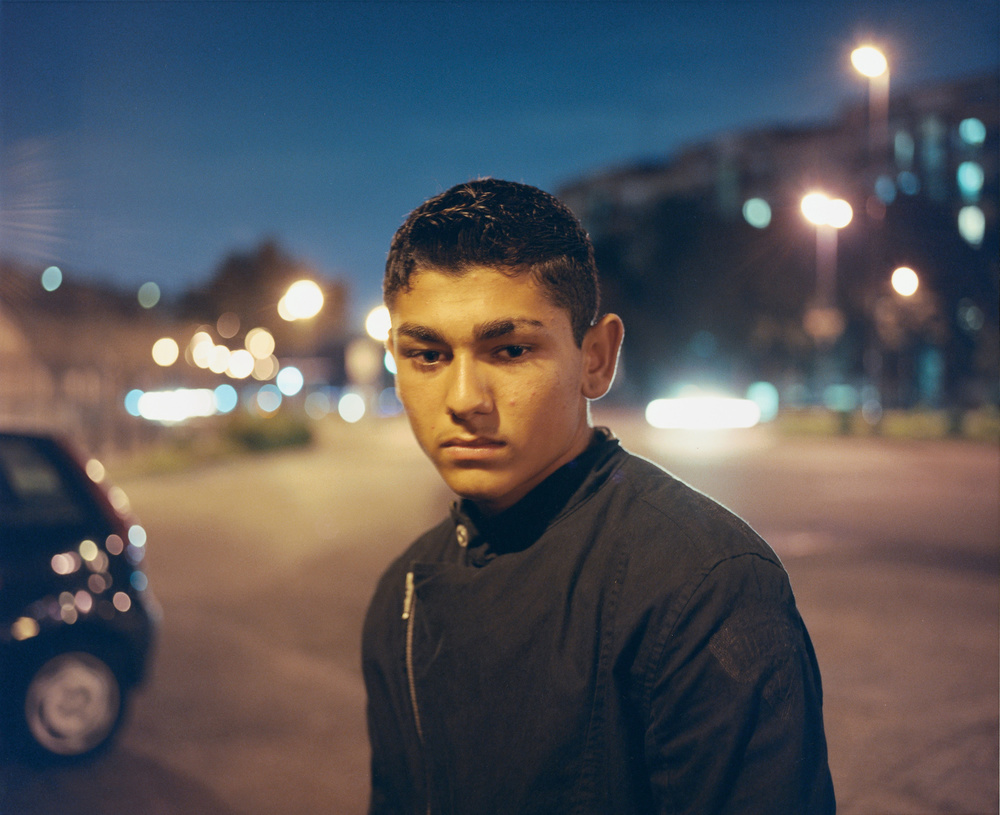
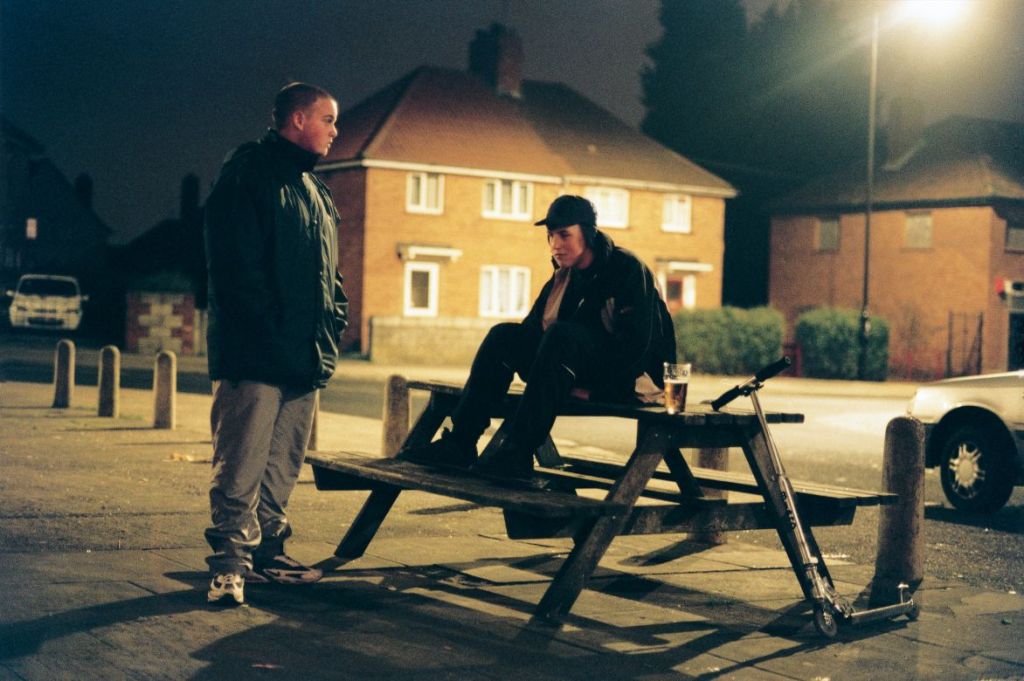
Im am not looking at a series in particular as I like his style of portraits in all his work. It’s as if he has taken a step back and is documenting these people as they live their lives. They don’t look at the camera which makes them more natural looking. The ones taken at night are really effective. The way he uses the light available leads to atmospheric photographs.

This is my favourite of his images. The light coming in from the sides add more depth to the image. There is light on the subjects face, possibly from another street light that creates a slight shadow on the side of his face. The different tones of his face and the shallow depth of field separates the subject from the background. The background is also interesting. Although out of focus, you can tell it is some sort of block of flats. You can also see other lights and some sort of greenery in the back. The camera is angled slightly up. This is effective as it means the main focus is on the subject but there is enough of the background in the frame to begin to be able to imagine what the location is like. The fact that is it out of focus leads to the viewer looking more at the image as their eyes won’t initially be drawn to the objects in the back.

I am going to try this more photojournalist approach my work. Taking a step back and just becoming someone observing a scene rather than setting up lighting, asking the model to pose and just overall taking a lot of control over the image. This could lead to more natural images and as I’m not setting up the scene, have more of a narrative. I will experiment this idea with my housemates as they go about their lives in a 24 hour period.

Design a site like this with WordPress.com
Get started