I have previously looked into the relationship between the photographer and the subject but now I have decided to look into the importance of the relationship to the viewer and how aspects of the image can change it. I am using Cindy Sherman’s self portraits as an example.
The most effective way to change how to viewer connects to the subject is by the gaze of the person. In simple terms, if the subject looks directly into the camera, you feel like you are looking at them and they are looking back. There is a connection, almost as if they are there in person. If the subject looks away from the camera, you feel almost like you are invading in a scene and there is less understanding about the subject.
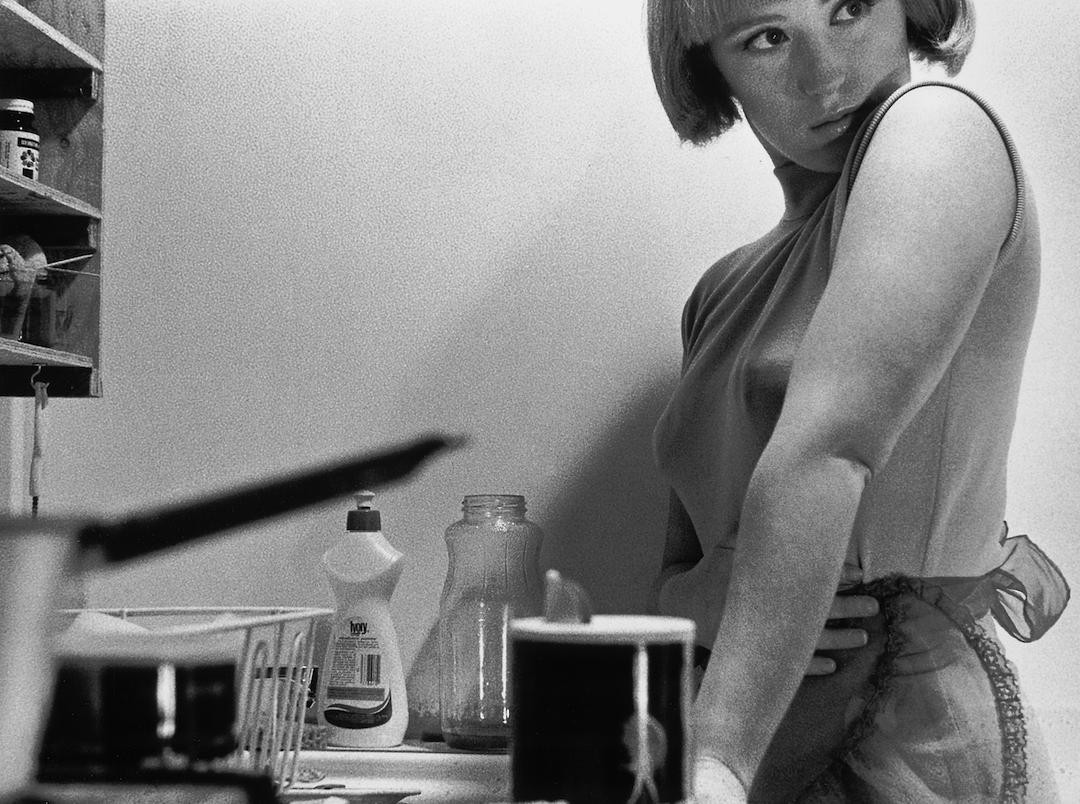
Cindy Sherman cleverly uses her eyes to make the viewer not just intrigued about what is in the frame, but also what is not in sight. In this image (Untitled Film Still 3), she looks off to the side of the frame as if she is looking at someone else. ‘There is two lines of sight here. We the spectators, see the subject – Cindy Sherman… She looks at her husband from another axis. There is no acknowledged contact between subject and us, the viewers. Our sight lines do not coincide. We are put in the position of eavesdropper.’ This quote from ‘Train your Gaze’ book, sums up how are experience as viewer is affected just by the direction the subject is looking. It makes the viewer ask so many more questions about the image, it becomes a ‘spectacle, about looking’. We begin to wonder more things, like is she posing for the camera or for the person who is out of frame. The person sees things that we can’t and we begin to imagine them . So through the simple direction of her eyes, it has opened up so much more in the photo.
This is useful to understand for my own work. I haven’t thought much about where the subject is looking apart from seeing what is visually better. This research has let me understand that it is much deeper than that. The subject looking off to the side creates a feeling of disconnect with the viewer, which is exactly what I am aiming for in these window portraits. In my project where I documented people in their 20’s, they looked at the camera and this worked better for that project as I wanted the viewer to feel more engaged with the subject. The gaze of the subject can have such a massive impact on the how the viewer interprets the photo. From now on, I will make sure the subject always looks off into the distance.
 Lucy Davis
One thought on “THEORETICAL RESEARCH – CINDY SHERMAN AND HER CONNECTION WITH THE VIEWER”