I have looked into this topic a lot in the past. As my main practice is documentary, is it important to understand how reality affects the image and the ethics behind it. It is an in depth topic. But as I am photographing in what will be a historical event, I want the viewer to believe the photos.
This quote is from Roswell Angier, ‘At least until recently, we have accepted most news photographs as more or less accurate portraits of real facts and real behaviour.’ People did believe photographs to be real. Even now people are easily drawn into fake news articles and the images displayed within them. There are ethical codes in place to guide photojournalists. This is could be consider good as it allows the viewer to understand that a documentary image has to have some extent of truth to it but the rules are not always followed. Work such as Robert Capa’s where he moved the body of a dead soldier in order to create a better photo, shows how photographers can easily change parts of their work which means that they are not accurately showing reality. There is so many other examples of documentary photographers manipulating their work, such as Steve McCurry and his digitally manipulated photographs. As photojournalists they have a responsibility to be truthful in their work as they can easily influence societies opinions on a subject.
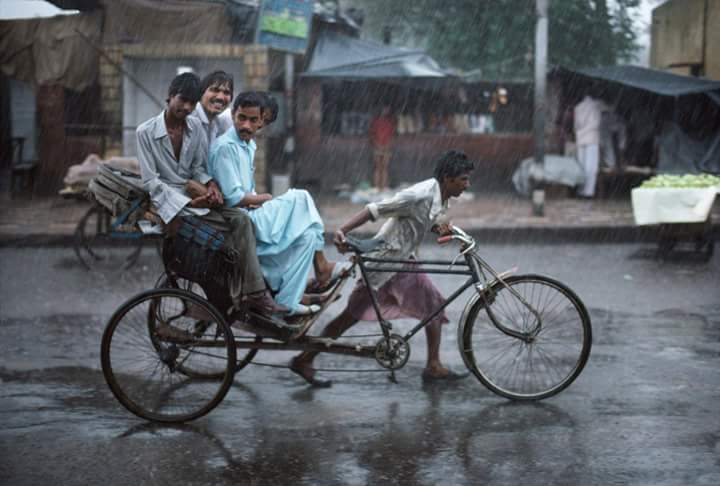
Max Pinkers refers to this time as the ‘post truth era’. People are understanding that images are not always 100% truthful. I believe this a good thing, if the viewer understands that they are not accurate then they won’t believe everything they see. Photos are opinions, they pose questions rather than prove something. I have before looked into how even subconsciously we portray are own opinions in are work, therefore an image will never be just a truthful documentation of a subject. Photographers have developed on this idea and people such as Hannah Starkey use staged documentary to portray their message to the viewer. In some cases staging the photo could be more beneficial, you have more control over aspects of the image and so maybe it could be better at accurately showing a message?
As Fred Ritchin said in a talk, the world is too complex to be able to represent it in photography. We don’t often know the sociological, political or historical context behind the image. We can only begin to represent a topic or theme in our work as often it is much more complicated. Because of this it is up to the viewer to interpret how they see photography. What I think is most important is that they understand that it cannot ever be entirely accurate.
In conclusion, documentary photography is making a change in this ‘post truth’ era and some photographers are adapting their practice. After reading many articles and books, one main fact that it is the viewer who will decide the authenticity of an image. In my work, the theme of truth is important. I am documenting a big and important part of everyones lives. Apart from editing colour and light in my work to get correct exposure, my images are accurate. But from this research there is not much I can do to prove this to the viewer, it is left to them to interpret it.
 Lucy Davis